In the meat industry, packaging is not just the final step before shipment – it is one of the most critical control points for food safety, shelf life, regulatory compliance, and brand reputation. Many meat processors invest heavily in sourcing quality raw material, maintaining sanitary processing environments, and training skilled labor, yet still face compliance issues because of packaging failures.
USDA compliance does not begin or end with inspection stamps. It is deeply connected to how meat products are sealed, protected, labeled, and preserved after processing. Among all packaging technologies used in meat plants today, commercial vacuum sealing has become one of the most reliable and widely accepted methods for meeting USDA requirements – especially as regulations tighten and retailers demand longer shelf life with fewer preservatives.
This article explains why commercial vacuum sealers play such a critical role in USDA-compliant meat packaging, the common challenges processors face without proper sealing systems, and how vacuum sealing directly supports food safety, regulatory compliance, and operational efficiency – without turning this into a sales pitch.
Understanding USDA Compliance in Meat Packaging
Before discussing equipment, it’s important to understand what USDA compliance actually means for meat packaging operations.
USDA regulations focus on three core outcomes:
- Food safety
- Product integrity
- Traceability and consistency
Packaging directly impacts all three.
USDA inspectors evaluate whether packaged meat products:
- Are protected from contamination
- Maintain proper oxygen control
- Prevent microbial growth
- Preserve product identity and labeling accuracy
- Withstand storage, handling, and distribution conditions
If packaging fails at any point – leaks, weak seals, trapped air, contamination – compliance issues arise even if the meat was processed correctly.
This is where many operations struggle.
The Real Packaging Challenges Meat Processors Face
1. Oxygen Exposure and Spoilage
Oxygen is one of the biggest enemies of fresh and processed meat. Even small amounts trapped inside a package can:
- Accelerate bacterial growth
- Cause discoloration
- Reduce shelf life
- Lead to off-odors and texture changes
USDA guidelines emphasize controlling environmental factors that promote spoilage. Traditional sealing methods or inconsistent manual sealing often fail to remove oxygen completely, increasing the risk of non-compliance.
2. Seal Integrity Failures
A package that looks sealed is not always properly sealed.
Weak seals, uneven pressure, or contamination along the seal line can cause:
- Micro-leaks
- Loss of vacuum during cold storage
- Exposure during transportation
From a USDA perspective, compromised seal integrity means compromised food safety – even if the product appears fine during inspection.
3. Inconsistent Packaging Across Batches
Consistency matters in regulated environments. USDA inspectors expect uniform packaging quality across production runs.
Manual or entry-level sealing methods often result in:
- Variations in vacuum levels
- Inconsistent seal width
- Different shelf-life performance between batches
Inconsistent packaging raises red flags during audits and inspections.
4. Cross-Contamination Risks
Packaging stations are high-risk zones in meat plants. If equipment is difficult to clean or not designed for washdown environments, bacteria can accumulate.
USDA sanitation standards require:
- Cleanable surfaces
- Food-grade materials
- Minimal harborage points
Packaging equipment that fails these criteria increases contamination risk – no matter how good the upstream processing controls are.
Why Vacuum Sealing Aligns with USDA Food Safety Goals
Commercial vacuum sealing directly supports USDA compliance because it addresses the core risks inspectors are trained to identify.
Oxygen Removal as a Preventive Control
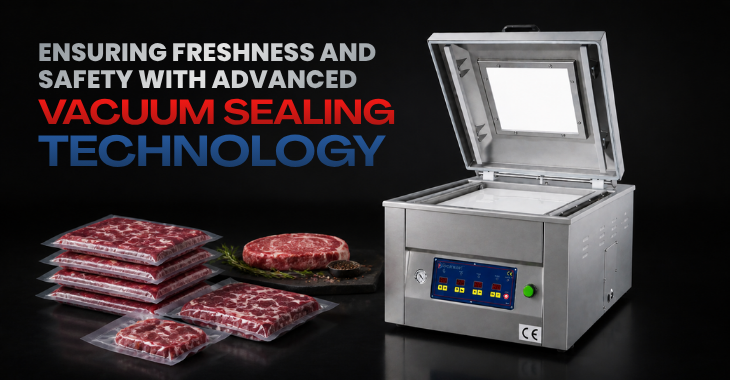
Vacuum sealing removes air from the package before sealing, significantly reducing oxygen levels. This helps:
- Slow microbial growth
- Preserve meat color
- Extend shelf life naturally
- Reduce reliance on chemical preservatives
From a USDA standpoint, this aligns with preventive control principles under HACCP (Hazard Analysis and Critical Control Points).
Strong, Consistent Seal Formation
Commercial vacuum sealers are designed to apply:
- Uniform pressure
- Controlled sealing temperature
- Consistent seal width
This ensures every package meets the same sealing standard – batch after batch.
Consistency reduces inspection issues and minimizes rejected product.
Reduced Handling After Packaging
Once vacuum sealed, meat products require less handling. Fewer touchpoints mean:
- Lower contamination risk
- Better sanitation control
- Improved traceability
USDA inspectors often evaluate how much product handling occurs after packaging – and vacuum sealing helps limit it.
The Role of Commercial Equipment vs. Light-Duty Sealers
One of the most common mistakes meat processors make is using packaging equipment that was never designed for commercial or USDA-regulated environments.
Light-duty or non-industrial sealers often lack:
- Accurate vacuum control
- Seal consistency
- Sanitary construction
- Durability for continuous operation
Commercial vacuum sealers, on the other hand, are built specifically for:
- Continuous production
- Washdown environments
- Food-grade compliance
- Long operational hours
For USDA-inspected facilities, equipment capability is not optional – it is a baseline requirement.
Sanitation and Hygienic Design: A USDA Priority
USDA inspectors pay close attention to equipment design, not just performance.
Commercial vacuum sealers typically feature:
- Stainless steel construction
- Smooth, easy-to-clean surfaces
- Minimal crevices where bacteria can hide
- Removable components for sanitation
This design supports:
- Faster daily cleaning
- Reduced downtime
- Lower risk of contamination during audits
Equipment that is difficult to clean often becomes a hidden compliance risk, even if it works well mechanically.
Shelf Life Control Without Preservatives
Retailers and foodservice buyers increasingly demand longer shelf life without added preservatives. USDA regulations allow this – but only if food safety is maintained.
Vacuum sealing helps processors achieve:
- Extended refrigerated shelf life
- Stable product appearance
- Reduced oxidation
This makes vacuum-sealed meat products more attractive to:
- Retail chains
- Private-label programs
- Export markets
Longer shelf life also reduces product loss, which directly improves profitability.
Traceability and Label Integrity
USDA compliance also includes proper labeling and traceability.
Poor packaging can cause:
- Label detachment due to moisture
- Ink bleeding from condensation
- Package deformation affecting barcodes
Vacuum-sealed packages maintain:
- Firm shape
- Reduced moisture movement
- Stable label adhesion
This improves scan accuracy and traceability throughout the supply chain.
Labor Efficiency and Compliance Go Hand in Hand
Labor shortages are a reality across the meat industry. Overworked staff and rushed packaging increase the risk of compliance errors.
Commercial vacuum sealers help by:
- Automating critical packaging steps
- Reducing operator variability
- Minimizing rework and rejects
When processes are controlled by machines rather than manual judgment, compliance becomes easier to maintain consistently.
USDA Audits: What Inspectors Really Look For
During USDA inspections, packaging is evaluated for:
- Seal quality
- Package integrity
- Sanitation
- Process consistency
- Documentation alignment
Commercial vacuum sealing systems make it easier to:
- Demonstrate control over packaging parameters
- Maintain consistent results
- Document standardized processes
This reduces stress during inspections and lowers the risk of corrective actions.
The Cost of Non-Compliance
Non-compliance is expensive.
It can result in:
- Product recalls
- Production shutdowns
- Lost retail contracts
- Brand damage
Many of these risks trace back to packaging failures rather than processing mistakes.
Investing in proper vacuum sealing is often less about upgrading equipment and more about protecting the entire operation.
Why Many Meat Plants Upgrade Packaging First
When plants modernize, packaging is often the first area addressed because:
- It impacts every product leaving the facility
- It directly affects compliance and shelf life
- It delivers fast ROI through reduced waste
Commercial vacuum sealers act as a stabilizing force in the operation, ensuring that all upstream work is preserved correctly.
Final Thoughts
USDA-compliant meat packaging is not achieved through inspection alone – it is built into daily operations, equipment choices, and process discipline.
Commercial vacuum sealers play a critical role because they:
- Control oxygen exposure
- Ensure seal integrity
- Support sanitation requirements
- Improve shelf life
- Reduce compliance risks
For meat processors aiming to meet USDA standards consistently while improving efficiency and product quality, vacuum sealing is not just a packaging method – it is a strategic safeguard.
At Promarks, the focus has always been on supporting real processing challenges, not just selling machines. Understanding why packaging matters – and how vacuum sealing fits into USDA compliance – is the first step toward building a stronger, safer, and more reliable meat operation.