
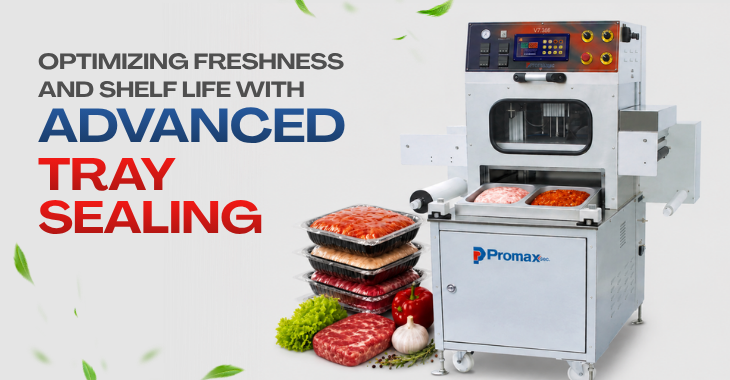
High-moisture foods such as fresh meat, seafood, ready meals, dairy products, and marinated items are some of the most challenging products to package correctly. While tray sealing may seem like a simple final step in the packaging process, for high-moisture foods it plays a critical role in food safety, shelf life, and brand reputation.
As food processors scale production and face tighter quality standards, traditional or outdated tray sealing methods often fail to deliver consistent results. This is where advanced automatic tray sealing technology becomes essential rather than optional.
Why High-Moisture Foods Are Harder to Seal
High-moisture products release liquids, vapors, and condensation during packaging. These factors directly affect seal integrity and packaging performance.
Common challenges include:
- Moisture contamination on seal areas
- Weak or incomplete seals
- Higher risk of leaks during transport
- Reduced shelf life due to oxygen ingress
- Increased chances of microbial growth
Manual or basic tray sealers struggle to maintain consistent sealing pressure and temperature when moisture levels vary from tray to tray. Over time, this leads to product spoilage, customer complaints, and costly rework.
The Real Cost of Poor Tray Sealing in High-Moisture Foods
When seal integrity fails, the impact goes beyond damaged packaging.
Food processors often experience:
- Product returns and rejected shipments
- Shortened shelf life and increased food waste
- Failed quality inspections and audits
- Damage to brand trust with retailers
- Higher operational costs due to downtime
For high-volume operations, even a small seal failure rate can result in significant financial losses over a year.
Why Advanced Tray Sealing Technology Is Different
Modern automatic tray sealing machines are specifically designed to handle challenging products, including high-moisture foods. Unlike basic sealers, advanced systems use precise controls to create reliable, repeatable seals under demanding conditions.
Key advantages include:
Consistent Heat and Pressure Control
Advanced tray sealers apply uniform heat and sealing pressure across every tray, even when moisture levels fluctuate. This ensures strong seals without overheating or damaging packaging film.
Moisture-Tolerant Sealing Design
High-performance seal bars and tooling are engineered to minimize seal contamination caused by liquids or condensation.
Modified Atmosphere Packaging (MAP) Compatibility
For products like meat, seafood, and ready meals, advanced tray sealers support gas flushing to reduce oxygen, extend shelf life, and maintain product freshness.
Higher Throughput Without Compromising Quality
Automatic tray sealing machines maintain seal quality at high speeds, making them ideal for commercial and industrial food production lines.
Industries That Benefit Most from Advanced Tray Sealing
While all food processors benefit from better sealing, advanced tray sealing technology is especially critical for:
- Meat and poultry processing plants
- Seafood packaging facilities
- Ready-to-eat and prepared meal manufacturers
- Dairy and cheese producers
- High-moisture fresh food packaging operations
In these industries, packaging performance directly affects compliance, shelf life, and customer satisfaction.
Automation Solves Consistency Problems
One of the biggest advantages of automatic tray sealing machines is process consistency. Human error, fatigue, and variation are eliminated, resulting in:
- Uniform seal quality across all shifts
- Reduced packaging waste
- Improved production efficiency
- Easier compliance with food safety standards
For growing food processors, automation also ensures scalability without sacrificing packaging reliability.
Choosing the Right Tray Sealing Solution
When packaging high-moisture foods, food processors should look for tray sealing machines that offer:
- Precise temperature and pressure control
- Strong seal integrity even with moisture present
- MAP and gas-flush capabilities
- Industrial-grade stainless steel construction
- Easy cleaning and sanitation features
Investing in the right tray sealing technology not only improves packaging performance but also supports long-term operational efficiency.
Final Thoughts
High-moisture foods demand more from packaging equipment than dry or low-moisture products. As production volumes increase and quality expectations rise, advanced automatic tray sealing technology becomes a critical part of a reliable food packaging operation.
For commercial and industrial food processors, upgrading to modern tray sealing solutions is not just about speed—it’s about protecting product quality, extending shelf life, and maintaining trust in the marketplace.

Tray Sealer vs Vacuum Sealer: Key Differences for Food Packaging
[…] packaging is one of the strongest applications for commercial tray sealing. Walk through a supermarket’s meat or prepared-food section and it’s easy to see why: […]