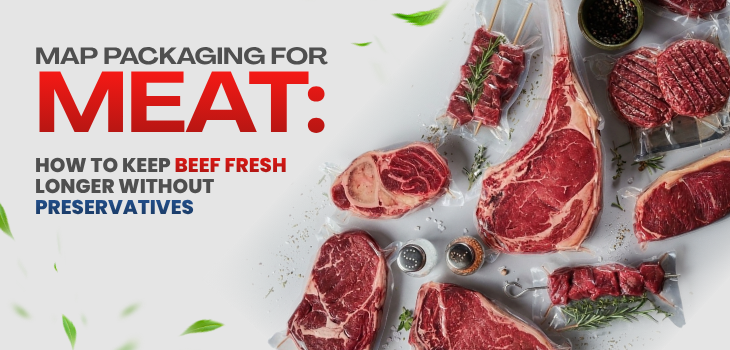
In the modern meat processing industry, maintaining freshness while extending shelf life is one of the biggest challenges. Consumers demand fresh-looking, safe, and preservative-free meat, while businesses need to reduce spoilage, minimize waste, and maximize profitability.
This is where Modified Atmosphere Packaging (MAP), also known as gas flush packaging, comes in.
MAP packaging has become a highly effective solution for meat processors, allowing beef to stay fresh for longer periods without relying on artificial preservatives. If you are still using traditional vacuum packaging alone, you may be limiting both shelf life and profitability.
This guide explains how MAP packaging works, why it matters, and how to implement it effectively in meat processing operations.
What Is MAP Packaging
Modified Atmosphere Packaging is a technology that replaces the air inside a package with a controlled mixture of gases.
Instead of normal air, which contains approximately 21 percent oxygen, MAP uses gases such as carbon dioxide, nitrogen, and oxygen in controlled proportions.
Carbon dioxide slows bacterial growth
Nitrogen prevents package collapse
Oxygen helps maintain the red color of meat in specific applications
This controlled environment preserves freshness, color, texture, and safety.
Why Traditional Packaging Falls Short
Before MAP, most meat processors relied on two common methods.
Standard Vacuum Packaging
This method removes air completely and extends shelf life. However, it often causes meat to appear darker, which can reduce visual appeal for retail customers.
Overwrap Packaging
This method maintains the bright red color of meat but provides a very short shelf life, typically between two to five days.
The Limitation
Processors often have to choose between longer shelf life and better appearance. MAP packaging addresses both challenges simultaneously.
How MAP Extends Beef Shelf Life
MAP packaging works by controlling microbial activity and oxidation.
Bacteria Control
Carbon dioxide slows the growth of spoilage bacteria. This helps keep meat fresh for a longer period.
Oxygen Control
Too much oxygen leads to oxidation and spoilage. Too little oxygen can cause meat to lose its red color. MAP balances oxygen levels based on the product type.
Moisture Retention
MAP helps maintain internal humidity, preventing drying, weight loss, and texture damage.
Shelf Life Comparison
Overwrap packaging typically provides two to five days of shelf life
Vacuum packaging provides around ten to twenty days
MAP packaging can extend shelf life to twenty to thirty days or more
This represents a significant improvement in product longevity.
Best Gas Mixtures for Beef
Different types of meat require different gas compositions.
Fresh Red Meat
A common mixture includes seventy to eighty percent oxygen and twenty to thirty percent carbon dioxide. This helps maintain a bright red appearance while controlling bacterial growth.
Low Oxygen MAP
A mixture of carbon dioxide and nitrogen is used when color is less critical, such as in bulk packaging.
Safety Considerations in MAP Packaging
Gas composition must be carefully controlled.
High oxygen levels improve color but can increase oxidation if not managed properly. Incorrect gas mixtures can promote bacterial growth, reduce shelf life, and compromise product safety.
It is important to validate gas mixtures and perform quality control testing regularly.
How MAP Packaging Works
The MAP process involves several key steps.
Step One
The product is placed inside a tray or pouch designed for MAP.
Step Two
The machine removes the existing air from the package.
Step Three
A controlled gas mixture is injected into the package.
Step Four
The package is sealed to maintain the internal atmosphere.
Step Five
Quality checks are performed to ensure proper gas composition and seal integrity.
Equipment Required for MAP Packaging
To implement MAP packaging effectively, the following equipment is needed.
Vacuum Packaging Machine with Gas Flush
This machine removes air and injects the gas mixture with precision.
Gas Supply System
This includes carbon dioxide, nitrogen, and oxygen cylinders along with regulators.
High Barrier Packaging Materials
These materials prevent gas leakage and maintain the internal atmosphere.
Gas Analyzer
This tool verifies gas composition and ensures safety and consistency.
Common Mistakes in MAP Packaging
Several common errors can reduce the effectiveness of MAP packaging.
Incorrect Gas Ratios
Using the wrong gas mixture can lead to spoilage or color loss. Always use validated gas compositions.
Poor Sealing
Weak seals can cause gas leakage. Sealing time and temperature must be optimized.
Low Quality Packaging Materials
Poor materials allow gas to escape over time. High barrier films should be used.
Lack of Temperature Control
MAP does not replace refrigeration. Products must still be stored at proper temperatures, typically between two to six degrees Celsius.
No Gas Testing
Without testing, it is not possible to confirm the gas composition inside the package. Regular analysis is essential.
Business Benefits of MAP Packaging
MAP packaging provides several advantages for meat processors.
Reduced Food Waste
Longer shelf life means less spoilage and more sellable product.
Extended Distribution
Products can be transported over longer distances without quality loss.
Improved Product Presentation
Bright red meat is more attractive to consumers and improves retail performance.
Fewer Returns and Complaints
Consistent quality leads to higher customer satisfaction.
Increased Profitability
Reduced waste and improved sales contribute directly to higher margins.
MAP vs Vacuum Packaging
Vacuum packaging offers good shelf life but can affect appearance. MAP packaging offers both extended shelf life and improved visual appeal.
Many processors use both methods depending on the product and market requirements.
Food Safety Considerations
MAP packaging does not eliminate the need for proper hygiene.
Processors must maintain clean environments, follow sanitation procedures, and conduct regular testing.
MAP slows bacterial growth but does not eliminate it.
Quality Control in MAP Packaging
Consistency in MAP packaging requires proper monitoring.
Gas composition should be checked regularly
Seals should be inspected for leakage
Temperature must be controlled throughout storage and transport
Is MAP Packaging Worth It
MAP packaging is a valuable investment for meat processors who supply retail markets, export products, or require longer shelf life and better presentation.
When implemented correctly, it delivers both operational and financial benefits.
Conclusion
MAP packaging is becoming a standard in modern meat processing.
By controlling the atmosphere inside the package, processors can extend shelf life, maintain product quality, reduce waste, and improve profitability.
It also helps meet consumer demand for fresh, safe, and preservative-free meat.