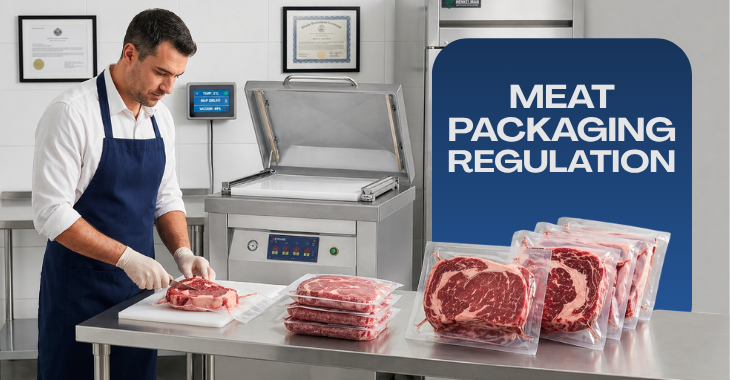
If you ask most customers how their meat is packaged, they’ll likely mention plastic wrap, trays, or vacuum-sealed bags. What they don’t see is the complex system of regulations behind every properly packaged cut of meat. For butchers, meat processors, and food businesses, packaging is not just about presentation it’s about compliance, safety, and long-term business sustainability.
Understanding meat packaging regulations is essential if you want to operate legally, avoid costly penalties, and build trust with your customers. Whether you run a small butcher shop or a large-scale processing facility, the rules governing meat packaging directly impact how you handle, store, label, and sell your products.
In this guide, we’ll break down how butchers package meat in compliance with regulations in the United States and globally, while also exploring how modern packaging methods like vacuum sealing play a critical role in meeting these standards.
Why Meat Packaging Regulations Exist
Meat is one of the most sensitive food products when it comes to contamination and spoilage. Unlike dry goods, it requires strict handling and packaging procedures to maintain safety and quality. Packaging regulations exist to minimize risks such as bacterial growth, chemical contamination, and mislabeling.
From a regulatory standpoint, packaging materials are treated as indirect food additives. This means any material that comes into contact with meat must be proven safe and must not transfer harmful substances into the product. Even minor violations in packaging standards can lead to serious consequences, including product recalls and legal action.
For butchers, proper packaging is also tied to shelf life. A well-packaged product can last significantly longer, reducing waste and improving profitability. At the same time, poor packaging can result in spoilage, customer complaints, and financial losses.
Meat Packaging Regulations in the United States
In the United States, meat packaging is regulated primarily by the United States Department of Agriculture (USDA) and the Food and Drug Administration (FDA). Each plays a distinct role in ensuring that meat products are packaged safely and labeled correctly.
Approved Packaging Materials
One of the most important requirements is that all packaging materials must be food-grade and approved for direct contact with meat. These materials must not release harmful chemicals or alter the taste, smell, or composition of the product.
Butchers must source packaging materials from verified suppliers who provide documentation confirming compliance with food safety standards. Using low-quality or uncertified packaging materials can lead to contamination and regulatory violations.
This is particularly important when using vacuum packaging systems, where the packaging material forms a tight seal around the product. The integrity of the material directly affects both safety and shelf life.
Labeling Requirements
Proper labeling is not optional it is a legal requirement. Every packaged meat product must include clear and accurate information for the consumer.
This typically includes:
- Product name
- Net weight
- Ingredient list (if applicable)
- Name and address of the processor or distributor
- Inspection stamp
- Safe handling instructions
Labels must be truthful and not misleading. For example, claims such as “organic” or “grass-fed” must be backed by proper certification. Any misrepresentation can result in penalties and loss of consumer trust.
Inspection and Certification
All meat sold commercially in the U.S. must come from facilities that are inspected and approved by the USDA. This ensures that the meat has been processed under hygienic conditions and meets safety standards.
Products that pass inspection receive an official stamp, which must appear on the packaging. Without this certification, meat cannot be sold across state lines or in many retail environments.
The FDA also plays a role in regulating certain types of meat products and ensuring that packaging materials meet safety standards.
Date Labeling and Traceability
Date labeling is another critical aspect of meat packaging regulations. While terms like “sell by” and “use by” are commonly seen, they must be applied correctly and consistently.
Once a date is printed on federally inspected meat products, it cannot be altered. This ensures traceability and helps prevent the sale of expired or unsafe products.
For butchers, maintaining accurate records of packaging dates is essential for inventory management and compliance.
Hygiene and Sanitation Standards
Packaging must take place in a clean and controlled environment to prevent contamination. Regulations require strict sanitation procedures, including:
- Regular cleaning of equipment
- Proper handling of raw and processed meat
- Separation of different product types
- Use of protective clothing by staff
Single-use packaging materials should never be reused, as this increases the risk of bacterial contamination.
Global Meat Packaging Regulations
Outside the United States, meat packaging is guided by international standards such as those set by the Codex Alimentarius, developed by global health and agriculture authorities.
These standards are widely adopted or adapted by countries around the world, including those in Europe, Asia, and the Middle East.
Food Safety Systems
Many countries require the implementation of systems like Hazard Analysis and Critical Control Points (HACCP). This approach identifies potential risks in the packaging process and establishes controls to prevent them.
Packaging Material Compliance
Globally, only approved food-grade materials can be used for meat packaging. Regulations often include limits on chemical migration from packaging into food, ensuring that materials remain safe under different storage conditions.
Labeling and Consumer Information
International regulations emphasize transparency. Labels must clearly state the origin of the meat, expiration dates, and storage instructions. In export markets, labeling requirements can be even more stringent.
Temperature Control and Cold Chain Management
Packaging alone cannot ensure safety. Meat must be stored and transported at controlled temperatures throughout the supply chain. This is especially important for frozen and vacuum-packed products.
Modern Meat Packaging Methods and Compliance
As the meat industry evolves, traditional packaging methods are being replaced by more advanced technologies that improve both compliance and efficiency.
Vacuum Packaging
Vacuum packaging is one of the most widely used methods in modern butcher shops and processing facilities. By removing air from the package, it significantly slows down bacterial growth and oxidation.
This method not only extends shelf life but also helps maintain the color and texture of the meat. From a regulatory standpoint, vacuum packaging is considered safe when used with approved materials and proper procedures.
Modified Atmosphere Packaging (MAP)
MAP involves replacing the air inside the package with a controlled mix of gases. This method is commonly used in supermarkets to preserve the appearance and freshness of meat.
It is particularly effective for retail environments where visual appeal plays a major role in purchasing decisions.
Traditional Butcher Wrapping
While still used in some small shops, traditional wrapping methods offer limited protection compared to modern techniques. They are more prone to contamination and shorter shelf life, making them less suitable for large-scale operations.
Common Mistakes Butchers Must Avoid
Even experienced butchers can face compliance issues if they overlook key details in packaging.
Using non-compliant materials is one of the most common mistakes. It may seem like a cost-saving measure, but it can lead to serious safety risks and regulatory penalties.
Incorrect labeling is another major issue. Missing or inaccurate information can result in fines and product recalls.
Poor sealing is often overlooked, especially in manual operations. Weak seals allow air and bacteria to enter, reducing shelf life and compromising safety.
Temperature mismanagement is another critical factor. Even perfectly packaged meat can spoil if not stored at the correct temperature.
Business Impact of Packaging Compliance
Following meat packaging regulations is not just about avoiding legal trouble. It has a direct impact on your business performance.
Proper packaging leads to longer shelf life, which reduces waste and increases profitability. It also improves product presentation, making your products more appealing to customers.
Compliance builds trust. Customers are more likely to purchase from businesses that demonstrate high standards of safety and quality.
For businesses looking to expand into supermarkets or export markets, meeting packaging regulations is essential.
Choosing the Right Packaging Equipment
The equipment you use plays a major role in ensuring compliance. Modern commercial packaging machines are designed to meet strict hygiene and safety standards while improving efficiency.
When selecting equipment, consider factors such as build quality, ease of cleaning, sealing consistency, and compatibility with food-grade materials.
Vacuum packaging machines, in particular, are a valuable investment for butchers looking to improve both compliance and operational efficiency.
Conclusion
Meat packaging regulations may seem complex, but they are essential for ensuring food safety, maintaining quality, and protecting consumers. For butchers and meat processors, compliance is not just a legal requirement it is a foundation for building a successful and sustainable business.
By understanding and following these regulations, and by investing in modern packaging methods, businesses can reduce waste, improve product quality, and gain a competitive edge in the market.
FAQs
What are the main authorities regulating meat packaging in the USA?
The USDA oversees meat safety and inspection, while the FDA regulates packaging materials and certain product categories.
Is vacuum packaging compliant with regulations?
Yes, as long as approved materials and proper procedures are used, vacuum packaging is widely accepted.
Can butchers package meat without labels?
No, labeling is mandatory and must include specific information required by law.
What is the safest method of meat packaging?
Vacuum packaging and modified atmosphere packaging are among the safest and most effective methods.
Why is packaging compliance important for small butchers?
It helps avoid legal issues, reduces waste, and builds customer trust, which is essential for long-term growth.