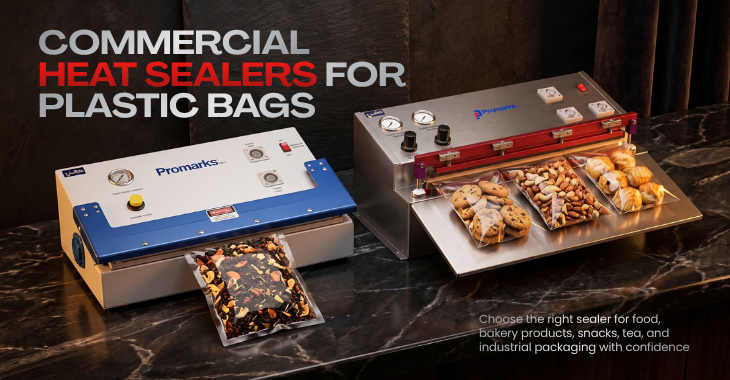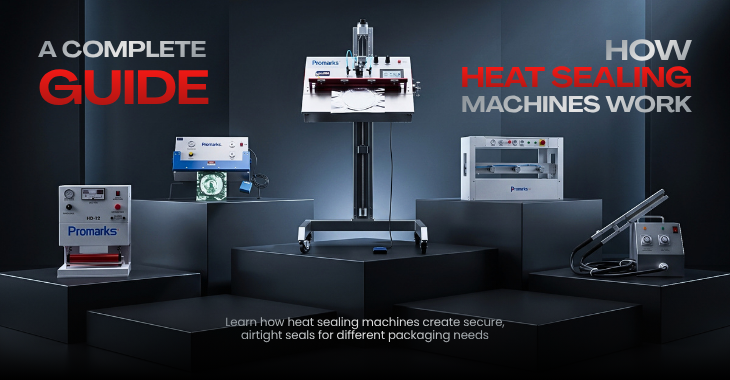
A heat sealer is a packaging machine that uses controlled heat, pressure, and sealing time to join thermoplastic materials and create a secure seal. Heat sealing is widely used for plastic bags, flexible packaging films, food packaging, medical products, industrial components, and many other applications.
Depending on the machine design, a heat sealer can create a seal in just a few seconds. From a simple impulse heat sealer for small packaging operations to industrial sealing equipment designed for continuous production, heat sealing machines help manufacturers create consistent and professional package closures.
But how does a heat sealer actually work?
How Does a Heat Sealer Work?
A heat sealing machine works by applying heat and pressure to compatible thermoplastic packaging materials. The heat softens or melts the sealable layer of the packaging film, while pressure brings the layers together. Once the material cools, the layers bond and form a sealed edge.
The basic heat sealing process involves three important factors:
- Temperature – The sealing surface must reach the appropriate temperature for the packaging material.
- Pressure – Pressure holds the material together while the seal is formed.
- Dwell time – The packaging material must remain under heat and pressure for an appropriate amount of time.
These three factors must be properly balanced. Too little heat or sealing time can produce a weak seal, while excessive heat can damage, distort, or burn the packaging material.
Step-by-Step Heat Sealing Process
The exact process depends on the type of industrial heat sealer being used, but the basic operation is straightforward:
Step 1: Position the packaging material
The open edge of the plastic bag or flexible packaging film is placed between the sealing jaws or sealing bars.
Step 2: Apply heat
The machine heats the sealing element to a predetermined temperature. In an impulse sealer, heat is typically applied only during the sealing cycle.
Step 3: Apply pressure
The sealing jaws press the packaging layers together. This allows the heated thermoplastic layers to bond.
Step 4: Hold and cool
The material remains under pressure for the required sealing time. The seal then cools and solidifies.
Step 5: Remove the package
The sealing jaws open, leaving a finished sealed edge.
The result is a clean, consistent closure that helps protect the contents from contamination, moisture, dust, and accidental opening.
What Materials Can a Heat Sealer Seal?
Heat sealing works with packaging materials that contain a heat-sealable thermoplastic layer. Common materials include various polyethylene and polypropylene films, laminates, coated films, and other flexible packaging structures designed for heat sealing.
However, not every plastic can be heat sealed.
The material’s composition, thickness, coating, and sealant layer all affect the required sealing temperature, pressure, and dwell time. This is why selecting the correct heat sealing equipment for the packaging material is important.
For manufacturers handling different packaging films, testing the material with the machine before full-scale production can help determine the appropriate operating settings.
Types of Heat Sealers
Heat sealing equipment is available in several configurations. The right machine depends on production volume, packaging material, package size, and the type of seal required.
1. Impulse Heat Sealer
An impulse sealer machine uses electrical energy to heat the sealing element for a short period during the sealing cycle.
One of the major advantages of an impulse heat sealer is that the heating element does not need to remain continuously heated while the machine is idle. This makes impulse sealing suitable for many intermittent packaging applications.
Impulse sealers are commonly used for:
- Plastic bags
- Flexible packaging
- Small-batch production
- Retail and commercial packaging
- Food packaging
- Industrial components
- General-purpose bag sealing
2. Continuous Band Sealer
A continuous band sealer is designed for higher-volume packaging operations. Instead of manually sealing each bag with a stationary sealing bar, the package is fed through a continuous sealing mechanism.
These machines can improve production consistency and reduce the amount of manual labor required for repetitive packaging tasks.
Continuous band sealers are often used for:
- Food products
- Powdered products
- Granular products
- Agricultural products
- Chemical products
- Industrial components
- High-volume bag packaging
3. Industrial Heat Sealing Machines
For demanding production environments, industrial heat sealing equipment can provide greater control over sealing temperature, pressure, speed, and package handling.
Industrial heat sealers are commonly selected when manufacturers need repeatable seals across large production volumes.
Where Are Heat Sealers Used?
Heat sealers are used across many industries because flexible packaging is lightweight, versatile, and economical.
Food Packaging
Food manufacturers use heat sealing machines to close bags and flexible packaging containing products such as snacks, dry foods, frozen products, spices, grains, and other packaged goods.
A properly formed seal can help protect the product from external contamination and unwanted exposure.
Medical and Pharmaceutical Packaging
Heat sealing is also used for certain medical and pharmaceutical packaging applications where controlled and consistent package closures are required.
The packaging material and sealing process must be selected according to the product, packaging specification, and applicable requirements.
Manufacturing and Industrial Packaging
Manufacturers use commercial heat sealers to package components, parts, materials, and finished products.
Heat sealing can provide a practical way to protect products from dust, moisture, and handling during storage and transportation.
Agriculture and Other Packaging Applications
Heat sealing equipment can also be used for agricultural products, chemicals, textiles, hardware, and other products packaged in heat-sealable bags or films.
Benefits of Using a Heat Sealing Machine
A properly selected heat sealer offers several advantages for packaging operations.
Fast and Simple Operation
Many heat sealing machines can create a finished seal within seconds. Operators generally place the package between the sealing jaws, activate the machine, and remove the sealed package.
This makes heat sealing practical for both small-scale and commercial packaging operations.
Consistent Seals
Modern sealing equipment can provide more consistent temperature, pressure, and sealing time than manual packaging methods.
Consistent operating conditions can help reduce weak, incomplete, or irregular seals.
Reduced Material Waste
A properly adjusted heat sealing process can help create reliable seals without excessive use of packaging material.
The exact amount of material savings depends on the packaging design and machine configuration.
Suitable for Different Packaging Materials
Heat sealers are available for many types of heat-sealable films and bags. The machine should be selected based on the material thickness, seal width, package dimensions, and production requirements.
Energy Efficiency of Impulse Sealers
One advantage of an impulse heat sealer is that the heating element generally operates only during the sealing cycle rather than remaining continuously heated while idle.
This can help reduce unnecessary energy consumption during intermittent operation.
Professional Package Appearance
A consistent sealing line gives packaged products a cleaner and more professional appearance while helping keep the package securely closed.
Heat Sealing vs. Vacuum Sealing: What’s the Difference?
Heat sealing and vacuum sealing are related packaging processes, but they are not the same.
A heat sealer primarily closes the package by bonding compatible thermoplastic layers together.
A vacuum sealer removes air from the package before sealing it. Depending on the packaging system, vacuum packaging can help reduce oxygen exposure and extend product shelf life for appropriate products.
For example, a manufacturer may use vacuum packaging equipment to remove air from a meat package and then create a heat seal to close the package.
In other words:
| Heat Sealing | Vacuum Sealing |
|---|---|
| Primarily closes the package | Removes air and seals the package |
| Uses heat and pressure | Uses vacuum plus sealing |
| Suitable for many flexible packages | Common in food and industrial vacuum packaging |
| Does not inherently remove air | Designed to remove air before sealing |
| Available as impulse, band, and industrial machines | Available as chamber and other vacuum packaging systems |
For applications where air removal is an important requirement, a dedicated vacuum packaging machine may be more appropriate than a standalone heat sealer.
How to Choose the Right Heat Sealer
Choosing the right heat sealing machine for plastic bags depends on several factors.
Packaging Material
First, determine whether the material has a suitable heat-sealable layer. Film thickness and material construction can affect the required sealing temperature.
Bag Size
The width of the package opening determines the required sealing length. A machine with an appropriately sized sealing bar can make the packaging process faster and easier.
Production Volume
Low-volume operations may benefit from a manual impulse sealer, while high-volume manufacturers may require a continuous or automated sealing system.
Seal Width
Different applications require different seal widths. A wider seal may be appropriate when additional seal strength is required, but the packaging material and application should determine the specification.
Product Type
Powders, liquids, food products, medical products, and industrial components can have different packaging requirements. Product characteristics should be considered when selecting the sealing method.
Required Production Speed
If operators are sealing hundreds or thousands of packages per day, a manual machine may become a production bottleneck. Continuous or automated equipment can be considered for higher throughput.
Common Heat Sealer Problems
Even a quality commercial bag sealer can produce inconsistent results if the machine settings or packaging materials are incorrect.
Common problems include:
Weak Seals
Possible causes include insufficient temperature, inadequate sealing time, insufficient pressure, contamination in the sealing area, or incompatible packaging material.
Burned or Damaged Film
Excessive temperature or sealing time can damage the film. Reducing the temperature or dwell time may help, depending on the material manufacturer’s specifications.
Incomplete Seals
An uneven sealing surface, incorrect machine settings, wrinkles, or product contamination around the sealing area can prevent a complete seal.
Leaking Packages
A package may leak when the seal is incomplete, contaminated, damaged, or incompatible with the packaging material. In liquid packaging applications, maintaining a clean sealing area is particularly important.
Why Proper Heat Sealing Matters
The seal is one of the most important parts of flexible packaging. A package can contain a high-quality product, but a weak or inconsistent seal can lead to leakage, contamination, product loss, and customer complaints.
For this reason, manufacturers should evaluate more than just the purchase price when selecting heat sealing equipment. Machine construction, sealing consistency, operating speed, available sealing widths, packaging compatibility, maintenance requirements, and production volume should all be considered.
Frequently Asked Questions About Heat Sealers
What is a heat sealer?
A heat sealer is a packaging machine that uses controlled heat and pressure to join heat-sealable thermoplastic materials and create a sealed package closure.
How does an impulse sealer work?
An impulse sealer heats its sealing element for a short period during the sealing cycle. The heated element softens the sealable layer of the packaging material while pressure holds the layers together.
Can a heat sealer seal plastic bags?
Yes. Heat sealers are commonly used to seal compatible plastic bags and flexible packaging films. The bag material must contain a suitable heat-sealable layer.
Can heat sealers be used for food packaging?
Yes. Heat sealing machines are widely used for many food packaging applications, provided that the packaging material, equipment, and process are appropriate for the specific food product and packaging requirements.
Can a heat sealer seal liquids?
Heat sealing can be used with bags containing liquids, but the sealing area must remain clean and the packaging material must be suitable for the application. Liquid packaging may require specialized equipment and careful control of the sealing process.
Is a heat sealer the same as a vacuum sealer?
No. A heat sealer primarily creates a seal, while a vacuum sealer removes air from the package before sealing. Some vacuum packaging machines incorporate heat sealing as part of the overall packaging process.
What causes a weak heat seal?
Weak seals can result from incorrect temperature, insufficient pressure, inadequate dwell time, contaminated sealing surfaces, wrinkles, incompatible materials, or improperly adjusted equipment.
What is the best temperature for heat sealing?
There is no single temperature that works for every package. The correct temperature depends on the packaging material, film thickness, sealant layer, machine design, pressure, and sealing time. Following the packaging manufacturer’s specifications is the appropriate starting point.
Choose the Right Heat Sealing Equipment
From impulse heat sealers for intermittent packaging to industrial equipment for demanding production environments, the right sealing machine can improve packaging consistency, speed, and reliability.
Promarksvac offers heat sealing solutions for commercial and industrial packaging applications. If you are unsure which sealing equipment is appropriate for your bags, films, production volume, or application, evaluate the packaging material and production requirements before selecting a machine.
Looking for a heat sealing machine for your packaging operation? Explore our heat sealing equipment or contact Promarksvac to discuss your application.