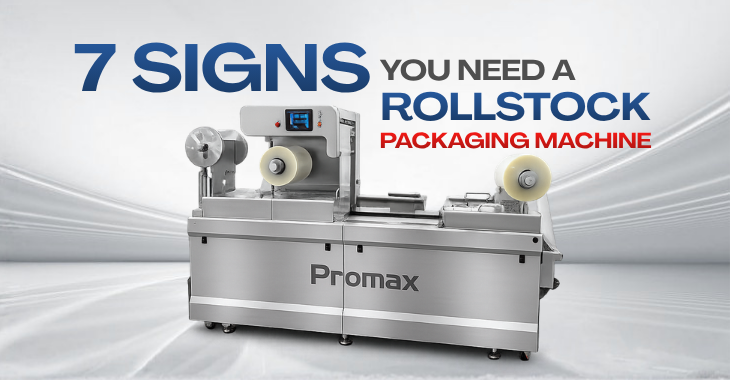
In today’s competitive food manufacturing industry, packaging is no longer just the final step in production. It plays a critical role in product quality, shelf life, labor efficiency, brand presentation, food safety, and overall profitability. As production demands increase and consumer expectations continue to evolve, many food processors find themselves asking an important question: Is our current packaging system holding us back?
For many companies, the answer isn’t immediately obvious. A packaging line that worked perfectly a few years ago may now be creating bottlenecks, increasing labor costs, limiting production capacity, or preventing the introduction of new product offerings. Businesses that continue relying on manual packaging methods or aging chamber vacuum sealers often discover that growth becomes increasingly difficult when packaging operations cannot keep pace with production requirements.
This is where a rollstock packaging machine can become a game-changing investment.
Unlike traditional chamber vacuum sealers that require operators to manually load, position, and unload products in batches, a rollstock packaging machine automates much of the packaging process. Products move continuously through forming, filling, sealing, and cutting operations, significantly increasing throughput while reducing labor dependency. For food manufacturers processing meat, poultry, seafood, cheese, ready-to-eat meals, and other packaged products, food packaging automation can provide substantial advantages in productivity and consistency.
However, purchasing an industrial vacuum packaging machine is a significant decision. Many processors wonder whether they have truly reached the point where automation makes sense for their operation. If you’re currently using manual or semi-automatic packaging equipment, there are several indicators that suggest it may be time to upgrade.
Let’s explore seven common signs that your operation is ready for a rollstock packaging machine.
Sign #1: Your Chamber Vacuum Sealers Are Becoming a Production Bottleneck
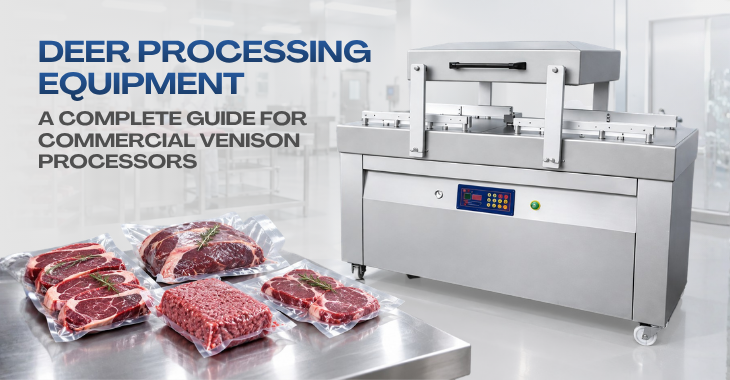
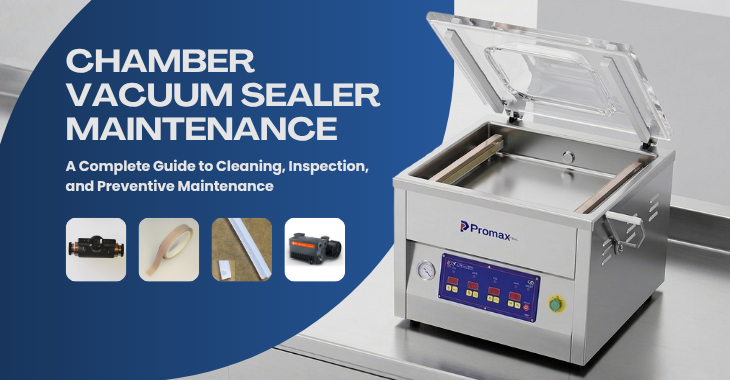
Many food processors begin their packaging journey with chamber vacuum sealers. These machines are reliable, relatively affordable, and highly effective for smaller production volumes. They allow businesses to vacuum package products while maintaining freshness and extending shelf life.
The challenge arises when production volume begins to grow.
As demand increases, chamber vacuum sealers often become the slowest point in the production process. Operators must continuously load products into pouches, position bags correctly, close the chamber lid, wait for the vacuum cycle to complete, remove finished packages, and repeat the process throughout the day.
While this workflow may be manageable for smaller operations, it becomes increasingly inefficient as order volumes rise. Production teams frequently find themselves waiting for packaging capacity to catch up with processing capacity.
A common scenario occurs in meat processing facilities where slicing, portioning, or marinating departments can produce product faster than packaging teams can seal it. Finished product begins accumulating near packaging stations, creating congestion and reducing overall operational efficiency.
A rollstock packaging machine eliminates many of these limitations by automating multiple packaging functions in a continuous process. Instead of packaging products one chamber cycle at a time, operators can process significantly larger volumes with fewer interruptions. The result is improved throughput, smoother production flow, and better utilization of labor resources.
If your packaging department consistently struggles to keep pace with production, it may be a strong indication that your facility has outgrown traditional chamber vacuum packaging equipment.
Sign #2: Labor Costs Continue to Increase
Labor remains one of the largest operating expenses for food manufacturers. Rising wages, labor shortages, employee turnover, and ongoing training requirements can place substantial pressure on operating budgets.
Manual and semi-automatic packaging systems typically require multiple employees to perform repetitive tasks throughout the production shift. Workers may be responsible for loading products into bags, positioning packages, operating sealing equipment, inspecting finished products, and transporting packaged goods for storage or shipment.
As production volumes increase, businesses often attempt to solve packaging challenges by adding more employees. While this may provide temporary relief, it rarely represents the most efficient long-term solution.
Every additional employee introduces associated costs including wages, benefits, training, supervision, scheduling management, and potential turnover expenses. In highly competitive labor markets, finding and retaining skilled workers can become increasingly difficult.
Food packaging automation addresses these challenges by reducing the amount of manual labor required to achieve production goals. A rollstock packaging machine can often perform work that would otherwise require several operators using manual methods.
Rather than relying on additional staffing to support growth, manufacturers can use automation to increase output while maintaining a lean workforce. This allows employees to focus on higher-value activities such as quality control, product handling, and production optimization instead of repetitive packaging tasks.
For companies experiencing persistent labor challenges, automation often becomes less of a luxury and more of a necessity.
Sign #3: Packaging Quality Is Inconsistent
Packaging quality directly impacts customer satisfaction, product protection, and brand reputation.
When packaging processes rely heavily on manual intervention, consistency can become difficult to maintain. Different operators may position products differently, create variations in package appearance, or unintentionally introduce sealing inconsistencies.
Customers notice these differences.
Packages with uneven seals, inconsistent vacuum levels, wrinkles, trapped air pockets, or irregular product presentation can negatively affect perceptions of product quality. In retail environments, packaging often serves as the first impression consumers have of a brand.
Inconsistent packaging can also contribute to more serious problems such as seal failures, reduced shelf life, product spoilage, and increased returns.
A rollstock packaging machine improves consistency by automating critical packaging functions with precise control. Each package is formed, sealed, and cut using programmed settings designed to maintain repeatable results throughout production runs.
This level of consistency becomes particularly valuable for manufacturers supplying grocery chains, foodservice distributors, institutional buyers, and national retailers where packaging standards are closely monitored.
If your quality control team frequently identifies packaging variations or customer complaints related to package appearance, automation may provide the consistency your operation needs.
Sign #4: Production Demand Is Growing Faster Than Your Packaging Capacity
Growth is a positive problem to have, but it can quickly expose weaknesses within an existing packaging system.
Many processors initially invest in packaging equipment based on current production requirements rather than future growth projections. As new customers are added and order volumes increase, packaging capacity may no longer align with business objectives.
This situation often becomes apparent when:
- Overtime becomes routine.
- Packaging shifts are extended.
- Production schedules become increasingly difficult to manage.
- New orders are delayed.
- Expansion opportunities are declined due to capacity limitations.
In these situations, the packaging department may become the primary constraint preventing further growth.
A rollstock packaging machine allows businesses to scale production more efficiently by increasing packaging throughput without proportionally increasing labor requirements. Higher speeds enable facilities to process larger volumes within existing operating hours while maintaining quality standards.
For growing food manufacturers, investing in automation before capacity becomes a critical issue can help prevent costly production bottlenecks and support sustainable expansion.
Sign #5: Your Product Line Is Expanding
Today’s food consumers expect variety.
Manufacturers frequently introduce new products, portion sizes, package configurations, and branding updates to remain competitive. While product diversification creates growth opportunities, it also places additional demands on packaging operations.
Many older packaging systems struggle to accommodate frequent changeovers or diverse packaging requirements. Equipment that was originally designed for a limited range of products may become increasingly inefficient as complexity increases.
Modern rollstock packaging machines offer flexibility that supports evolving product portfolios. Depending on machine configuration, manufacturers can package a wide range of products including:
- Fresh meat
- Processed meat
- Poultry
- Seafood
- Cheese
- Ready-to-eat meals
- Prepared foods
- Pet food products
- Specialty food items
This flexibility allows businesses to respond more effectively to market opportunities without requiring separate packaging systems for every product category.
When product innovation becomes a strategic priority, packaging equipment must be capable of supporting that growth.
Sign #6: You Need Better Material Efficiency and Packaging Costs Control
Packaging materials represent a significant ongoing operating expense.
Many manual packaging systems rely on pre-made pouches that may not always provide optimal material utilization. Excess packaging material increases costs while creating unnecessary waste.
Rollstock packaging machines form packages directly from rollstock film, allowing manufacturers to optimize package dimensions based on product specifications. This often results in improved material efficiency and reduced packaging waste.
In addition to material savings, improved package consistency can reduce rework, rejected packages, and product loss associated with sealing issues.
Over time, these efficiencies can contribute significantly to overall operational savings and improve return on investment.
Sign #7: You’re Planning for the Future, Not Just Today
Perhaps the strongest indicator that it’s time to invest in a rollstock packaging machine is strategic planning.
Many successful food manufacturers do not wait until packaging becomes a major operational problem before investing in automation. Instead, they evaluate future growth objectives and implement solutions that position the business for long-term success.
Questions worth considering include:
- Where will production volumes be in three years?
- Are labor shortages likely to continue?
- Will customer expectations for packaging quality increase?
- Are additional product lines being considered?
- Is facility expansion part of the business strategy?
If the answer to several of these questions is yes, automation may be a proactive investment rather than a reactive purchase.
How Promarksvac Helps Food Processors Transition to Rollstock Packaging
At Promarksvac, we work with food processors at every stage of growth from companies upgrading from chamber vacuum sealers to large-scale manufacturers expanding automated production capacity.
Our rollstock packaging machine solutions are designed to help businesses improve throughput, reduce labor dependency, enhance packaging consistency, and support future growth objectives. Whether you’re packaging meat, poultry, seafood, cheese, dairy products, or prepared foods, selecting the right industrial vacuum packaging machine can transform packaging from a production bottleneck into a competitive advantage.
Beyond equipment selection, factors such as facility space, production goals, package design requirements, service support, and future scalability should all be considered when evaluating food packaging automation solutions.
Conclusion
The decision to upgrade to a rollstock packaging machine is rarely driven by a single factor. More often, it results from a combination of rising labor costs, growing production demands, packaging inconsistencies, product line expansion, and long-term business planning.
If your facility is currently relying on manual packaging methods or chamber vacuum sealers and experiencing one or more of the challenges discussed above, it may be time to evaluate whether automation can support your next stage of growth.
Investing in a rollstock packaging machine is about more than increasing packaging speed. It’s about improving efficiency, maintaining quality, controlling costs, and creating a packaging operation capable of supporting future success.
The sooner packaging capacity aligns with business growth, the better positioned your company will be to compete in an increasingly demanding marketplace.