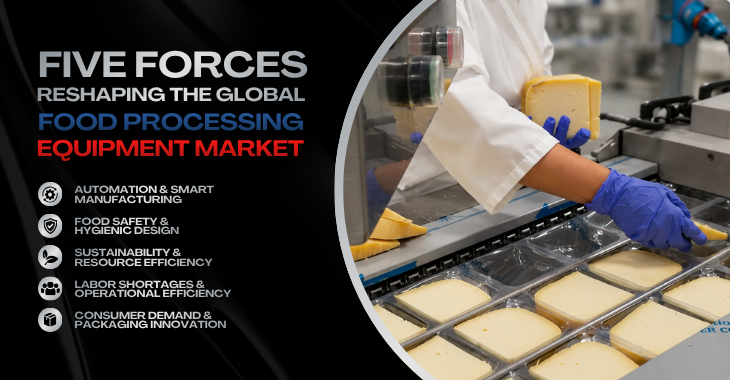
The global food industry is in the middle of one of the biggest shifts in its history. Automation, tightening food safety rules, labor shortages, and sustainability pressure are all converging at once and manufacturers are feeling it on the plant floor, not just in boardroom strategy decks.
For food processors, buying new equipment used to be a simple question: how much can it produce? Today it’s a much bigger one. Can this machine hold up under stricter hygiene standards? Will it cut labor dependency? Can it plug into a connected, data-driven production line? Modern equipment is no longer just a production tool it’s a strategic lever for profitability and long-term growth.
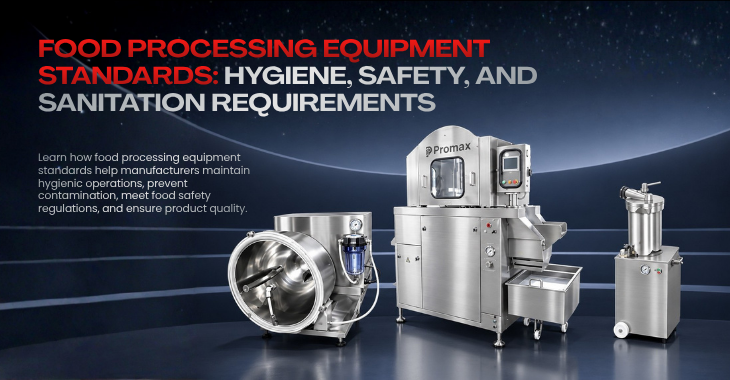
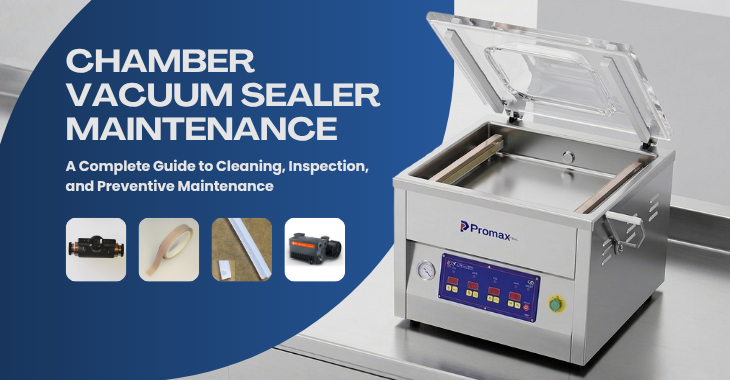
At Promarksvac, we sit at the center of this shift every day. From chamber vacuum sealers and thermoforming packaging systems to industrial vacuum tumblers and tray sealers, the equipment we build is designed to help processors of meat, seafood, dairy, bakery goods, ready meals, and frozen foods meet these new demands head-on.
This article is the first in a two-part series exploring the five forces redefining the food processing equipment market. Part 1 covers the force that’s changing plant floors the fastest: automation and smart manufacturing.
What Is the Food Processing Equipment Market?
The food processing equipment market represents the global industry responsible for designing, manufacturing, and supplying machinery used to prepare, process, package, preserve, and handle food products.
These machines allow food manufacturers to improve production efficiency, maintain consistent product quality, meet food safety regulations, reduce waste, and increase operational profitability.
Food processing equipment is used across almost every segment of the food industry, including:
- Meat processing
- Poultry processing
- Seafood processing
- Dairy production
- Bakery manufacturing
- Frozen foods
- Ready meals
- Fresh produce
- Beverage production
- Pet food manufacturing
Modern food processing equipment has evolved beyond basic machinery. Today’s systems combine automation, digital monitoring, advanced controls, and precision engineering to help manufacturers produce safer, higher-quality products at greater speed and scale.
As consumer demand for convenient, fresh, and sustainably packaged foods continues to increase, investment in advanced processing and packaging equipment is becoming essential for manufacturers of all sizes.
The Evolution of Food Processing Equipment
Food processing equipment has come a long way from simple mechanical machinery. Today’s systems are intelligent production platforms capable of automating complex processes with a level of precision that simply wasn’t possible a decade ago.
Modern facilities are now expected to deliver more than raw output higher efficiency, tighter product consistency, lower operating costs, stronger food safety, reduced energy use, better traceability, and less waste, all at once. That expectation is being driven by rising global food demand and consumers who want fresh, safe, convenient, and sustainably packaged products without paying a premium for it. Meeting that bar means rethinking not just what gets produced, but how the equipment behind it is chosen and configured.
Major Categories of Food Processing Equipment
Food manufacturing facilities rely on different types of equipment depending on their production requirements, product characteristics, and packaging goals.
Some of the most common categories include:
| Equipment Type | Primary Function | Common Applications |
|---|---|---|
| Chamber Vacuum Sealers | Remove air from packaging and create secure vacuum seals | Meat, seafood, cheese, dairy, ready meals |
| Thermoforming Packaging Machines | Automatically form, fill, seal, and cut packages | High-volume food production |
| Vacuum Tumblers | Improve marination, tenderness, and product consistency | Meat and poultry processing |
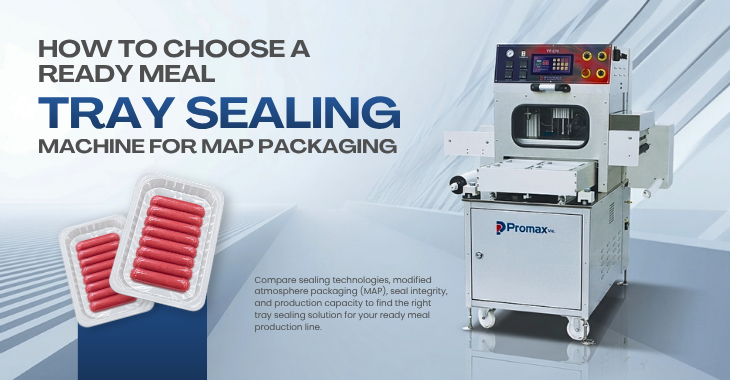
| Tray Sealers | Seal prepared food products in trays | Ready meals, fresh foods, poultry |
| Heat Sealing Equipment | Create reliable seals for flexible packaging | Food and non-food packaging |
| Vacuum Packaging Bags & Rollstock Film | Provide protective packaging solutions | Meat, seafood, dairy, frozen products |
Each equipment category plays an important role in improving food quality, extending shelf life, reducing waste, and helping manufacturers meet increasing production demands.
Force #1: Automation and Smart Manufacturing
Automation is arguably the single biggest force reshaping this market and it’s no longer the exclusive domain of large multinational food companies. As automated machinery becomes more accessible and affordable, small and mid-sized processors are adopting it just as aggressively.
Why It Matters
Manual processing is inherently inconsistent. People work at different speeds, get fatigued over a shift, and make small errors during repetitive tasks not because they’re careless, but because that’s how manual work behaves at scale.
Automated equipment removes that variability. A processor running an automated vacuum packaging line, for instance, can move hundreds or even thousands of units per hour while holding the same vacuum level and seal integrity on unit one thousand as it did on unit one. That kind of repeatability translates directly into faster production, higher throughput, lower labor costs, more consistent quality, less waste, and a safer working environment benefits that compound across every shift, not just the good ones.
Labor Shortages Are Accelerating the Shift
Recruiting and retaining workers for repetitive packaging roles has become genuinely difficult across many regions. Rather than expanding headcount to meet demand, more manufacturers are investing in machinery that can run reliably with a leaner crew enabling multiple shifts, higher daily output, and consistent quality, without the recruiting treadmill.
For a growing share of the industry, automation isn’t a competitive edge anymore. It’s table stakes.
Smart Equipment Is the New Baseline
Modern food processing systems increasingly ship with touchscreen controls, programmable recipes, real-time production monitoring, automatic diagnostics, maintenance alerts, and built-in quality tracking. That combination shifts operators from reacting to breakdowns to catching problems before they become expensive ones a small change in posture that can save a shift’s worth of output.
Automation Beyond Packaging
Automation now touches nearly every stage of the plant: meat preparation, vacuum tumbling, portioning, filling, tray sealing, thermoforming, conveyor integration, robotic handling, labeling, inspection, and palletizing. Integrated end-to-end, these systems let manufacturers maximize efficiency from raw material intake through the final sealed package.
Where Vacuum Packaging Fits In
Vacuum packaging is one of the clearest examples of automation paying off in a measurable way. Modern chamber vacuum sealers and thermoforming machines integrate directly into automated lines, giving processors consistent vacuum levels, reliable seals, less need for operator intervention, faster line speeds, and critically for perishables meaningfully longer shelf life. For processors handling meat, poultry, seafood, cheese, dairy, and ready meals, that shelf-life gain alone can change what markets and distribution windows are realistically reachable.
Industry 4.0 Is Turning Equipment Into Data
Connected equipment now lets manufacturers track utilization, downtime, energy consumption, efficiency, and quality metrics across an entire facility in real time. As digital transformation continues, this kind of connected visibility is moving from “nice to have” to baseline expectation the same way touchscreen controls did a decade ago.
What This Means for Equipment Buyers
Speed and capacity used to be the whole conversation. Now buyers are asking sharper questions: Does this integrate into an automated line? Will it scale with future growth? Does it reduce labor dependency? Does it improve traceability and lower operating cost? Can it flex across multiple product formats?
These questions are quietly rewriting how purchasing decisions get made across the industry and they’re a good filter for any processor evaluating new machinery today.
Manual Processing vs Automated Processing
The shift toward automation is changing how food manufacturers evaluate production equipment.
| Manual Processing | Automated Processing |
|---|---|
| Requires more operators | Reduces labor dependency |
| Production speed varies | Consistent production output |
| Higher risk of human error | Improved accuracy and repeatability |
| Difficult to scale quickly | Easier production expansion |
| More product variation | Consistent product quality |
| Higher long-term labor costs | Better operational efficiency |
For many food manufacturers, automation is no longer only about increasing production speed. It is about creating a more reliable, scalable, and profitable operation.
How Promarksvac Supports Automation
Promarksvac builds equipment around this exact shift helping processors gain efficiency without compromising packaging quality. Our portfolio includes industrial chamber vacuum sealers, thermoforming packaging machines, vacuum tumblers, tray sealing systems, heat sealing equipment, and vacuum packaging consumables all built for reliability and ease of operation as plants move toward fuller automation.
In Part 2, we’ll cover the next two forces reshaping the market: hygienic equipment design and food safety compliance, and sustainability and resource efficiency with practical examples from meat, dairy, seafood, bakery, and ready-meal processors.
Want to see how Promarksvac equipment fits into an automated production line? Talk to our team to explore the right solution for your facility.
Frequently Asked Questions
What is food processing equipment?
Food processing equipment includes machines used to prepare, process, package, preserve, and handle food products efficiently while maintaining quality and food safety.
Why is automation important in food processing?
Automation improves consistency, reduces labor costs, increases production speed, minimizes waste, and helps manufacturers meet strict food safety standards.
What industries use food processing equipment?
Food processing equipment is commonly used in:
- Meat processing
- Poultry
- Seafood
- Dairy
- Cheese
- Bakery
- Frozen foods
- Ready meals
- Fruits and vegetables
What are the advantages of vacuum packaging?
Vacuum packaging:
- Extends shelf life
- Reduces oxidation
- Prevents freezer burn
- Maintains freshness
- Improves product presentation
- Reduces food waste
What is a thermoforming packaging machine?
A thermoforming packaging machine automatically forms packaging from rollstock film, fills products, vacuum seals or gas flushes them, and cuts finished packages for high-volume production.
How do I choose the right food processing equipment?
Consider:
- Production capacity
- Product type
- Automation requirements
- Hygiene standards
- Available floor space
- Future expansion
- Maintenance support
Is automation suitable for small food manufacturers?
Yes. Modern automation solutions are available for small and medium-sized processors, helping reduce labor dependency, improve consistency, and increase production efficiency without requiring large-scale facilities.
How does Industry 4.0 affect food processing?
Industry 4.0 enables connected equipment that monitors production, tracks performance, predicts maintenance needs, and provides real-time operational data to improve efficiency and reduce downtime.