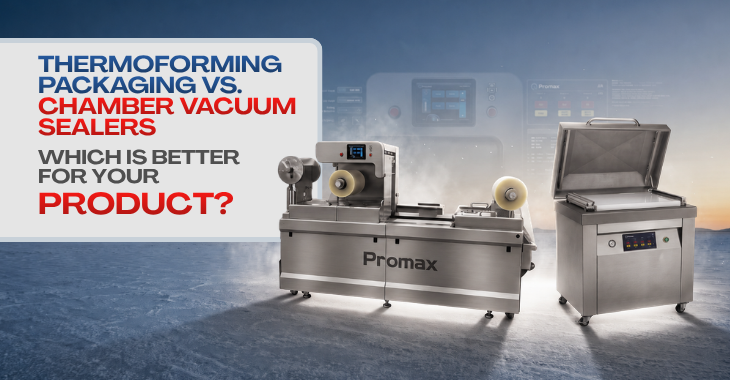
In the modern food processing industry, packaging plays a critical role in protecting product quality, extending shelf life, reducing waste, and improving operational efficiency. Whether you are processing fresh meat, seafood, ready meals, dairy products, or other products that require reliable preservation, choosing the right vacuum packaging technology can significantly impact your production.
Two of the most widely used solutions are thermoforming packaging machines and chamber vacuum sealers. While both technologies use vacuum sealing principles to remove air and protect products, they are designed for very different production environments.
A small butcher shop packaging a few hundred pounds of meat per day has different requirements than a large food manufacturer producing thousands of retail-ready packages every hour. Understanding the differences between these systems helps businesses invest in the right equipment for their current needs while planning for future growth.
What Is Thermoforming Packaging?
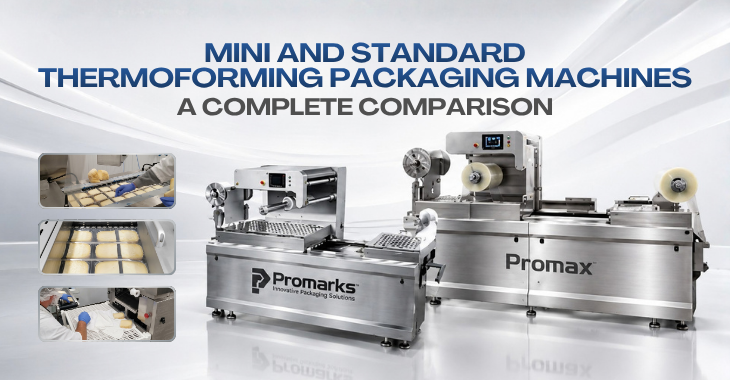
A thermoforming packaging machine, also known as a rollstock packaging machine, is an automated packaging system that creates vacuum packages directly from rolls of plastic film.
Unlike traditional vacuum sealing methods that require pre-made bags, thermoforming machines form the bottom portion of the package inside the machine. The product is placed into the formed cavity, vacuum or modified atmosphere packaging (MAP) is applied, and the package is sealed with a top film layer before being cut into individual units.
The entire process combines multiple steps into one continuous production line:
Film Feeding → Heating → Forming → Product Loading → Vacuum/Gas Flushing → Sealing → Cutting → Finished Package
This automation allows manufacturers to achieve high production speeds with consistent package quality.
How Thermoforming Packaging Helps Large-Scale Production
For companies producing thousands of packages daily, efficiency and consistency are essential. Manual packaging processes can create production bottlenecks, increase labor costs, and lead to inconsistent package quality.
Thermoforming packaging machines solve these challenges by automating the entire packaging cycle.
For example, a large meat processor producing retail packs of chicken breast may need to package different product portions every day. Instead of manually inserting products into pre-made pouches, a thermoforming system can continuously create packages, vacuum seal them, and deliver uniform products ready for distribution.
This provides several advantages:
Increased Production Capacity
Thermoforming machines are designed for continuous operation. Businesses can significantly increase output without adding additional packaging labor.
A processor that starts with one production line can later scale by increasing machine configurations, adding additional lanes, or upgrading to higher-output models as demand grows.
Lower Cost Per Package
Although thermoforming equipment requires a higher initial investment, the cost per package can become lower at high production volumes.
Because the machine forms packages from roll film, manufacturers can optimize material usage, reduce packaging waste, and improve operational efficiency.
For companies producing thousands of packages per day, these savings can make a significant difference.
Professional Retail Packaging
Retail customers expect packaging that is clean, consistent, and visually appealing.
Thermoforming allows businesses to create:
- Custom package shapes
- Portion-controlled packs
- Attractive retail displays
- Consistent product presentation
This makes it ideal for supermarkets, grocery chains, and export markets where packaging appearance influences purchasing decisions.
What Is a Chamber Vacuum Sealer?
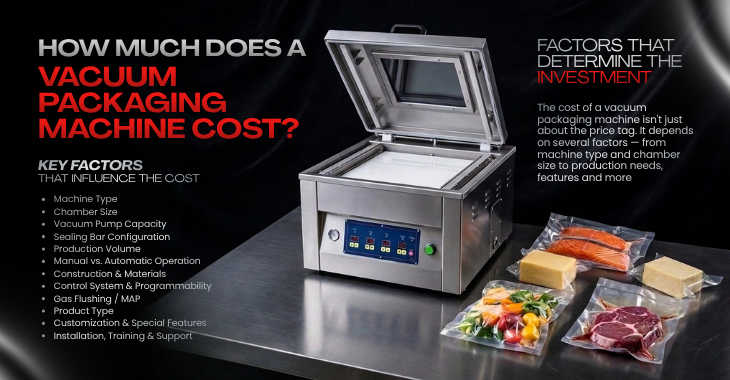
A chamber vacuum sealer is a commercial vacuum packaging machine that uses pre-made vacuum pouches.
The operator places the product inside a pouch, positions the bag inside the vacuum chamber, closes the lid, and the machine removes air before heat sealing the package.
The basic process is:
Product Placement → Vacuum Cycle → Heat Seal → Finished Package
Chamber vacuum sealers are widely used because they offer flexibility, reliability, and a lower investment compared to automated packaging lines.
How Chamber Vacuum Sealers Support Growing Businesses
Not every company needs thousands of packages per hour. Many businesses require a packaging solution that can handle different products, package sizes, and production schedules.
A chamber vacuum sealer provides that flexibility.
For example, a specialty butcher shop may package steaks, ground beef, sausages, and frozen products throughout the day. Each product may require a different bag size and packaging approach.
With a chamber vacuum sealer, operators can quickly switch between products without changing complex tooling or production settings.
Advantages of Chamber Vacuum Sealers
Flexible Product Packaging
Chamber sealers can package a wide variety of products, including:
- Fresh meat
- Seafood
- Cheese
- Frozen foods
- Marinated products
- Ready-to-cook meals
Businesses can easily adjust pouch sizes depending on customer requirements.
Lower Initial Investment
For companies entering vacuum packaging, a chamber sealer provides an affordable way to improve product preservation without investing in a complete automated packaging line.
This makes chamber machines popular among:
- Restaurants
- Butcher shops
- Farms
- Small food processors
- Supermarkets
Ideal for Multiple Product Types
Some businesses process many different products in smaller quantities.
A chamber vacuum sealer allows them to package different items throughout the day while maintaining professional sealing quality.
Thermoforming Packaging vs Chamber Vacuum Sealer: Scalability Comparison
Choosing between these technologies often depends on business growth plans.
Small Production Businesses
Recommended Solution: Chamber Vacuum Sealer
Businesses producing limited quantities usually benefit from the flexibility and affordability of chamber machines.
Example:
A local meat processor packages 300–500 pounds of beef daily for restaurants and retail customers. A commercial chamber vacuum sealer allows them to package different cuts efficiently without unnecessary investment.
Medium-Sized Food Producers
Recommended Solution: Advanced Chamber Systems or Entry-Level Thermoforming
Companies experiencing growth may need more speed but still require flexibility.
Example:
A seafood company processing several thousand pounds weekly may begin with multiple chamber vacuum sealers. As orders increase and packaging becomes standardized, upgrading to thermoforming can improve production efficiency.
Large Industrial Manufacturers
Recommended Solution: Thermoforming Packaging Machine
Large processors with consistent high-volume production benefit most from automated rollstock systems.
Example:
A national meat supplier producing thousands of retail packages every day can use thermoforming technology to automate packaging, reduce labor requirements, and maintain consistent quality across production lines.
Which Packaging Solution Is Best for Your Business?
The right choice depends on several factors:
Choose a Thermoforming Packaging Machine If:
✔ Your production volume is high
✔ You need automated packaging
✔ You supply supermarkets or retailers
✔ You require consistent package sizes
✔ You want to reduce labor dependency
✔ You are planning long-term production expansion
Best industries:
- Large meat processors
- Seafood exporters
- Ready meal manufacturers
- Dairy producers
- High-volume food factories
Choose a Chamber Vacuum Sealer If:
✔ Your production volume is low to medium
✔ You package multiple products
✔ You need flexibility
✔ You want lower startup costs
✔ You frequently change package sizes
Best industries:
- Restaurants
- Butcher shops
- Farms
- Specialty food producers
- Small and medium processors
Growing From Chamber Sealing to Thermoforming
Many successful food businesses do not start with a fully automated packaging line.
A common growth path is:
Stage 1: Chamber Vacuum Sealer
Businesses begin with flexible vacuum packaging equipment while building their customer base.
↓
Stage 2: Multiple Chamber Machines
As production increases, additional machines are added to handle higher demand.
↓
Stage 3: Thermoforming Packaging System
When production reaches industrial levels, businesses transition to automated rollstock packaging for greater speed and efficiency.
This approach allows companies to scale their packaging operation based on actual business growth.
Final Thoughts: Selecting the Right Vacuum Packaging Technology
Both thermoforming packaging machines and chamber vacuum sealers provide excellent vacuum packaging results, but they serve different business needs.
A chamber vacuum sealer is the ideal choice for businesses looking for flexibility, reliability, and cost-effective packaging. It provides an excellent solution for small and medium-sized operations that handle multiple products.
A thermoforming packaging machine is designed for businesses focused on automation, high-volume production, and long-term scalability. It delivers faster output, consistent packaging, and improved efficiency for industrial food manufacturers.
At Promarks, we help businesses select the right vacuum packaging technology based on their production requirements, product type, and future growth plans. Whether you need a reliable chamber vacuum sealer or an automated rollstock packaging solution, choosing the right equipment today can help build a more efficient packaging operation for tomorrow.