The Hidden Cost of Shipping Air
In today’s competitive logistics environment, businesses are under constant pressure to reduce operating costs while maximizing efficiency. Whether managing a textile manufacturing facility, a distribution center, a disaster relief warehouse, or a military supply operation, one challenge remains remarkably common: the cost of storing and transporting bulky products that contain a significant amount of empty space. While companies often focus on freight rates, labor costs, and inventory management systems, they frequently overlook one of the largest hidden expenses in their supply chain, shipping and storing air.
Soft goods such as uniforms, linens, blankets, sleeping bags, protective clothing, towels, and leather products naturally occupy a large amount of space because air becomes trapped between layers of fabric and within the material itself. Although these products may not weigh much, their volume quickly consumes valuable warehouse space and limits the number of units that can fit on a pallet, inside a truck trailer, or within an ocean shipping container.
As warehouse costs continue to rise and transportation budgets become increasingly scrutinized, companies are looking for smarter ways to maximize every square foot of storage and every cubic inch of shipping capacity. Industrial vacuum sealing has emerged as one of the most effective solutions for addressing these challenges. By removing trapped air and compressing products into compact packages, vacuum sealing significantly reduces volume while simultaneously protecting inventory from environmental threats such as moisture, mold, dust, insects, and water damage.
For organizations handling large quantities of textiles and soft goods, industrial vacuum packaging is no longer simply a method of preservation, it has become a strategic tool for improving warehouse utilization, lowering freight costs, and protecting valuable inventory throughout the supply chain.
Why Warehouse Space Matters More Than Ever
Warehouse space has become one of the most valuable assets in modern supply chain operations. Rising commercial real estate prices, increasing inventory levels, and the continued growth of e-commerce have created unprecedented pressure on storage facilities worldwide. Many businesses find themselves running out of space long before they reach their sales targets, forcing them to either lease additional facilities or invest in costly warehouse expansions.
Unfortunately, adding more warehouse space is rarely a quick or inexpensive solution. Leasing additional storage creates recurring expenses, while building new facilities requires significant capital investment and lengthy planning. In contrast, increasing storage density within existing facilities offers an immediate and cost-effective way to improve operational efficiency.
This is where industrial vacuum sealing delivers substantial value. By dramatically reducing the size of stored products, businesses can increase inventory capacity without increasing their physical footprint. More products can fit on each shelf, pallet, and storage rack, allowing companies to utilize their existing warehouse space more effectively while postponing or eliminating the need for expansion.
Understanding Vacuum Compression for Soft Goods
Unlike rigid products, textiles and soft goods are highly compressible. Fabrics naturally contain pockets of air between fibers, layers, and folds. When these products are packaged conventionally, a large percentage of the package volume consists of empty space rather than actual product.
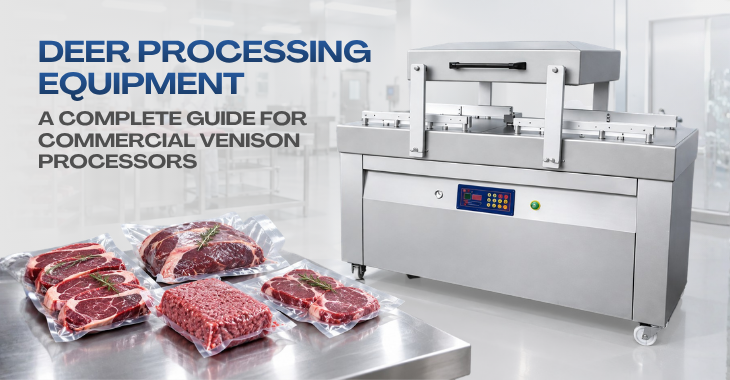
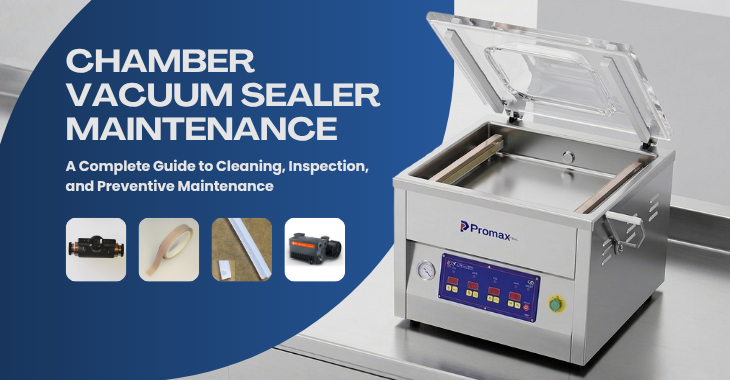
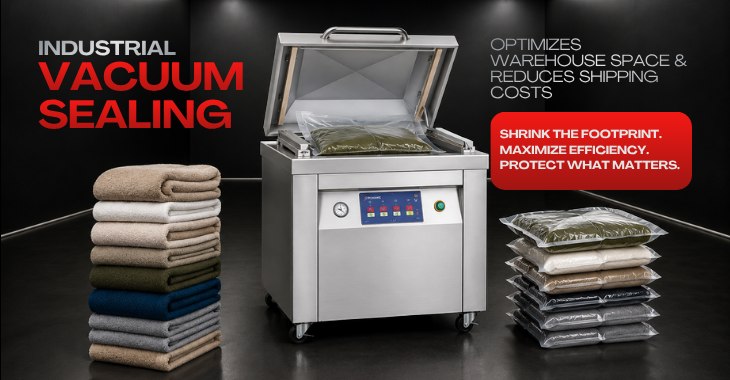
Industrial vacuum sealing removes this trapped air through a controlled vacuum process. Products are placed inside specialized vacuum pouches or bags and positioned within a chamber vacuum sealer. The machine extracts air from the package before creating a secure, airtight seal. Once the air is removed, the product compresses naturally, often resulting in dramatic reductions in package size.
The result is a compact, stable package that occupies significantly less storage and transportation space. Unlike manual compression methods, industrial vacuum sealing creates consistent results while maintaining package integrity throughout storage and shipping.
For organizations handling thousands of textile products, even modest reductions in package size can translate into significant savings across warehousing, transportation, and inventory management operations.
The Math Behind Space Savings
The most immediate benefit of vacuum sealing is volume reduction. Depending on the product type, material density, and packaging method, vacuum compression commonly reduces textile volume by 50% to 70%.
| Product Type | Average Volume Reduction |
|---|---|
| Cotton Uniforms | 55% |
| Hotel Linens | 60% |
| Towels | 55% |
| Protective Clothing | 60% |
| Sleeping Bags | 65% |
| Emergency Blankets | 70% |
| Textile Components | 50% |
These percentages may seem simple on paper, but their impact on warehouse operations can be extraordinary. Consider a distributor storing 10,000 folded uniforms. Without compression, those uniforms might require approximately 100 pallets of storage space. If vacuum sealing reduces volume by 60 percent, the same inventory could potentially fit within 40 pallets instead of 100.
That reduction represents 60 fewer pallets occupying warehouse space. It also means fewer storage racks, reduced forklift movement, simplified inventory management, and lower overall handling costs. When applied across multiple product categories and warehouse locations, these efficiencies can generate substantial annual savings.
Reducing Shipping Costs Through Volume Optimization
Transportation costs are increasingly influenced by dimensional weight pricing. Many freight carriers calculate shipping charges based on the amount of space a package occupies rather than its actual weight. As a result, lightweight but bulky products often become surprisingly expensive to transport.
Textile products are among the most affected by dimensional pricing models. Uniforms, linens, blankets, and protective garments may not weigh much individually, but they consume large amounts of trailer and container space when packaged conventionally.
Vacuum sealing directly addresses this issue by reducing package dimensions before shipment. When products occupy less space, more units can fit on each pallet and more pallets can fit inside each truck or shipping container. This improved utilization lowers transportation costs and increases overall shipping efficiency.
For companies shipping internationally, the benefits become even more significant. Ocean freight containers often reach their volume capacity long before reaching their maximum weight limit. Compressing products allows businesses to maximize container utilization, reducing the number of containers required and lowering overall freight expenses.
Protecting Inventory During Long-Term Storage
Space savings alone make vacuum sealing attractive, but the technology offers an equally important advantage: superior inventory protection.
Warehouses can expose products to a variety of environmental risks over time. Moisture, dust, insects, mold, mildew, and water intrusion all have the potential to damage valuable inventory. Soft goods are particularly vulnerable because fabrics readily absorb moisture and can deteriorate when exposed to unfavorable storage conditions.
Industrial vacuum packaging creates a sealed barrier between the product and the surrounding environment. This protective layer helps preserve product quality throughout extended storage periods, ensuring that inventory remains in optimal condition until it reaches the end user.
For organizations maintaining emergency reserves, military stockpiles, or seasonal inventory, this protection can significantly reduce losses and improve long-term product reliability.
Preventing Mold, Mildew, and Moisture Damage
Moisture remains one of the greatest threats to textile products. Even relatively small amounts of humidity can lead to mold growth, mildew formation, unpleasant odors, and fabric degradation. These issues are especially problematic in regions with high humidity levels or during long-term storage.
Vacuum-sealed packaging helps minimize exposure to environmental moisture, creating a more stable storage environment for sensitive products. This protection is particularly valuable for hospital linens, hotel bedding, uniforms, and emergency response supplies that may remain in storage for months or even years before use.
By reducing the risk of moisture-related damage, businesses can preserve product quality, reduce waste, and avoid costly inventory replacement expenses.
Safeguarding Products During Ocean Transit
International shipping presents unique environmental challenges. Cargo transported across oceans may encounter temperature fluctuations, condensation, high humidity levels, and prolonged transit times. These conditions can compromise product quality if adequate protective packaging is not used.
Vacuum packaging provides an effective barrier against many of these risks. By sealing products within a protective package, companies can better safeguard textiles and soft goods throughout lengthy international journeys. This added protection reduces the likelihood of damage claims, product returns, and customer dissatisfaction.
For exporters of uniforms, textiles, bedding products, and premium leather goods, vacuum sealing offers peace of mind that products will arrive in the same condition in which they were shipped.
Real-World Applications Across Industries
The benefits of industrial vacuum sealing extend across a wide range of industries.
Uniform suppliers frequently maintain large inventories in multiple sizes, styles, and colors. Vacuum packaging allows these companies to maximize storage efficiency while protecting garments from dust and environmental exposure.
Disaster relief agencies often store thousands of blankets, sleeping bags, protective garments, and emergency supplies in preparation for natural disasters and humanitarian crises. Compressing these products enables organizations to maintain larger emergency reserves within the same warehouse footprint while ensuring that critical supplies remain protected and ready for deployment.
Military and defense organizations also benefit significantly from vacuum packaging. Uniforms, field gear, sleeping systems, and protective equipment frequently require long-term storage before deployment. Vacuum sealing helps preserve inventory condition while reducing transportation and storage requirements.
Luxury leather goods manufacturers use vacuum packaging to protect premium products from moisture, dust, and contamination during warehousing and export operations. The reduced package size also lowers shipping costs while maintaining product quality.
Similarly, hotels, resorts, healthcare facilities, and institutional laundries use vacuum packaging to optimize storage space for linens, towels, and bedding while maintaining cleanliness and inventory organization.
Sustainability Benefits of Vacuum Compression
As businesses increasingly focus on sustainability initiatives, vacuum packaging provides environmental advantages alongside its operational benefits.
Reducing package volume allows more products to fit within existing transportation resources. Fewer truckloads, fewer shipping containers, and fewer warehouse expansions translate directly into lower fuel consumption and reduced carbon emissions.
Additionally, improved warehouse utilization allows companies to maximize existing infrastructure rather than constructing new facilities. This contributes to more sustainable resource management while delivering measurable cost savings.
For organizations seeking both environmental and financial benefits, vacuum compression represents a practical solution that aligns operational efficiency with sustainability goals.
The Promarks Solution for Large-Scale Soft Goods Packaging
Successfully implementing vacuum packaging on an industrial scale requires equipment capable of delivering consistent performance in demanding production environments. This is where Promarks provides significant value.
Promarks has established itself as a trusted manufacturer of industrial vacuum packaging equipment designed to meet the needs of commercial operations across multiple industries. For companies handling textiles, uniforms, emergency supplies, bedding products, leather goods, and other bulky soft goods, reliable vacuum packaging equipment is essential for achieving maximum space savings and inventory protection.
Promarks industrial chamber vacuum sealers are engineered to provide powerful vacuum performance, dependable seal integrity, and high production throughput. Their robust stainless-steel construction ensures durability in continuous-use environments, while advanced vacuum technology delivers consistent compression results across a wide range of product types.
For businesses packaging oversized items such as blankets, sleeping bags, protective clothing, and specialty textile products, Promarks can provide large-chamber and custom-configured vacuum sealing solutions designed to accommodate unique packaging requirements. These systems enable organizations to compress bulky products efficiently while maintaining package quality and long-term protection.
Whether supporting logistics providers, textile manufacturers, military contractors, hospitality suppliers, disaster preparedness agencies, or warehousing operations, Promarks equipment helps organizations maximize storage capacity, reduce shipping costs, and protect valuable inventory throughout the supply chain.
Conclusion
As supply chains continue to evolve, businesses can no longer afford to waste valuable warehouse space and transportation capacity. The practice of storing and shipping air-filled packages creates unnecessary expenses that directly impact profitability and operational efficiency.
Industrial vacuum sealing offers a proven solution by dramatically reducing product volume while simultaneously protecting inventory from environmental damage. From uniforms and linens to emergency blankets and military gear, vacuum-compressed packaging enables organizations to store more products, ship more efficiently, and preserve inventory quality throughout long-term storage and transit.
The benefits extend beyond simple space savings. Reduced freight costs, improved warehouse utilization, enhanced inventory protection, and stronger sustainability performance all contribute to a more resilient and cost-effective supply chain.
For organizations seeking to optimize logistics operations and maximize every square foot of storage space, industrial vacuum sealing represents a strategic investment with measurable long-term returns. With advanced vacuum packaging solutions from Promarks, businesses can transform bulky inventory into compact, protected assets and gain a significant competitive advantage in today’s increasingly demanding marketplace.