Food packaging has changed significantly over the years. What was once considered a simple process of wrapping, sealing, and protecting products has become an important part of food quality management, safety, distribution, and customer communication. Food manufacturers are no longer looking only for packaging that keeps products contained. They want solutions that help preserve product quality, provide useful information, improve traceability, and support more efficient supply chains.
This shift has brought smart packaging into the spotlight.
Smart packaging is becoming an important development in the food industry because it connects traditional packaging with modern technologies such as sensors, intelligent labels, QR codes, RFID tags, and digital monitoring systems. These technologies give manufacturers, distributors, retailers, and consumers more information about the products they handle.
But what does smart packaging actually look like in practice? Is it simply packaging with a QR code, or does it involve more advanced technology? And how does it relate to established industrial packaging methods such as vacuum packaging?
Understanding these questions is important for food manufacturers considering their next investment in packaging technology. Smart packaging is not just about adding technology to a package. It is about making packaging more useful throughout a product’s journey, from the processing facility to the consumer’s refrigerator.
What Is Smart Packaging?
Smart packaging refers to packaging solutions that use technology to monitor, communicate, or actively influence the condition of a packaged product. Unlike conventional packaging, which primarily provides physical protection, smart packaging can provide additional information about product quality, freshness, storage conditions, and supply chain movement.
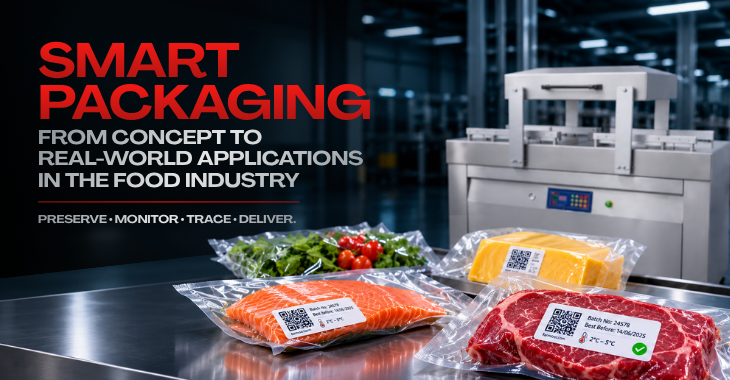
For example, a conventional food package might display the product name, ingredients, manufacturing date, and expiration date. A smart packaging solution may go further by using a temperature indicator to show whether a product has experienced unsuitable storage conditions or a QR code that allows customers to access information about its origin, ingredients, and production history.
Some packaging technologies can even interact with the environment inside the package. Oxygen absorbers, moisture regulators, and antimicrobial materials are examples of technologies designed to help maintain product quality.
Smart packaging is particularly relevant to industries where product condition, handling, and traceability are important. Meat processing, seafood production, dairy manufacturing, ready-to-eat meals, pharmaceuticals, and fresh produce are among the sectors where these technologies can provide practical benefits.
It is important to understand that not every advanced packaging solution is automatically smart packaging. A vacuum packaging machine, for example, performs an important preservation function, but it does not become an intelligent packaging system simply because it removes air from a package. Instead, vacuum packaging can complement smart packaging technologies by providing a suitable packaging environment that works alongside monitoring and traceability solutions.
Understanding the Two Main Types of Smart Packaging
Smart packaging is generally discussed through two major categories: active packaging and intelligent packaging. Although these terms are sometimes used interchangeably, they describe different functions.
1. Active Packaging: Helping Maintain Product Quality
Active packaging interacts with the product or its surrounding environment to help maintain or improve product quality. Instead of simply creating a physical barrier, it uses specific materials or components to influence conditions inside the package.
Oxygen absorbers are a common example. Certain foods are sensitive to oxygen exposure, which can contribute to oxidation, changes in color, and deterioration of quality. Oxygen-absorbing components can help reduce oxygen levels inside compatible packaging systems.
Moisture-control materials are another example. Some products are sensitive to excess moisture, while others require a controlled moisture environment. Packaging materials designed to manage moisture can help maintain product quality during storage and transportation.
Antimicrobial packaging is another developing area. Certain packaging materials incorporate substances intended to inhibit the growth of specific microorganisms. Their effectiveness depends on the material, food product, regulatory requirements, and intended application.
For food manufacturers, active packaging can provide another layer of product protection. However, it should not replace appropriate food handling, sanitation, processing controls, or temperature management.
2. Intelligent Packaging: Communicating Product Information
Intelligent packaging focuses on monitoring and communicating information about the condition, history, or location of a packaged product.
A simple example is a time-temperature indicator. This type of indicator can provide information about temperature exposure over time. It can help businesses identify whether a temperature-sensitive product has experienced conditions that may affect its quality.
Freshness indicators are another application. Depending on the technology, these indicators may respond to changes associated with product deterioration, such as changes in gases or other chemical conditions inside the package.
QR codes and RFID tags also contribute to intelligent packaging systems. They can connect physical products with digital information, making it easier for manufacturers, distributors, retailers, and consumers to access product details.
For example, a customer purchasing packaged meat may scan a QR code to view information about its origin, processing facility, batch number, or handling recommendations. A distributor may use RFID technology to identify and track products as they move through a warehouse.
The main purpose of intelligent packaging is to make product information more accessible and useful.
What Does Smart Packaging Look Like in Practice?
Smart packaging becomes easier to understand when we look at how it is used in different food industries. Its applications are not limited to one product category. Different technologies can address different challenges depending on the food being packaged, its storage requirements, and its distribution journey.
Smart Packaging in Meat and Poultry Processing
Meat and poultry products require careful handling throughout processing, storage, and distribution. Temperature control, packaging integrity, product identification, and traceability all play important roles in maintaining quality and meeting food safety requirements.
Consider a meat processing facility packaging fresh beef for distribution to supermarkets. The facility may use vacuum packaging to reduce the amount of air remaining inside the package. Appropriate vacuum packaging materials can help protect the product from external exposure and support quality preservation when combined with suitable processing and refrigerated storage conditions.
The package may also carry a QR code or other digital identifier connected to the product’s batch information. This information can help the business identify the processing date, production batch, facility, and other relevant details.
For temperature-sensitive distribution, time-temperature indicators or connected monitoring devices may provide additional information about storage conditions. These tools can help businesses identify potential problems during transportation or warehousing.
The combination of suitable packaging materials, vacuum packaging, traceability, and temperature monitoring creates a more informed packaging and distribution process.
For meat processors handling large production volumes, the equipment used to package products is equally important. Consistent sealing, reliable machine operation, and appropriate packaging cycles help support product quality and production efficiency.
Smart Packaging in Seafood Processing
Seafood is another industry where packaging and distribution conditions are particularly important. Fish and other seafood products are highly perishable, making temperature management, hygienic processing, and appropriate packaging essential.
A seafood processing company supplying restaurants and supermarkets may use vacuum packaging to package individual fish portions, fillets, or other seafood products. Suitable packaging materials help protect the product during refrigerated or frozen storage, depending on the application.
Intelligent packaging can add another level of information. Temperature indicators may help monitor exposure during distribution, while QR codes can provide information about product origin, processing details, batch identification, and handling recommendations.
Traceability is particularly valuable in seafood supply chains because products may pass through several stages before reaching their final destination. Digital identification can help businesses connect products with relevant records and improve visibility across the supply chain.
For seafood manufacturers, the goal is not simply to seal a package. It is to create a packaging process that supports product protection, accurate identification, and better supply chain management.
Smart Packaging in Dairy and Cheese Manufacturing
Dairy products present different packaging challenges depending on their composition, moisture content, storage requirements, and intended shelf life.
Cheese is a good example of where packaging technology can make a difference. Exposure to oxygen and unsuitable storage conditions can affect the quality of certain cheese varieties. Vacuum packaging is commonly used for cheese blocks and portions because it reduces the amount of air inside the package.
Smart packaging technologies can complement this process. Digital product identifiers can provide batch information, manufacturing details, and traceability records. Temperature monitoring solutions may also support the management of refrigerated distribution.
For manufacturers producing different cheese varieties, packaging requirements can vary considerably. A hard cheese block, sliced cheese, and a soft cheese product may require different materials and packaging approaches.
The choice of packaging technology should therefore be based on the product itself rather than assuming that one solution works for every dairy application.
Smart Packaging for Ready-to-Eat Meals
The demand for convenient food products has encouraged manufacturers to expand their ready-to-eat and prepared meal offerings. These products often require carefully controlled processing, packaging, and storage conditions.
A company producing prepared meals may use vacuum packaging for selected food components or products where the process is suitable. Packaging can help protect products from external exposure and support refrigerated or frozen distribution.
Smart packaging technologies can improve the information available to both manufacturers and consumers. QR codes can provide ingredient information, allergen details, preparation instructions, and product traceability information.
Temperature-monitoring technologies may also be useful for products that require controlled cold-chain handling. This is particularly relevant when products move through several distribution points before reaching retailers or customers.
For ready-to-eat food manufacturers, smart packaging is not a substitute for validated food safety processes. It is an additional tool that can support better product information and handling decisions.
Smart Packaging in Fresh Produce
Fresh fruits and vegetables have different packaging requirements from meat, seafood, and dairy products. Their quality can be affected by moisture, respiration, temperature, and exposure to gases.
Some fresh produce products continue to respire after harvesting. Packaging designed for these products may use modified atmosphere technology to manage the gas composition inside the package. This is different from conventional vacuum packaging and must be designed around the specific produce and its respiration characteristics.
Smart packaging can support this process through freshness indicators, gas-monitoring technologies, and digital traceability systems.
For example, a fresh produce distributor may use digital labels to identify the farm, harvesting date, packing facility, and batch information. Retailers can use this information to improve inventory management and product rotation.
The result is a packaging system that supports both product management and supply chain visibility.
The Role of QR Codes, RFID, and Digital Traceability
One of the most visible developments in smart packaging is the connection between physical products and digital information.
QR codes are among the simplest ways to introduce digital functionality into food packaging. They can be printed directly on labels or packaging materials and scanned using a smartphone.
A food manufacturer can use a QR code to provide customers with information about ingredients, nutritional values, production facilities, sourcing, and product handling. Businesses can also use these codes to connect individual products or batches with digital records.
RFID technology offers another approach. Radio-frequency identification uses tags and readers to identify products without requiring direct visual scanning of each individual label. This can be useful in warehouses, distribution centers, and inventory management systems.
For example, a food distributor handling thousands of packaged products may use RFID technology to improve product identification and inventory visibility.
Digital traceability systems bring these technologies together by connecting product identification with manufacturing and distribution records.
For manufacturers, this can make it easier to locate specific batches, investigate quality concerns, and respond to product recalls when necessary.
However, the technology only works as well as the information behind it. Accurate data collection, reliable identification, and proper integration with business systems are essential.
Where Does Vacuum Packaging Fit Into Smart Packaging?
Vacuum packaging has been an established food preservation method for many years, but it continues to play an important role in modern industrial packaging operations.
The process involves removing air from a package before sealing it. By reducing the amount of oxygen present, vacuum packaging can help limit oxidation and protect suitable products from certain forms of deterioration.
This makes it useful in meat processing, seafood packaging, cheese production, prepared foods, and several other food applications.
Although vacuum packaging is not intelligent packaging by itself, it can work alongside smart packaging technologies.
Consider a food manufacturer producing vacuum-packed meat portions for supermarket distribution. The company may use an industrial vacuum packaging machine to package the product, apply a QR code for batch identification, and use temperature monitoring during refrigerated transportation.
Each part of the process serves a different purpose.
The vacuum packaging equipment helps create a consistent sealed package. The packaging material provides the required barrier properties. The QR code connects the product to digital information. Temperature monitoring provides additional insight into storage and transportation conditions.
Together, these technologies contribute to a more controlled and transparent packaging operation.
For food manufacturers, this distinction is important. Investing in smart packaging does not necessarily mean replacing existing packaging equipment. In many cases, businesses can improve their packaging operations by integrating digital identification and monitoring technologies with established industrial packaging processes.
How Industrial Vacuum Packaging Equipment Supports Modern Food Production
As food manufacturers expand production and serve larger distribution networks, packaging consistency becomes increasingly important. A packaging system must be capable of handling the required production volume while maintaining reliable sealing performance and accommodating the characteristics of the product being packaged.
Industrial vacuum packaging machines are designed to support these requirements.
For example, chamber vacuum packaging machines are used in many food processing environments because they can accommodate different product sizes and packaging applications. Depending on the machine configuration, businesses can package meat portions, seafood, cheese, prepared foods, and other suitable products.
For higher-volume production, automated and rollstock packaging systems can help manufacturers manage repetitive packaging operations with greater consistency. These systems can be configured around production requirements, product dimensions, packaging materials, and operating conditions.
The machine selection process should consider more than its initial purchase price. Production capacity, cycle time, chamber dimensions, sealing requirements, vacuum pump performance, maintenance needs, and operator training all influence long-term performance.
This is particularly relevant for companies planning to introduce new packaging formats or expand their product lines.
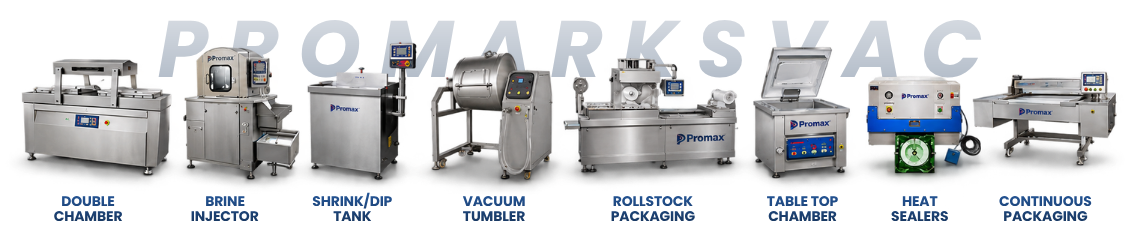
Promarksvac provides commercial and industrial vacuum packaging equipment for food processing operations. Its range includes chamber vacuum packaging machines and automated packaging solutions designed for different production requirements.
For manufacturers evaluating smart packaging initiatives, reliable physical packaging equipment remains an important part of the overall system. Digital labels and monitoring technologies can provide useful information, but they depend on a well-managed packaging process to ensure that products are properly prepared and sealed.
The right combination of packaging machinery, suitable materials, and digital monitoring can help businesses build more efficient packaging operations.
The Business Benefits of Smart Packaging
Smart packaging is attracting attention because it can address several practical challenges faced by food manufacturers. However, the benefits depend on choosing technologies that solve actual operational problems.
Better Product Traceability
Traceability is one of the most important advantages of connected packaging systems. Digital identifiers can link products to manufacturing records, batch information, and distribution details.
This can help businesses investigate quality concerns, identify affected products, and manage recalls more efficiently.
Improved Visibility Across the Supply Chain
Food products often travel through several stages before reaching consumers. Smart labels, RFID systems, and connected monitoring solutions can provide additional visibility into product movement and handling.
This information can help manufacturers and distributors make more informed decisions about inventory, transportation, and product management.
More Informed Quality Management
Temperature indicators and freshness-monitoring technologies can provide information that is not available from a conventional printed label.
These tools may help businesses identify potential storage or handling problems. However, they should complement established quality assurance procedures rather than replace them.
Better Customer Communication
Consumers increasingly want to understand where their food comes from, what it contains, and how it should be stored.
Digital packaging features can make this information easier to access. A QR code can connect customers to product details, sourcing information, preparation instructions, and other relevant resources.
More Efficient Inventory Management
Digital identification can help businesses improve product tracking and stock visibility. This can support better warehouse organization, stock rotation, and distribution planning.
When implemented correctly, these systems can also help reduce avoidable inventory errors and improve operational coordination.
Supporting Food Waste Reduction
Smart packaging may contribute to food waste reduction by providing better information about product condition, handling, and distribution.
For example, temperature-monitoring solutions can help identify products that may have experienced unsuitable storage conditions. Better traceability can also help businesses manage stock more effectively.
However, smart packaging does not automatically prevent food waste. Its effectiveness depends on how manufacturers and distributors use the information it provides.
Challenges of Implementing Smart Packaging
Despite its potential, smart packaging is not without challenges. Food manufacturers need to consider the practical requirements of introducing new technologies into existing production and distribution operations.
One of the biggest considerations is the initial investment. Intelligent labels, sensors, RFID infrastructure, and connected monitoring systems can add costs to packaging operations. Businesses need to evaluate whether the expected benefits justify the investment, particularly when operating with large production volumes.
Compatibility is another important factor. A manufacturer may already have established packaging machinery, labeling systems, inventory software, and quality management procedures. Introducing new technology requires these systems to work together without creating unnecessary production delays or operational complexity.
Food-contact compliance also needs careful attention. Packaging materials and components used in direct contact with food must meet the applicable regulatory requirements in the markets where the products are manufactured and sold. Manufacturers must evaluate the safety and suitability of new materials before introducing them into production.
Data accuracy is equally important. A temperature sensor that provides unreliable readings or a digital traceability system containing incomplete information can create more problems than it solves. Businesses need appropriate procedures for maintaining equipment, checking data, and training employees.
For these reasons, implementing smart packaging should be approached as a business improvement project rather than simply purchasing the latest packaging technology.
What Is the Future of Smart Packaging?
Smart packaging is likely to become increasingly connected with automation, artificial intelligence, and digital supply chain management. As these technologies develop, food manufacturers may have access to more detailed information about their products and how they are handled.
Artificial intelligence, for example, can help analyze information collected through production monitoring and supply chain systems. Manufacturers may use this data to identify patterns, investigate recurring quality issues, and improve operational planning.
Internet of Things (IoT) technology is another important development. Connected sensors can transmit information about environmental conditions, equipment performance, or product handling to centralized monitoring platforms. This can give businesses greater visibility into their operations.
Digital product passports and more advanced traceability systems may also become increasingly relevant as regulations and consumer expectations around product information evolve. These systems can help connect products with information about their origin, materials, processing, and supply chain journey.
Another area of development is the integration of sustainable materials with active and intelligent packaging. Researchers and packaging manufacturers are exploring materials that provide the necessary protective properties while addressing environmental concerns.
However, the future of smart packaging will not be defined by technology alone. Manufacturers will need solutions that are practical, reliable, affordable, and compatible with their production requirements.
How to Choose the Right Packaging Technology for Your Food Business
Not every food manufacturer needs the same smart packaging solution. A seafood processor has different requirements from a cheese manufacturer, a meat packaging facility, or a company producing ready-to-eat meals.
The first step is to identify the actual packaging challenge. Is the main concern product preservation, temperature monitoring, traceability, packaging consistency, or production efficiency? Understanding the problem makes it easier to select technology that delivers measurable value.
Product characteristics should also influence the decision. Moisture content, oxygen sensitivity, storage temperature, product dimensions, and expected distribution conditions all affect packaging requirements.
Manufacturers should then evaluate the available packaging formats and materials. Vacuum packaging, modified atmosphere packaging (MAP), skin packaging, and conventional sealing methods serve different purposes. Selecting the correct approach requires an understanding of the product and its intended storage conditions.
Production capacity is another important consideration. A small food processing operation may have different equipment requirements from a large manufacturing facility handling thousands of packages per shift.
Before purchasing new machinery, businesses should consider the required production output, machine cycle times, chamber dimensions, sealing capabilities, vacuum pump specifications, maintenance requirements, and availability of technical support.
It is also worth considering how new technology will integrate with existing operations. For example, a business may be able to introduce QR-code-based traceability without replacing its vacuum packaging equipment. In another situation, an increase in production volume may justify upgrading to an automated packaging system.
The objective should be to develop a packaging process that supports product quality, operational efficiency, and long-term business requirements.
Bringing Smart Packaging Concepts Into Real-World Production
Smart packaging is changing the way food manufacturers approach packaging, preservation, and product information. Technologies such as intelligent labels, temperature indicators, RFID tags, and digital traceability systems are making it possible to monitor products and access useful information throughout the supply chain.
However, the success of these technologies still depends on the fundamentals of food production. Proper handling, suitable packaging materials, reliable sealing, controlled storage conditions, and consistent manufacturing processes remain essential.
Vacuum packaging continues to have an important place in this changing environment. While it is not an intelligent packaging technology on its own, it provides a practical packaging method that can work alongside digital monitoring and traceability solutions.
For food processors looking to modernize their packaging operations, the right approach is to evaluate both the physical packaging process and the technologies that can improve product monitoring and information management.
Promarksvac offers commercial and industrial vacuum packaging machines designed for food processing businesses with different production requirements. Whether a company is packaging meat, seafood, dairy products, or prepared foods, selecting suitable equipment is an important step toward building a consistent and efficient packaging operation.
If your business is evaluating new packaging equipment or looking to improve its existing packaging process, explore the available solutions from Promarksvac.
Ready to discuss your packaging requirements? Contact the Promarksvac team to explore equipment options for your food processing operation.
Request a Quote from Promarksvac
Frequently Asked Questions About Smart Packaging
1. What is smart packaging in the food industry?
Smart packaging uses technologies such as sensors, intelligent labels, QR codes, and RFID tags to monitor, communicate, or improve information about packaged food products. It can support product traceability, quality monitoring, storage management, and customer communication.
2. What are the two main types of smart packaging?
The two main categories are active packaging and intelligent packaging. Active packaging interacts with the product or its environment to help maintain quality, while intelligent packaging monitors and communicates information about product condition, handling, or location.
3. How does smart packaging improve food safety?
Smart packaging can support food safety management by providing information about temperature exposure, product identification, and traceability. These technologies can help businesses investigate handling issues and identify affected product batches. They do not replace sanitation, food safety controls, or proper storage procedures.
4. Can vacuum packaging be considered smart packaging?
Vacuum packaging is not inherently smart packaging. It is a packaging method that removes air before sealing a package. However, it can complement intelligent packaging solutions such as temperature indicators, QR codes, and digital traceability systems.
5. What industries use smart packaging?
Smart packaging has applications in meat processing, seafood, dairy, fresh produce, ready-to-eat meals, pharmaceuticals, and other industries where product quality, monitoring, and traceability are important.
6. What is the difference between active packaging and intelligent packaging?
Active packaging interacts with the product or its environment to help maintain quality, such as through oxygen absorbers or moisture regulators. Intelligent packaging monitors and communicates information, such as temperature exposure or product identification.
7. Does smart packaging help reduce food waste?
It can help reduce avoidable waste by improving product traceability, storage monitoring, inventory management, and handling decisions. The actual impact depends on the technology used and how effectively businesses act on the information collected.
8. Is smart packaging expensive to implement?
Costs vary depending on the technology, production volume, packaging materials, and infrastructure required. Simple QR-code-based systems may be relatively inexpensive, while connected sensors, RFID infrastructure, and automated monitoring systems can require a larger investment.
9. What is the role of automation in smart packaging?
Automation helps manufacturers maintain consistent packaging operations, manage higher production volumes, and integrate packaging processes with digital production and inventory systems. Automated vacuum packaging equipment can complement smart packaging initiatives by supporting reliable physical packaging operations.
10. What should food manufacturers consider before adopting smart packaging?
Manufacturers should evaluate their product requirements, packaging format, production capacity, storage conditions, traceability needs, regulatory requirements, implementation costs, and compatibility with existing equipment.