A Step-by-Step Guide to Validating Seal Temperature and Dwell Time for USDA Compliance in Large-Scale Packaging Lines
In modern meat processing operations, packaging is not simply the final stage of production it is a critical food safety control point that determines whether a product remains safe, stable, and compliant throughout its shelf life. As production volumes increase and packaging lines operate at continuous high speed, the ability to maintain consistent seal integrity becomes one of the most important factors in ensuring USDA compliance and preventing costly product failures.
Seal integrity is the final barrier between a processed meat product and the external environment. Even when all upstream processes such as trimming, seasoning, cooking, or chilling are performed correctly, a weak or inconsistent seal can compromise the entire product. For this reason, HACCP systems identify packaging as a Critical Control Point where strict monitoring, validation, and documentation are required.
However, in many high-volume meat plants, the challenge is not awareness it is consistency. Operators are often focused on maintaining production speed, managing machine flow, and minimizing downtime. As a result, HACCP logs are sometimes treated as secondary documentation rather than an active control system. This creates a gap between actual machine performance and recorded compliance data, which becomes a major issue during audits.
To address this challenge, modern meat processing facilities are increasingly adopting structured approaches to HACCP log standardization, specifically focusing on seal temperature and dwell time validation. These two parameters form the foundation of reliable vacuum sealing and must be carefully controlled to ensure consistent results across all production shifts.
Why Seal Integrity is the Most Critical Control Point in Packaging
Seal integrity directly determines whether a packaged meat product remains protected from oxygen exposure, microbial contamination, and moisture loss. In vacuum packaging systems, the seal functions as a hermetic barrier that maintains the internal environment of the package. If this barrier fails, the product becomes vulnerable to spoilage regardless of how well it was processed earlier in the production line.
Unlike other stages of meat processing, seal failure is irreversible once the product leaves the packaging line. There is no corrective action that can restore a compromised seal without reprocessing the product entirely. This is why regulatory frameworks such as USDA HACCP place packaging under strict control requirements.
In practical terms, seal integrity is influenced by multiple variables including temperature stability, dwell time consistency, pressure distribution, packaging material properties, and machine condition. Even minor fluctuations in any of these factors can lead to weak seals, channel leaks, or delayed seal failure during storage or transportation.
Because of this complexity, high-volume meat plants must treat sealing as a controlled engineering process rather than a simple machine function.
The Role of HACCP in Seal Monitoring and Compliance
HACCP systems are designed to identify hazards, define control points, and ensure that critical parameters remain within safe operating limits. In packaging operations, seal integrity is classified as a Critical Control Point because it directly affects product safety.
For seal monitoring to be effective, acceptable operating ranges for temperature, dwell time, and pressure must first be established through validation testing. These limits are not theoretical they are determined through controlled production trials that simulate real operating conditions.
Once these parameters are validated, the HACCP system requires continuous monitoring and documentation to ensure that production remains within defined limits. Any deviation from these limits must be recorded along with corrective actions, including product isolation, machine adjustment, and root cause analysis.
Regulatory auditors evaluate not only whether these records exist but also whether they accurately reflect actual production conditions. This makes consistency and traceability essential components of any HACCP documentation system.
Challenges of HACCP Logging in High-Volume Production Environments
In high-speed meat processing plants, packaging lines often operate continuously for long production cycles. During these operations, operators are responsible for managing multiple tasks simultaneously, including product flow, machine monitoring, material handling, and quality checks.
Under these conditions, manual HACCP logging becomes increasingly difficult to maintain with accuracy. Entries may be delayed, estimated, or duplicated across shifts. Over time, this leads to inconsistencies between recorded data and actual machine settings.
Another common challenge arises from the lack of direct integration between packaging machines and documentation systems. In many facilities, sealing parameters are adjusted directly on the machine interface but are not automatically transferred into HACCP records. This creates a dependency on human input, which increases the risk of errors.
Modern industrial packaging environments are addressing this issue through automation and digital traceability systems. Advanced vacuum packaging platforms used in large-scale meat processing facilities are now capable of recording seal temperature stability and dwell time execution in real time. These systems reduce reliance on manual documentation and improve audit readiness by ensuring that recorded data reflects actual machine performance.
Standardizing a HACCP Seal Integrity Log System
A properly structured HACCP seal integrity log must function as both a compliance document and an operational control tool. It should not only record data but also reflect real-time production conditions in a consistent and traceable format.
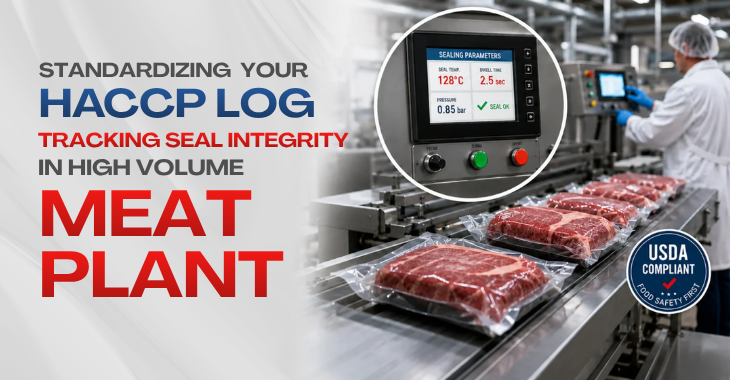
At its core, the log must capture key production details such as time, machine identification, product type, and packaging material specifications. However, the most critical aspect is the accurate recording of sealing parameters, particularly temperature and dwell time.
Seal temperature plays a central role in determining the quality of the bond between packaging layers. If the temperature is too low, the seal may not fully form, leading to leakage risks. If it is too high, it may damage the packaging material and reduce structural integrity. Therefore, maintaining a stable temperature range is essential for consistent results.
Dwell time, which defines how long heat and pressure are applied, is equally important. In high-speed production environments, even minor variations in dwell time can significantly affect seal strength. This is especially critical when working with different packaging materials that respond differently to heat exposure.
A standardized HACCP log ensures that these variables are recorded consistently across all production cycles. Over time, this data becomes a valuable reference for identifying trends, detecting deviations, and improving process stability.
Validating Seal Temperature and Dwell Time in Real Production Conditions
Before sealing parameters can be standardized, they must undergo a structured validation process. This process ensures that the selected temperature and dwell time consistently produce strong and reliable seals under actual production conditions.
Validation begins by defining product-specific requirements, including meat type, fat content, moisture level, and packaging material properties. These variables influence how the material reacts to heat and pressure during sealing.
Once these parameters are defined, controlled sealing trials are conducted across a defined range of temperature and dwell time settings. Each seal is evaluated using physical inspection and testing methods such as peel strength analysis or vacuum decay testing to assess seal reliability.
The objective is to identify the optimal combination that produces consistent, durable seals without damaging the packaging material. Once validated, these parameters are locked into the machine settings to ensure repeatability across production shifts.
In advanced industrial environments, such as those using modern vacuum packaging systems designed for high-output meat processing, validated seal parameters can be stored as product-specific recipes. This allows operators to select predefined settings without manually adjusting machine parameters, reducing variability and improving compliance consistency.
Common Causes of Seal Failure in Meat Packaging Operations
Seal failures in industrial meat packaging are rarely caused by a single issue. Instead, they typically result from a combination of mechanical, thermal, and operational factors.
One of the most common causes is incorrect temperature calibration. Even small fluctuations can significantly impact seal strength, especially in continuous production environments where machines operate for extended periods. Another frequent issue is inconsistent dwell time, often caused by mechanical wear or control system instability.
Contamination of the sealing area is another major contributor to seal failure. Residual fat, moisture, or product particles can prevent proper bonding between packaging layers, leading to weak or partial seals. Over time, this issue can become more pronounced if cleaning protocols are not strictly followed.
Mechanical misalignment of sealing bars or uneven pressure distribution can also result in inconsistent sealing patterns. In such cases, only portions of the seal may form correctly, creating hidden failure points that may not become visible until later stages of storage or transportation.
Understanding these failure modes is essential for developing effective HACCP corrective action procedures.
Corrective Actions and Regulatory Expectations
When deviations in sealing parameters occur, HACCP systems require immediate corrective action. This typically includes stopping production, isolating affected batches, and reviewing machine calibration.
However, corrective action extends beyond immediate response. It also requires identifying the root cause of the deviation and implementing preventive measures to avoid recurrence. This may involve equipment maintenance, recalibration, operator retraining, or process adjustments.
Regulatory auditors place significant emphasis on the completeness of corrective action records. Facilities that demonstrate not only detection but also structured resolution of issues are viewed as more compliant and operationally mature.
The Shift Toward Digital HACCP Systems in Meat Processing
As meat processing operations become more advanced, there is a clear shift toward digital HACCP systems that integrate directly with packaging equipment. These systems automatically record sealing parameters in real time, reducing reliance on manual documentation and improving traceability.
In high-volume environments, this transition is particularly valuable because it ensures that HACCP logs accurately reflect actual machine performance. It also enables faster detection of deviations and simplifies audit preparation through automated reporting.
Modern vacuum packaging platforms used in industrial meat processing environments are increasingly designed with this level of integration in mind, allowing seamless connection between production data and compliance documentation systems.
Conclusion: Standardization as the Foundation of Compliance and Quality
Standardizing HACCP logs for seal integrity is not just a regulatory requirement it is a fundamental component of operational excellence in meat processing environments. When sealing parameters are properly validated, consistently monitored, and accurately documented, the entire production system becomes more reliable, efficient, and audit-ready.
In high-volume operations, this level of control reduces product loss, minimizes compliance risk, and ensures consistent product quality across production shifts. More importantly, it transforms packaging from a variable process into a controlled and measurable system.
Ultimately, seal integrity is not only about packaging technology it is about trust in the safety, consistency, and quality of every product leaving the facility.