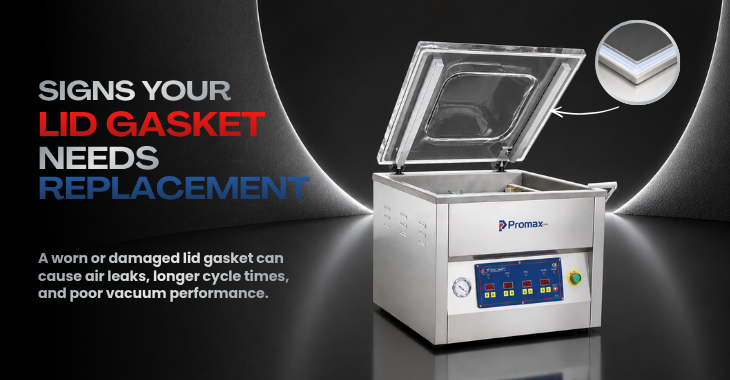
Every commercial vacuum packaging machine relies on one small but essential component to create a perfect vacuum the lid gasket. While operators often focus on the vacuum pump, sealing wire, or control panel, the lid gasket quietly performs one of the most important jobs in the entire packaging process.
Without an airtight seal between the chamber and the lid, even the most powerful vacuum pump cannot achieve its maximum performance. A damaged, worn, or improperly seated lid gasket allows air to enter the chamber during the vacuum cycle, resulting in poor package quality, longer cycle times, increased pump wear, and unnecessary production downtime.
Whether you’re packaging fresh meat, seafood, cheese, ready-to-eat meals, pharmaceuticals, electronics, or industrial components, maintaining a healthy lid gasket is essential for consistent vacuum performance.
Fortunately, the lid gasket is also one of the easiest components to inspect and replace. Recognizing the early warning signs can help you prevent costly interruptions and keep your production line operating efficiently.
In this guide, we’ll explain how a chamber lid gasket works, why it matters, and the most common signs that indicate it’s time for a replacement.
What Is a Lid Gasket?
A lid gasket is a specially designed rubber sealing strip installed around the perimeter of a chamber vacuum packaging machine’s lid or vacuum chamber.
Its primary function is simple:
Create an airtight seal while the vacuum cycle is running.
When the lid closes, the gasket compresses against the chamber surface, preventing outside air from entering the vacuum chamber. This allows the vacuum pump to remove air efficiently until the programmed vacuum level is reached.
Once the desired vacuum is achieved, the sealing bar activates, permanently sealing the vacuum pouch before atmospheric pressure returns.
Although the gasket may appear to be a simple rubber strip, it is engineered to withstand thousands of compression cycles while maintaining flexibility and sealing integrity.
Over time, however, continuous use, cleaning chemicals, temperature changes, food residue, and natural aging cause the gasket material to wear out.
When this happens, vacuum performance begins to decline.
Why Is the Lid Gasket So Important?
The lid gasket directly affects nearly every aspect of your vacuum packaging machine’s performance.
A properly functioning gasket helps:
- Create an airtight vacuum chamber
- Reach programmed vacuum levels faster
- Produce consistent package quality
- Reduce unnecessary strain on the vacuum pump
- Shorten production cycle times
- Improve sealing consistency
- Reduce energy consumption
- Protect product shelf life
Even a tiny leak can significantly reduce vacuum efficiency.
Many operators mistakenly believe their vacuum pump is failing when the real issue is simply an aging gasket allowing air into the chamber.
Replacing a worn gasket is often one of the quickest and most cost-effective maintenance tasks you can perform.
How Long Does a Lid Gasket Last?
There is no universal replacement schedule because gasket life depends on several operating conditions, including:
- Daily production volume
- Number of vacuum cycles
- Cleaning procedures
- Exposure to oils and chemicals
- Operating environment
- Storage conditions
- Frequency of preventive maintenance
Machines operating multiple shifts each day naturally wear gaskets faster than machines used only occasionally.
Instead of replacing the gasket on a fixed schedule, Promarksvac maintenance procedures recommend regularly inspecting sealing components for wear and replacing them whenever deterioration is observed.
Routine visual inspection is the best way to avoid unexpected failures.
10 Signs Your Vacuum Packaging Machine Lid Gasket Needs Replacement
1. Your Machine Cannot Reach Full Vacuum
This is the most common symptom of a worn lid gasket.
If your machine previously achieved 99% vacuum but now consistently stops at a lower level or takes much longer to complete the vacuum cycle, air may be leaking into the chamber.
As the vacuum pump removes air, even a small leak around the lid continuously introduces outside air.
The result is:
- Lower vacuum percentage
- Longer cycle times
- Reduced package quality
- Inconsistent vacuum results
Before assuming the vacuum pump needs repair, inspect the gasket carefully.
In many cases, replacing the gasket completely restores machine performance.
2. Vacuum Cycle Takes Longer Than Normal
An airtight chamber allows the vacuum pump to remove air efficiently.
A leaking gasket forces the pump to work continuously against incoming air.
Symptoms include:
- Extended vacuum times
- Pump running longer than usual
- Increased production delays
- Lower productivity
Even if the machine eventually reaches the programmed vacuum level, excessive cycle times usually indicate a developing air leak.
The earlier you identify the issue, the less stress you place on the vacuum pump.
3. You Hear Air Leaking Around the Lid
One of the easiest warning signs is sound.
During the vacuum cycle, listen carefully around the chamber lid.
A damaged gasket often produces:
- Hissing
- Whistling
- Air suction noises
- Small intermittent leaks
These sounds usually indicate air entering through a damaged section of the gasket.
Never ignore persistent air leakage.
Small leaks almost always become larger over time.
4. Bags Contain Residual Air After Packaging
Proper vacuum packaging removes nearly all air before sealing.
If finished packages suddenly contain visible air pockets, the chamber may not be reaching its programmed vacuum level.
Possible symptoms include:
- Loose bags
- Wrinkles caused by incomplete vacuum
- Reduced product shelf life
- Excess oxygen inside the package
Although several factors can contribute to poor vacuum packaging, a leaking lid gasket should always be one of the first components inspected.
5. The Gasket Has Visible Cracks or Tears
Routine inspection often reveals obvious physical damage.
Check for:
- Small cracks
- Surface splitting
- Cuts
- Torn corners
- Missing sections
- Punctures
Even tiny cracks can create air leaks during operation.
Once physical damage appears, replacement is usually recommended rather than attempting temporary repairs.
6. The Rubber Feels Hard or Brittle
A healthy gasket should remain flexible.
Over time, rubber naturally loses elasticity due to:
- Age
- Heat
- Cleaning chemicals
- UV exposure
- Continuous compression
If the gasket feels stiff instead of soft, it can no longer compress evenly against the chamber surface.
This greatly increases the chance of vacuum leaks.
A brittle gasket should be replaced before complete failure occurs.
7. The Gasket Appears Flattened
Years of repeated lid closures gradually compress the gasket.
Instead of maintaining its original rounded profile, the gasket becomes permanently flattened.
Flattened gaskets cannot create enough sealing pressure.
Look for:
- Flat contact surfaces
- Uneven compression
- Permanent deformation
- Loss of original shape
This is one of the most common indicators that replacement is needed.
8. The Lid Requires Extra Force to Close
Operators become familiar with how their machine normally feels.
If the lid suddenly becomes difficult to close or requires unusual pressure it may indicate:
- Improper gasket positioning
- Swollen gasket material
- Uneven wear
- Twisting inside the gasket channel
Likewise, if the lid closes too easily because the gasket has compressed excessively, sealing performance may suffer.
Any noticeable change in lid operation deserves inspection.
9. Vacuum Performance Changes from Cycle to Cycle
Healthy machines deliver consistent results.
If one package reaches full vacuum while the next does not, inconsistent gasket sealing may be the cause.
Intermittent leaks often occur because:
- Only part of the gasket is damaged
- Debris is trapped beneath the gasket
- One corner has become worn
- Compression varies around the chamber
Consistency is one of the easiest ways to judge gasket condition.
10. The Gasket Frequently Comes Loose or Will Not Stay Seated
The gasket should remain securely positioned inside its channel.
If it begins to:
- Pull out during cleaning
- Twist
- Shift during operation
- Refuse to stay seated
it may have stretched beyond its usable life.
A loose gasket cannot maintain uniform sealing pressure around the chamber.
Replacing it prevents recurring vacuum issues.
Daily Inspection Checklist
One of the easiest ways to avoid unexpected downtime is to inspect the lid gasket as part of your daily maintenance routine. Promarksvac machine manuals emphasize regular inspection of sealing components and keeping them clean to maintain reliable vacuum performance.
Before starting production each day, check the following:
- Inspect the entire gasket for cracks, tears, or cuts.
- Ensure the gasket is fully seated in its groove with no twisted or lifted sections.
- Remove any food particles, oil, moisture, or debris from the gasket and chamber sealing surface.
- Check that the rubber remains flexible and is not hardened or brittle.
- Look for flattened or permanently compressed areas that could allow air leaks.
- Close the lid and confirm it seals evenly around the entire chamber.
- Listen for unusual hissing or air leakage during the first vacuum cycle of the day.
- Replace the gasket promptly if signs of wear or damage are found rather than waiting for vacuum performance to decline.
A two-minute inspection at the beginning of each shift can help prevent production delays, reduce stress on the vacuum pump, and ensure consistent packaging quality throughout the day.
Need a Replacement Lid Gasket?
Restore your vacuum packaging machine’s performance with a genuine Promarksvac Lid Gasket designed for a precise fit and reliable sealing. Browse our available replacement lid gaskets here and find the right part for your machine.