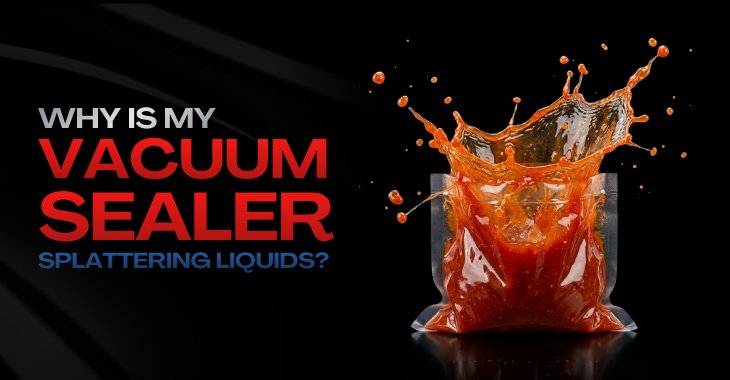
Vacuum sealing liquids such as marinades, sauces, brines, and soups can be challenging, especially when the product suddenly begins bubbling, splattering, or overflowing during the packaging cycle. Many operators assume this is a machine malfunction, a sealing issue, or a problem with the vacuum pump. In reality, the cause is much simpler and much more scientific.
The phenomenon is directly related to how liquids behave under reduced pressure. Understanding the relationship between vacuum pressure and boiling points can help food processors eliminate product loss, improve seal quality, and achieve more consistent packaging results. Modern vacuum packaging systems, such as those manufactured by Promarksvac Corp., address this challenge through advanced sensory control technology that prevents liquids from reaching the point where they boil over.
Why Liquids Appear to Boil Inside a Vacuum Sealer
One of the most surprising things operators notice when vacuum packaging liquid-rich products is that cold marinades or room-temperature sauces can suddenly start bubbling as if they were being heated. This creates the impression that something is wrong with the machine.
However, the liquid is not boiling because it has become hot. Instead, it is boiling because the pressure surrounding it has been significantly reduced.
A vacuum chamber removes air from the packaging environment, creating a low-pressure atmosphere. As the pressure decreases, the boiling point of liquids decreases as well. Eventually, the pressure becomes low enough that the liquid begins to vaporize even though its temperature has not changed significantly.
This is why a cold marinade can suddenly bubble and rise inside a vacuum chamber during packaging.
The Science Behind Boiling Points and Vacuum Pressure
Most people associate boiling with heat. At normal atmospheric pressure, water boils at 100°C (212°F). While this is true, temperature is only part of the equation.
Boiling occurs when the vapor pressure of a liquid becomes equal to the pressure surrounding it. Under normal atmospheric conditions, water must reach 100°C to achieve this balance. When pressure is reduced, the temperature required for boiling also decreases.
The relationship can be visualized as follows:
- Higher pressure = Higher boiling point
- Lower pressure = Lower boiling point
- Deep vacuum = Extremely low boiling point
PV=nRT
P is pressure; V is volume; n is amount of gas; T is temperature.
As a vacuum chamber continues removing air, the liquid eventually reaches a pressure level where boiling begins. This occurs regardless of whether the liquid is hot, warm, or relatively cool.
What Happens During Vacuum-Induced Boiling?
The vacuum cycle starts by rapidly removing air from the chamber. As the pressure decreases, tiny vapor bubbles begin forming within the liquid. These bubbles quickly expand and rise toward the surface.
As vacuum levels increase further, the bubbling becomes more aggressive. The liquid can then surge upward, creating the splattering effect that many operators experience.
When this happens, several problems may occur:
Product Loss
Valuable sauces, marinades, and brines can be pulled out of the package, reducing yield and increasing waste.
Seal Contamination
When liquid reaches the sealing area of the pouch, it can interfere with the seal formation process. This often results in weak seals, leaks, or premature package failure.
Inconsistent Packaging
Some packages may seal properly while others experience boil-over, creating inconsistency across production runs.
Increased Downtime
Operators may need to stop production to clean the chamber and adjust settings, reducing overall efficiency.
Which Products Are Most Likely to Splatter?
While almost any liquid can experience vacuum-induced boiling, some products are particularly susceptible.
Common examples include:
- Meat marinades
- Brining solutions
- BBQ sauces
- Gravy products
- Soup bases
- Dairy mixtures
- Pickling liquids
- Liquid seasonings
Products with higher water content tend to react more aggressively because water responds quickly to pressure changes.
Food processors working with marinated meats often encounter this issue because the packaging contains both solids and liquids. The meat remains stable while the surrounding marinade begins to boil under vacuum conditions.
Why Traditional Vacuum Systems Struggle with Liquids
Many standard vacuum packaging machines rely on time-based controls. In these systems, the machine runs the vacuum pump for a predetermined amount of time before proceeding to the sealing stage.
This approach works well for dry products such as:
- Cheese blocks
- Frozen meats
- Dry ingredients
- Processed foods
However, liquids behave differently.
A vacuum setting that works perfectly for a dry product may be too aggressive for a liquid-based product. Since the machine is following a timer rather than monitoring actual pressure conditions, it has no way of knowing when the liquid is approaching its boiling point.
As a result, the vacuum cycle may continue beyond the safe threshold, causing boil-over and splattering.
The Importance of Millibar Control
Professional vacuum packaging systems often measure vacuum levels using millibars (mbar). This allows operators to control packaging conditions with far greater precision.
Rather than simply running a vacuum cycle for a specific amount of time, the machine can target an exact pressure level.
This distinction is important because liquids begin boiling at predictable pressure points.
If the vacuum cycle stops before reaching the critical boiling threshold, the liquid remains stable and packaging proceeds normally.
If the cycle continues past that threshold, boiling and splattering can occur.
The ability to monitor and control pressure accurately is one of the most effective ways to prevent liquid boil-over.
How Promarksvac Sensory Control Technology Prevents Splattering
Modern vacuum packaging requires more than simple timers. It requires intelligent control over pressure conditions throughout the packaging cycle.
This is where Promarksvac’s sensory control technology provides a significant advantage.
Instead of relying solely on time-based vacuum settings, Promarksvac machines continuously monitor chamber pressure during operation. The system measures actual vacuum conditions and determines precisely when the desired pressure level has been reached.
For liquid-rich products, this technology can stop the vacuum cycle before the product enters the aggressive boiling phase.
The result is a more controlled packaging process that protects both the product and the package.
Key Benefits of Sensory Control Technology
Prevents Liquid Boil-Over
The machine can terminate the vacuum cycle before the liquid reaches a pressure level where excessive bubbling occurs.
Improves Seal Integrity
Keeping liquids away from the sealing area helps create stronger and more reliable seals.
Reduces Product Waste
Marinades and sauces remain inside the package rather than being pulled into the chamber.
Enhances Package Appearance
Finished packages look cleaner, more professional, and more consistent.
Improves Production Efficiency
Operators spend less time adjusting settings and cleaning chambers between cycles.
Best Practices for Vacuum Packaging Liquids
Even with advanced equipment, operators can improve results by following several practical guidelines.
Keep Liquids Cold
Colder liquids generally remain more stable during vacuum packaging because they have lower vapor activity.
Avoid Overfilling Pouches
Leaving adequate headspace provides room for minor liquid movement during the vacuum cycle.
Position Liquids Away from the Seal Area
Proper pouch placement helps prevent contamination of the sealing surface.
Use Product-Specific Vacuum Settings
Different products require different vacuum levels. Avoid using maximum vacuum settings for every application.
Utilize Sensory Control Features
Machines equipped with pressure-based control systems can significantly reduce packaging issues associated with liquids.
Why Pressure-Based Packaging Is the Future
The food processing industry is moving toward smarter packaging technology. Rather than relying on fixed timers and manual adjustments, modern systems use sensors and pressure monitoring to make packaging decisions based on real-time conditions.
This approach delivers several advantages:
- Greater consistency
- Improved product protection
- Reduced waste
- Higher productivity
- Better package quality
As food manufacturers continue to package more liquid-rich products, intelligent vacuum control systems will become increasingly important.
Final Thoughts
If your vacuum sealer is splattering liquids, the issue is usually not a machine defect. The real cause is a fundamental principle of physics: lowering pressure lowers the boiling point of liquids.
When a deep vacuum is applied, marinades, sauces, and other liquid products can begin boiling even when they are cold. This boiling action creates bubbles, splattering, seal contamination, and product loss.
The solution is not necessarily less vacuum it is smarter vacuum control.
Promarksvac’s sensory control technology monitors chamber pressure in real time and automatically cuts off the cycle at the precise millibar level needed before liquids reach the boil-over stage. This allows processors to achieve excellent vacuum packaging results while protecting product quality, reducing waste, and maintaining strong package seals.
For food processors packaging marinades, brines, sauces, and other liquid-rich products, intelligent pressure control is no longer just a convenience it is an essential part of efficient and reliable vacuum packaging.