
Exporting dehydrated fruits and vegetables requires more than producing high-quality dried food products and placing them inside sealed bags. International food distribution involves several important considerations, including packaging material selection, moisture protection, oxygen control, product stability, food safety, labeling, transportation, and destination-country regulations. For manufacturers and exporters, choosing the right packaging system is essential to maintaining product quality from the processing facility to the final customer.
Dehydrated fruits and vegetables have become important ingredients in the international food industry. Dried mangoes, apples, bananas, pineapples, strawberries, onions, garlic, carrots, spinach, and other dehydrated products are supplied to supermarkets, food manufacturers, restaurants, ingredient distributors, and private-label brands. These products are used in snacks, breakfast cereals, bakery ingredients, instant meals, seasoning blends, soups, and ready-to-eat food products.
However, dehydrated foods have specific packaging requirements that differ from those of fresh fruits and vegetables. Although moisture removal increases their storage stability, many dried products can absorb moisture from the surrounding environment. Exposure to oxygen, excessive humidity, light, contamination, and unsuitable storage temperatures can also affect their flavor, color, texture, and overall quality.
For exporters, these challenges become particularly important when products travel long distances, pass through multiple distribution centers, and remain in warehouses before reaching retailers. A packaging solution that performs well during short-term local distribution may not provide sufficient protection throughout an international supply chain.
This is where industrial vacuum packaging and modified atmosphere packaging (MAP) technologies become valuable. With suitable packaging materials and correctly configured equipment, manufacturers can develop packaging systems that reduce oxygen exposure, protect products against moisture ingress, and maintain consistent package sealing.
Promarksvac provides commercial and industrial vacuum packaging equipment that can be evaluated for different dehydrated food applications, including dried fruits, vegetables, freeze-dried products, and food ingredients. Understanding the packaging requirements of these products helps manufacturers select appropriate machinery and establish more reliable export packaging operations.
Why Proper Packaging Matters When Exporting Dehydrated Fruits and Vegetables
Dehydrated fruits and vegetables are processed to remove a significant portion of their original moisture content. This reduces the conditions that support many forms of microbial growth and helps make the products more suitable for extended storage. Nevertheless, dehydration does not make food immune to environmental conditions or contamination.
One of the biggest challenges is moisture reabsorption. Products such as dried mangoes, pineapple slices, strawberries, and certain vegetable flakes can absorb moisture when exposed to humid air. As moisture enters the product, its texture may change, pieces can become sticky or soft, and conditions may develop that encourage mold growth.
Oxygen exposure is another important concern. Oxygen can contribute to oxidation reactions that affect the color, flavor, aroma, and nutritional quality of certain dehydrated foods. Products containing natural fats or sensitive flavor compounds may experience noticeable quality changes during storage.
Physical damage also needs consideration. Freeze-dried fruits, for example, have a porous structure and can break easily when subjected to excessive pressure or rough handling. Conventional vacuum packaging may compress these products, making it necessary to evaluate alternative packaging methods.
Export packaging must therefore perform several functions at the same time. It should protect the product from moisture, reduce unwanted oxygen exposure, prevent contamination, maintain package integrity, and withstand transportation and handling conditions.
For manufacturers, the objective is not simply to produce an airtight package. The objective is to select a complete packaging system that maintains the product’s required quality throughout its intended distribution period.
1. Understanding the Packaging Requirements of Different Dehydrated Products
Not all dehydrated fruits and vegetables have identical packaging requirements. Their moisture content, water activity, physical structure, fat content, acidity, and sensitivity to oxygen can influence the type of packaging material and sealing method required.
Manufacturers should evaluate each product individually rather than using one packaging specification for their entire product range.
Dried Fruits
Dried mangoes, bananas, apples, pineapples, apricots, raisins, dates, and other fruits are commonly supplied in retail pouches, resealable bags, bulk ingredient packaging, and foodservice containers.
Many dried fruits retain some moisture after processing and may have a soft or flexible texture. This makes moisture protection particularly important. Packaging materials should prevent the product from absorbing humidity during storage and transportation.
Dried mango slices, for example, can become sticky when exposed to moisture. Dried pineapple may lose its preferred texture, while dried apple slices can experience changes in crispness and appearance.
Oxygen exposure can also affect certain dried fruits. Depending on the product and its processing conditions, it may contribute to discoloration, flavor deterioration, or changes in nutritional quality.
For these products, manufacturers should evaluate high-barrier flexible packaging, vacuum sealing, or nitrogen flushing according to the product’s physical characteristics and intended shelf life.
Dehydrated Vegetables
Dehydrated vegetables include onions, garlic, carrots, peas, spinach, tomatoes, mushrooms, potatoes, and mixed vegetable ingredients.
These products are commonly supplied to food manufacturers, soup producers, seasoning companies, restaurants, and commercial food-processing facilities.
Their packaging requirements often focus on moisture protection, contamination prevention, aroma retention, and convenient bulk handling.
Dehydrated onions and garlic, for example, contain strong aromatic compounds that manufacturers may want to protect during storage. Vegetable flakes and small dehydrated pieces also require packaging that prevents moisture absorption and contamination.
For bulk ingredient suppliers, packaging consistency is particularly important because products may be stored for extended periods before being used in commercial food production.
Vacuum packaging can be suitable for products that tolerate compression, while nitrogen flushing may be considered for products that require a less compressed package.
Freeze-Dried Fruits and Vegetables
Freeze-dried products require special attention because their structure is different from that of conventional hot-air-dried products.
Freeze-drying removes moisture through sublimation, leaving a highly porous structure. This allows freeze-dried strawberries, blueberries, raspberries, mangoes, and vegetables to remain lightweight and retain much of their original shape.
However, their porous structure also makes them vulnerable to physical breakage and moisture absorption.
Excessive vacuum pressure can damage delicate freeze-dried products. For this reason, manufacturers should evaluate nitrogen-flushed packaging or carefully controlled vacuum cycles.
High-barrier packaging is especially important because even relatively small amounts of moisture entering the package can affect the product’s crispness and texture.
2. Selecting the Right Packaging Material for Export
Packaging material selection is one of the most important decisions for dehydrated food exporters. A packaging machine can create a strong seal, but the finished package will only provide suitable protection if the selected material has the necessary barrier properties.
Different flexible packaging structures offer different levels of resistance to oxygen, water vapor, light, punctures, and mechanical stress.
Aluminum Foil Laminated Packaging
Aluminum foil laminated pouches are widely considered for products requiring strong protection against moisture, oxygen, and light.
These packaging structures may be useful for freeze-dried fruits, sensitive vegetable ingredients, dried fruit snacks, and premium retail products.
A typical structure may include an outer polyester layer, an aluminum foil barrier layer, and an inner polyethylene sealing layer. The exact construction depends on the product, pouch design, and packaging requirements.
The outer layer provides mechanical strength and a printable surface, while the aluminum layer provides a strong barrier against light, oxygen, and moisture. The inner sealing layer allows the package to be heat-sealed.
However, foil laminates must be evaluated for puncture resistance, flex cracking, seal performance, and compatibility with the selected packaging machine.
Metallized Film Packaging
Metallized films are another option for dehydrated food manufacturers.
These materials typically contain a thin metallic coating that improves barrier performance compared with many basic transparent films.
Metallized packaging is commonly considered for dried fruit snacks, vegetable products, and retail food pouches where manufacturers want a combination of product protection, attractive appearance, and relatively lightweight packaging.
The barrier performance of metallized films varies according to their construction and manufacturing quality. They should not automatically be treated as equivalent to aluminum foil laminates.
Polyamide and Polyethylene Packaging
PA/PE packaging structures are commonly used in vacuum packaging applications.
Polyamide provides mechanical strength and puncture resistance, while polyethylene provides a heat-sealable inner layer.
These materials may be suitable for selected dried-food products packaged in vacuum-compatible bags. However, manufacturers should evaluate their oxygen and moisture transmission properties before selecting them for long-term export packaging.
For products requiring stronger barrier protection, additional layers or specialized packaging structures may be necessary.
PET-Based Laminated Packaging
PET-based laminates provide a printable outer layer and can be combined with polyethylene, metallized films, or other barrier materials.
These structures are used in many flexible food packaging applications, including dried fruit and vegetable products.
The appropriate construction depends on the expected shelf life, product characteristics, storage conditions, and transportation environment.
Important Packaging Material Considerations
Before finalizing a packaging material, exporters should evaluate its oxygen transmission rate (OTR), water vapor transmission rate (WVTR), sealing compatibility, puncture resistance, food-contact compliance, and suitability for the intended packaging atmosphere.
A low OTR helps reduce oxygen entering through the packaging material, while a low WVTR helps limit moisture transfer.
The material should also be compatible with the machine’s sealing temperature, sealing time, and pressure requirements.
Manufacturers should obtain technical data sheets and relevant food-contact compliance documentation from their packaging suppliers rather than selecting materials based only on appearance or price.
3. Moisture Protection: One of the Most Important Export Packaging Requirements
Moisture management is essential for dehydrated fruits and vegetables because these products are specifically processed to achieve a reduced moisture level.
When dried products are exposed to humid air, they can absorb moisture and gradually lose their intended characteristics.
This can become a serious problem during international shipping, particularly when products pass through humid ports, warehouses, and distribution centers.
Exporters should therefore consider the entire moisture-control process rather than relying exclusively on the packaging machine.
The product must first be dried to an appropriate moisture content and water activity level. It should then be cooled under suitable conditions before packaging to avoid unnecessary condensation or moisture exposure.
The packaging area should also be controlled to prevent dried products from absorbing humidity while waiting for filling and sealing.
Once packaged, the selected film must provide an adequate moisture barrier, and the finished package must have reliable seals.
Water activity is an especially important measurement because it indicates how much water is available for microbial growth and other reactions. Moisture percentage alone does not provide the same information.
For many shelf-stable dried products, a water activity of 0.60 or below is a common stability target, but the correct specification must be established for the individual product and validated through appropriate testing.
Promarksvac vacuum packaging machines can support the final packaging stage by creating sealed packages using compatible vacuum bags or pouches. However, the machine does not remove moisture from the product itself or correct an inadequate dehydration process.
4. Vacuum Packaging for Exporting Dehydrated Fruits and Vegetables
Vacuum packaging is one of the established technologies used in commercial food packaging.
The process involves placing the product inside a compatible pouch, removing air from the packaging environment, and sealing the package.
Reducing the amount of air inside the package can help limit oxygen exposure and protect products against certain forms of oxidation and quality deterioration.
For dehydrated food manufacturers, chamber vacuum packaging machines provide a practical method for sealing different pouch sizes and product quantities.
They are particularly relevant for dried fruit manufacturers, vegetable processors, bulk ingredient suppliers, and commercial food packaging operations.
However, vacuum packaging should be selected according to the physical characteristics of the product.
Products such as dried mango slices, dried apple pieces, and certain vegetable flakes may tolerate controlled vacuum packaging. More fragile products may require lower vacuum levels or alternative packaging methods.
How Promarksvac Chamber Vacuum Packaging Machines Support Dried-Food Manufacturers
Promarksvac offers chamber vacuum packaging equipment that can be evaluated for dehydrated food packaging applications.
For smaller manufacturers and businesses developing their packaging operations, the TC-420F tabletop chamber vacuum packaging machine provides an entry point into commercial chamber packaging.
Its compact format makes it relevant to smaller production environments, specialty food manufacturers, and businesses handling limited packaging volumes.
For growing food processors, the SC-420 single-chamber vacuum packaging machine can be considered when manufacturers require a larger commercial packaging setup.
These machines can be evaluated for different pouch dimensions, sealing requirements, and product configurations. Optional gas-flushing availability should be confirmed for the selected machine specification.
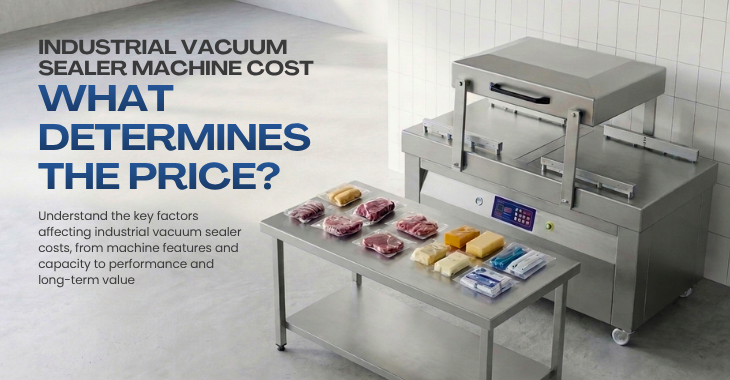
For larger production environments, the DC-800B double-chamber vacuum packaging machine offers a different production workflow. Its dual-chamber arrangement allows operators to load one chamber while the other chamber completes its packaging cycle, subject to the operating configuration.
This can help manufacturers organize packaging operations more efficiently when processing larger volumes of dried food products.
The SC-800 industrial single-chamber vacuum packaging machine is another option for manufacturers evaluating heavy-duty chamber packaging equipment and larger pouch applications.
The correct machine depends on the required package dimensions, production volume, vacuum level, sealing arrangement, and product sensitivity.
Manufacturers can explore the broader Promarksvac vacuum packaging machine range and request an application assessment to identify a suitable configuration.
5. Nitrogen Flushing and Modified Atmosphere Packaging for Export Products
Vacuum packaging is not always the best solution for every dehydrated food product.
Some products are fragile, lightweight, or sensitive to compression. Freeze-dried strawberries, raspberries, blueberries, and certain dried snack products can lose their shape when excessive vacuum pressure is applied.
In these situations, nitrogen flushing and modified atmosphere packaging may provide a more appropriate packaging approach.
Modified atmosphere packaging involves changing the composition of the gases inside a package before sealing. Nitrogen is commonly used because it is an inert gas that can help displace oxygen.
A nitrogen-flushing process may involve removing some of the air from a pouch, introducing nitrogen, and then sealing the package. The exact process depends on the machine configuration and the requirements of the product.
Benefits of Nitrogen-Flushed Packaging
Nitrogen flushing can reduce oxygen concentration inside the package when the process is correctly designed and validated.
It can also help maintain package volume, which is particularly useful for products that may be damaged by conventional vacuum compression.
For freeze-dried food manufacturers, this can be an important consideration because the product must maintain its lightweight and porous structure.
Nitrogen flushing may also be evaluated for dried fruit snacks, vegetable ingredients, and other oxygen-sensitive products.
However, nitrogen flushing does not automatically guarantee a particular shelf life. The final result depends on residual oxygen, gas composition, packaging film barrier properties, seal integrity, initial product quality, and storage conditions.
Promarksvac Gas-Flushing Options
Promarksvac offers optional gas-flushing configurations on selected vacuum packaging machine models.
For dehydrated food manufacturers interested in nitrogen-flushed packaging, the first step should be to confirm the available gas-flush configuration with the Promarksvac engineering team.
A compatible chamber machine can then be evaluated using representative dried-food products and suitable high-barrier pouches.
Testing should include the gas-flushing sequence, residual oxygen measurements, package appearance, seal integrity, and product condition after storage.
The gas mixture should be determined by a qualified food technologist according to the specific application. Nitrogen alone may be suitable for certain products, while other products may require a different validated atmosphere.
Promarksvac’s custom vacuum packaging machine configuration guide provides additional information about evaluating machine options according to product requirements, sealing arrangements, chamber dimensions, and gas-flushing needs.
6. Choosing the Right Promarksvac Machine for Different Export Operations
Selecting a packaging machine requires more than comparing machine dimensions or vacuum pump capacity.
Manufacturers should consider their product characteristics, packaging material, package size, daily production volume, required packaging atmosphere, and available production space.
A machine suitable for a small dried fruit business may not meet the requirements of a large food ingredient manufacturer.
TC-420F for Small and Growing Food Manufacturers
The Promarksvac TC-420F tabletop chamber vacuum packaging machine can be considered by smaller dried fruit manufacturers, specialty food producers, and businesses developing commercial packaging operations.
It is relevant to companies that need chamber vacuum packaging capabilities without immediately investing in a large industrial production system.
Applications may include selected dried fruit products, small vegetable ingredient packages, and product development trials.
SC-420 for Commercial Packaging Operations
The Promarksvac SC-420 single-chamber vacuum packaging machine can be evaluated by growing food manufacturers that need a commercial packaging setup with greater operating flexibility.
It may suit businesses producing multiple dried-food varieties and handling different pouch dimensions.
Manufacturers interested in nitrogen-flush packaging should confirm the availability and suitability of the required gas-flush configuration before purchasing.
DC-800 for Larger Manufacturing Facilities
For manufacturers with larger packaging requirements, the Promarksvac DC-800 double-chamber vacuum packaging machine offers an industrial packaging option.
The dual-chamber design is particularly relevant when packaging operations require a continuous operator workflow.
Dried fruit processors, bulk vegetable ingredient manufacturers, and commercial food packers can evaluate this equipment according to their production targets and packaging requirements.
The machine should be configured according to the product size, pouch dimensions, sealing requirements, and desired packaging process.
SC-800 for Heavy-Duty Packaging Requirements
The Promarksvac SC-800 single-chamber vacuum packaging machine can be evaluated by businesses handling larger packages and demanding commercial packaging operations.
It may be relevant for industrial food processors that need a heavy-duty chamber vacuum packaging setup.
The appropriate configuration should be established through an assessment of package size, daily operating hours, vacuum requirements, and the type of dried food being packaged.
Rollstock and Tray-Sealing Applications
Larger manufacturers may also consider automated rollstock thermoforming or tray-sealing systems when their products and packaging formats require those technologies.
Promarksvac’s PRS series rollstock machines can be evaluated for automated forming, loading, and sealing workflows, while selected VT-series tray-sealing configurations may be considered for tray-packed food products.
These systems should not be assumed to provide the same packaging capabilities as chamber vacuum machines. Their suitability depends on product feeding, forming film, package structure, atmosphere-control requirements, and available machine configurations.
For many conventional dried fruit and vegetable export applications, a chamber vacuum machine is a more straightforward starting point.
7. Packaging Formats for International Distribution
The final packaging format depends on the customer, product category, distribution channel, and expected storage conditions.
Exporters may supply dried fruits and vegetables in small retail pouches, medium-sized foodservice bags, or large bulk ingredient packages.
Retail packaging is usually designed around convenience, product presentation, and consumer use. Stand-up pouches, resealable bags, and individual portion packs are common formats.
Bulk packaging focuses more on product protection, storage efficiency, and convenient handling by commercial buyers.
Food manufacturers purchasing dried onions, garlic, tomato powder, or vegetable flakes may require larger barrier bags that can be stored in ingredient warehouses before production.
Freeze-dried products often require special consideration because of their fragile structure. Their packaging may include protective outer cartons or other arrangements to reduce crushing during transportation.
Regardless of the format, the packaging must provide adequate protection against moisture, oxygen, contamination, and mechanical damage.
Exporters should also ensure that the primary package is appropriately protected inside shipping cartons. Carton strength, internal spacing, pallet configuration, and shipping conditions can affect the condition of the product when it arrives at its destination.
8. Food Safety and Hygiene Requirements for Export Packaging
Packaging is one part of a wider food-safety management system.
Dehydrated fruits and vegetables must be processed, handled, stored, and packaged under suitable hygienic conditions.
Packaging materials should be clean, suitable for food contact, and stored in a way that prevents contamination before use.
The packaging environment should protect finished products from dust, insects, foreign materials, and unnecessary exposure to humidity.
Equipment surfaces that come into contact with products or packaging materials should be maintained and cleaned according to a documented sanitation procedure.
Operators should also follow appropriate hygiene practices during filling, pouch handling, and sealing.
Promarksvac chamber vacuum packaging machines are designed for commercial and industrial packaging applications, but the sanitation procedure must be established according to the customer’s product, operating environment, and applicable food-safety requirements.
The FDA’s preventive-controls framework under the Food Safety Modernization Act addresses hazards that may occur during food manufacturing, processing, packing, and holding. Applicable facilities must establish and implement appropriate food-safety controls.
For additional background, manufacturers can review Promarksvac’s article on Food Safety and Industrial Vacuum Packaging.
9. Export Documentation and Destination-Country Compliance
Packaging requirements do not exist independently of food-export regulations.
A product that is appropriately packaged in its country of manufacture may still face import problems if its labeling, food-safety documentation, ingredients, or packaging materials do not satisfy the destination country’s requirements.
Exporters should identify the destination market before finalizing their packaging design.
Exporting to the United States
Companies exporting dehydrated fruits and vegetables to the United States must evaluate applicable FDA requirements.
Most foreign facilities that manufacture, process, pack, or hold food for consumption in the United States are subject to FDA food-facility registration requirements, unless an exemption applies.
Imported food shipments are also subject to applicable prior-notice requirements.
The US importer may have responsibilities under the Foreign Supplier Verification Program (FSVP), depending on the applicable rules and exemptions.
Food labeling must also meet applicable FDA requirements, including ingredient declarations, allergen information where required, nutrition labeling where applicable, and truthful product descriptions.
Exporters should confirm the requirements for their specific food product and importer rather than assuming that all dehydrated foods follow identical procedures.
Useful official resources include:
- FDA: Importing Human Foods
- FDA: Foreign Supplier Verification Programs
- FDA: FSMA Preventive Controls for Human Food
Exporting to Canada
Companies exporting food products to Canada must consider the applicable requirements administered by the Canadian Food Inspection Agency (CFIA).
Depending on the product and business activities, requirements may include food-safety controls, licensing, traceability, packaging, labeling, and import documentation.
Canadian importers and exporters should verify product-specific requirements before shipping.
Official information is available through the Canadian Food Inspection Agency’s food export requirements.
Exporting to European and Other International Markets
European and other international markets may have additional requirements concerning food-contact materials, labeling, allergens, additives, contaminants, traceability, and food hygiene.
Exporters should verify the current rules applicable to the product and destination country.
The Codex Alimentarius provides internationally recognized food-hygiene references, including the Code of Hygienic Practice for Dehydrated Fruits and Vegetables, CXC 5-1971.
This code provides useful guidance on hygienic processing, product handling, packaging, and preservation.
The Codex reference can be accessed through the FAO/WHO Codex Alimentarius.
10. Labeling Requirements for Dehydrated Food Products
Packaging labels provide important information to importers, distributors, retailers, and consumers.
Although labeling requirements differ between countries, exporters should generally prepare product labels that accurately identify the food and provide the information required by the destination market.
Common labeling elements include:
- Product name and description
- Ingredient list
- Allergen declarations where applicable
- Net weight
- Country of origin where required
- Manufacturer or responsible business details
- Lot or batch identification
- Production and best-before dates where required
- Storage instructions
- Nutrition information where applicable
- Importer or distributor information where required
For products containing multiple ingredients, the ingredient declaration should accurately identify the components used in the product.
For example, a dried fruit mixture may contain mango, pineapple, raisins, and added ingredients. Its label should reflect the actual formulation and applicable labeling rules.
Labels should also be durable enough to remain readable throughout storage and transportation.
Exporters should confirm language requirements, date formats, nutrition declarations, and mandatory label elements before producing large quantities of packaging.
11. Maintaining Package Integrity During Long-Distance Transportation
Even when the correct packaging material and machine are selected, poor transportation practices can damage finished products.
International shipments may involve extended storage, container handling, changes in temperature, high humidity, and repeated movement between distribution facilities.
These conditions can expose packaging to physical stress and environmental changes.
For this reason, exporters should consider both primary and secondary packaging.
Primary packaging is the bag, pouch, tray, or container that directly holds the dehydrated food.
Secondary packaging includes cartons, protective inserts, and other materials used to organize and protect individual packages during distribution.
Cartons should be sufficiently strong for the expected stacking and handling conditions. Packages should be arranged to minimize unnecessary movement and crushing.
For delicate freeze-dried products, additional protection may be required to prevent pieces from breaking during transportation.
Finished products should also be stored in a clean, dry environment away from direct sunlight and excessive heat.
A strong package seal is important, but the complete distribution system must be designed to protect the product.
12. How to Select the Right Vacuum Packaging Machine for Export Production
Selecting industrial packaging equipment is an important investment for dehydrated food manufacturers.
The machine must match the packaging requirements of the product while providing sufficient production capacity for the business.
One of the first considerations is package size. Manufacturers should identify the maximum pouch width, length, and product quantity that will be packaged.
The chamber dimensions and sealing-bar arrangement should then be evaluated to determine whether the machine can accommodate the required packaging format.
The second consideration is production capacity. A small manufacturer may be able to operate with a tabletop or single-chamber machine, while a larger factory may require a double-chamber configuration or an automated packaging system.
The third consideration is the packaging atmosphere. Products that tolerate compression may be suitable for conventional vacuum packaging, while delicate products may require a nitrogen-flush process.
Manufacturers should also consider packaging material compatibility, sealing temperature, sealing time, cooling time, pump capacity, operator workflow, and maintenance requirements.
Promarksvac offers different chamber vacuum packaging configurations that can be assessed according to these operational requirements.
For a more detailed explanation of packaging cycle considerations, read How Long Does a Cycle Take in a PromarksVac Chamber Machine?.
A packaging cycle may include vacuum generation, gas flushing where available, sealing, cooling, and chamber release. Each additional process can affect overall production time.
The actual number of packages per hour depends on the machine, package dimensions, operator loading and unloading time, and selected operating parameters.
13. Testing and Quality Control Before Exporting
Before sending dehydrated fruits and vegetables to international customers, manufacturers should establish a quality-control procedure for the finished packaging.
Packaging trials should use representative products and the actual packaging materials intended for commercial production.
The first test should evaluate the product’s initial moisture content and water activity. These measurements help establish whether the product is sufficiently stable for its intended storage conditions.
The second test should evaluate packaging performance. This includes vacuum settings, gas-flushing performance where applicable, seal strength, and package leakage.
For nitrogen-flushed products, manufacturers should measure residual oxygen using an appropriate headspace oxygen analyzer.
The third test should examine the product after packaging. Fragile dried foods should be checked for breakage, compression, and changes in appearance.
Finally, manufacturers should conduct shelf-life studies under conditions representative of the intended storage and distribution environment.
Accelerated testing may help identify potential packaging weaknesses, but it should not automatically replace real-time shelf-life validation.
The purpose of these tests is to establish a documented packaging specification that can be consistently followed during commercial production.
14. Common Packaging Mistakes Dehydrated Food Exporters Should Avoid
Several packaging mistakes can affect the quality of dehydrated fruits and vegetables during international distribution.
One common mistake is choosing packaging material based only on its price. A low-cost pouch may provide insufficient moisture or oxygen protection for a product that requires a longer storage period.
Another mistake is applying excessive vacuum pressure to fragile products. Freeze-dried fruits and lightweight vegetable products may become crushed when unsuitable vacuum settings are used.
Some manufacturers also assume that nitrogen flushing automatically provides a longer shelf life. In reality, its performance depends on the residual oxygen level, gas mixture, package barrier properties, and product characteristics.
Poor sealing is another frequent problem. Wrinkles, contamination in the seal area, incorrect sealing temperatures, and unsuitable sealing times can create weak package seals.
A further mistake is packaging products immediately after dehydration without allowing them to cool appropriately. Product temperature and the packaging environment should be controlled to avoid condensation and other quality problems.
Finally, exporters sometimes overlook the importance of storage and transportation conditions. Even high-quality packaging can fail to protect products if finished goods are stored in unsuitable environments or subjected to excessive mechanical stress.
Manufacturers should evaluate the complete packaging process rather than relying on one machine setting or packaging material to solve every problem.
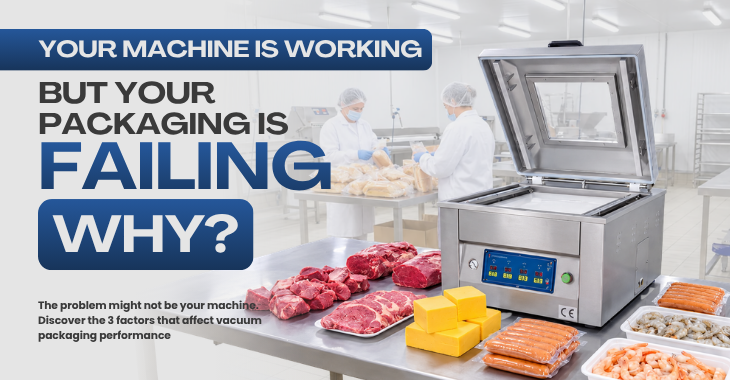
For troubleshooting guidance, Promarksvac also provides Vacuum Packaging Machine Working but Packaging Failing?, which discusses the importance of appropriate operating parameters, sealing conditions, and packaging material compatibility.
15. Why Promarksvac Is a Packaging Equipment Option for Dehydrated Food Manufacturers
Choosing packaging equipment is an important decision for companies involved in dehydrated food manufacturing and international distribution.
A suitable machine must accommodate the product, packaging material, production volume, and required sealing process.
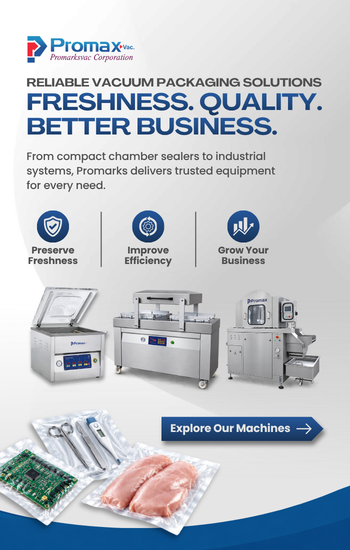
Promarksvac manufactures commercial and industrial vacuum packaging equipment for food-processing and other packaging applications. Its equipment range includes tabletop, single-chamber, double-chamber, and automated packaging solutions.
For small and growing dried-food manufacturers, the TC-420F and SC-420 can be evaluated as chamber vacuum packaging options.
For larger manufacturers, the DC-800B and SC-800 provide industrial chamber configurations that can be assessed according to package dimensions and production requirements.
Selected machine configurations may also be evaluated for gas flushing when the application requires modified atmosphere packaging.
For manufacturers moving toward larger automated packaging operations, Promarksvac’s rollstock and tray-sealing equipment may provide additional options, depending on the required package format and machine configuration.
The objective is to match the equipment to the actual product and production process rather than recommend the same machine for every manufacturer.
Promarksvac has been serving the packaging and food-processing equipment industry since 1989, with US and Taiwan manufacturing and engineering operations. Its equipment portfolio provides options for businesses evaluating packaging solutions for different production scales.
Manufacturers interested in exporting dehydrated fruits, vegetables, and food ingredients can discuss their application requirements with the Promarksvac team.
Providing information about product type, pouch dimensions, packaging material, daily production volume, and vacuum or nitrogen-flush requirements can help identify a suitable machine configuration.
Conclusion
Exporting dehydrated fruits and vegetables successfully requires careful attention to product quality, packaging materials, moisture protection, oxygen control, sealing performance, labeling, food safety, and transportation conditions.
The right packaging system should be selected according to the characteristics of each product rather than relying on a single packaging method for all dried foods.
Conventional vacuum packaging can be appropriate for products that tolerate compression, while nitrogen flushing and modified atmosphere packaging may be better suited to certain delicate and oxygen-sensitive products.
High-barrier packaging materials, reliable sealing, suitable storage conditions, and documented quality-control procedures are equally important for maintaining product quality during international distribution.
For manufacturers seeking to improve their packaging operations, Promarksvac provides commercial and industrial vacuum packaging equipment that can be evaluated for different dehydrated food applications.
Whether a business produces dried mangoes, dehydrated vegetables, freeze-dried strawberries, vegetable ingredients, or bulk food products, selecting the appropriate packaging machine and configuration can help establish a more consistent and reliable export packaging process.
Looking for a vacuum packaging machine for dehydrated fruits and vegetables? Contact Promarksvac to discuss your product, packaging requirements, and production capacity. Our team can help evaluate suitable chamber vacuum packaging and selected gas-flushing configurations for your application.