Medical products often require more than a standard packaging machine. When a component needs to be sealed, cut, and formed to a precise shape, manufacturers may require custom-engineered heat sealing equipment designed around the application.
Promarks Heat Seal Division has developed custom medical heat sealing equipment for specialized medical-product manufacturing applications, including equipment used to produce protective covers for surgical robotic systems.
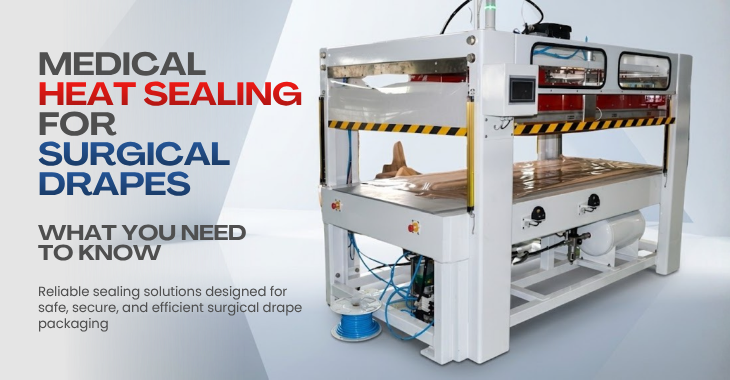
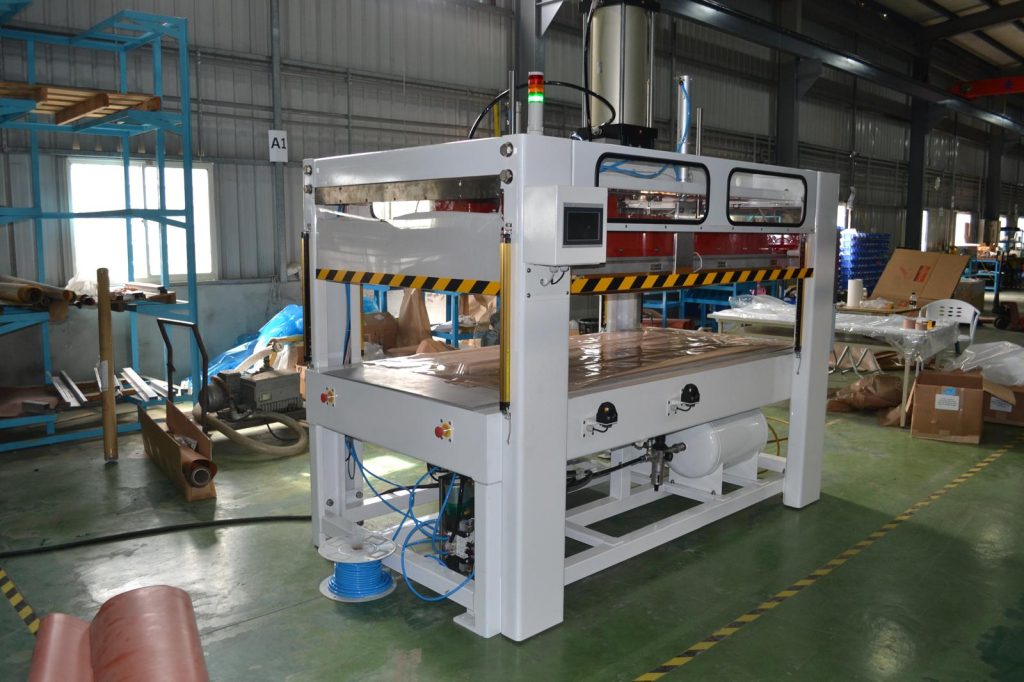
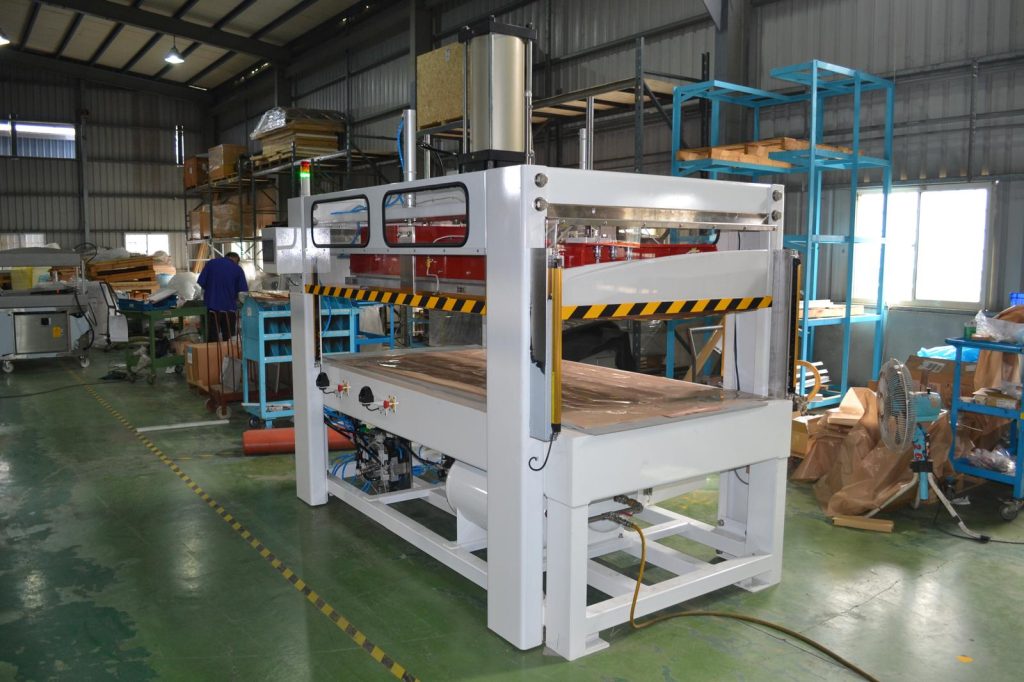
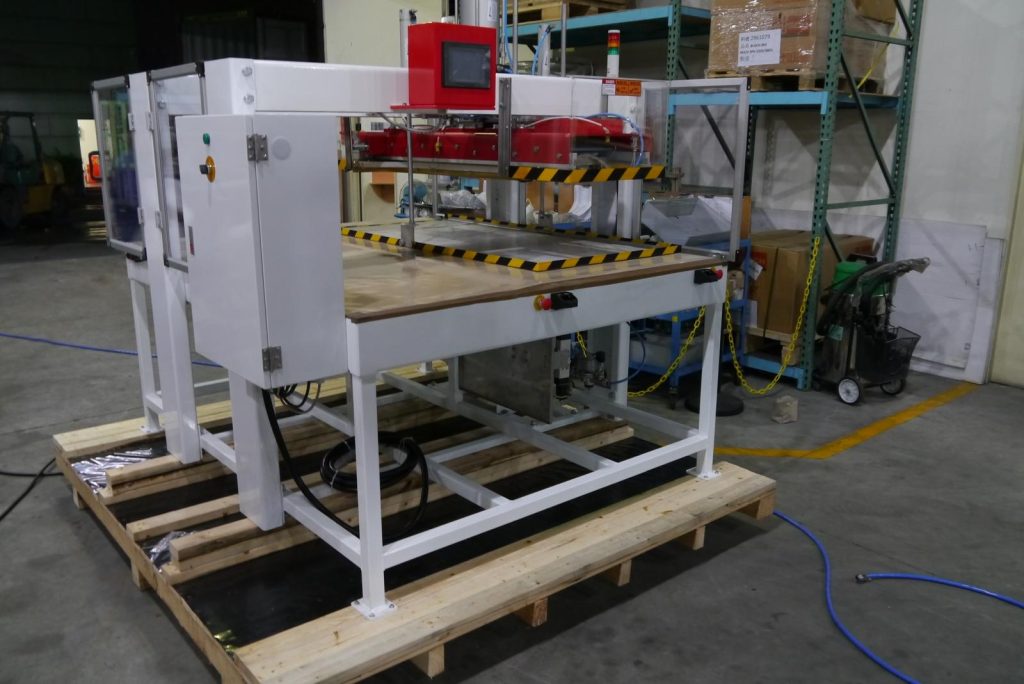
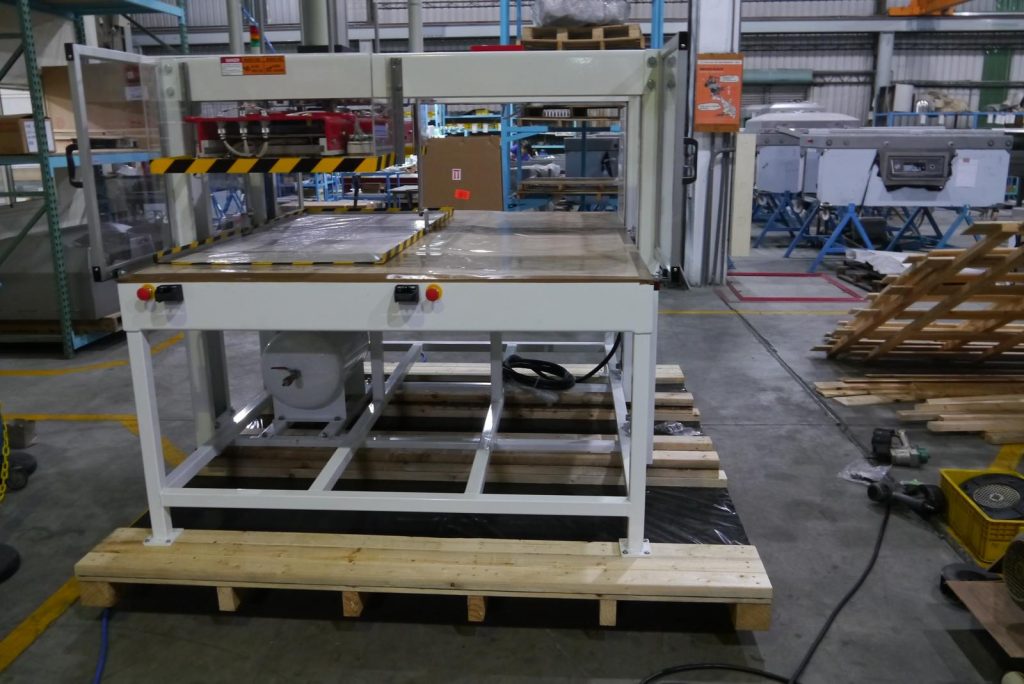
One example is a custom heat sealing and cutting machine developed for Ecolab’s Da Vinci surgical drape application.
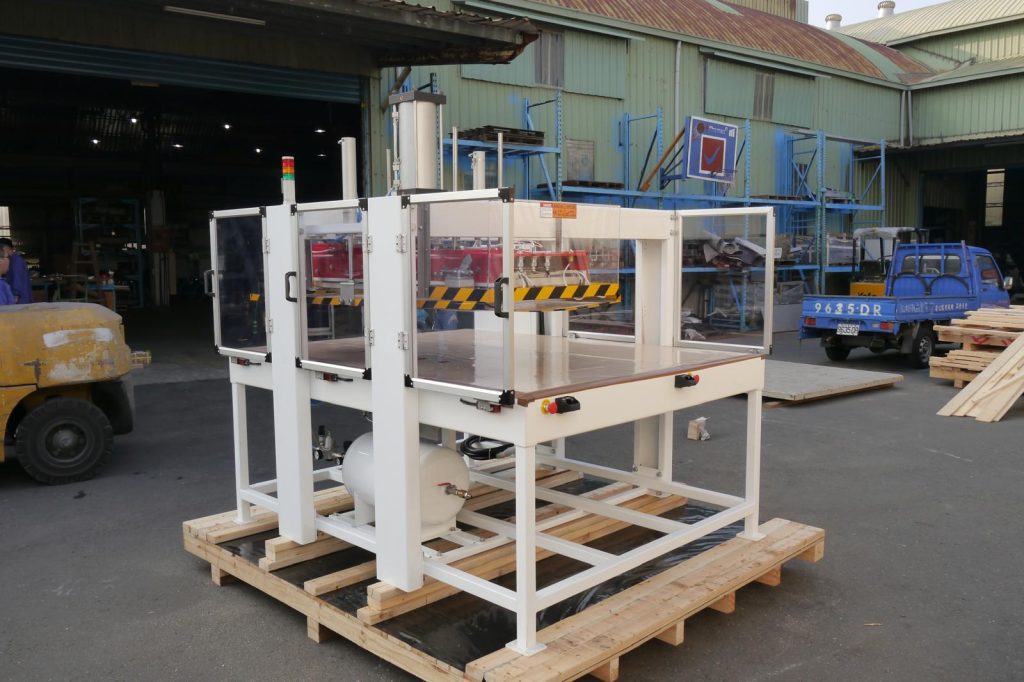
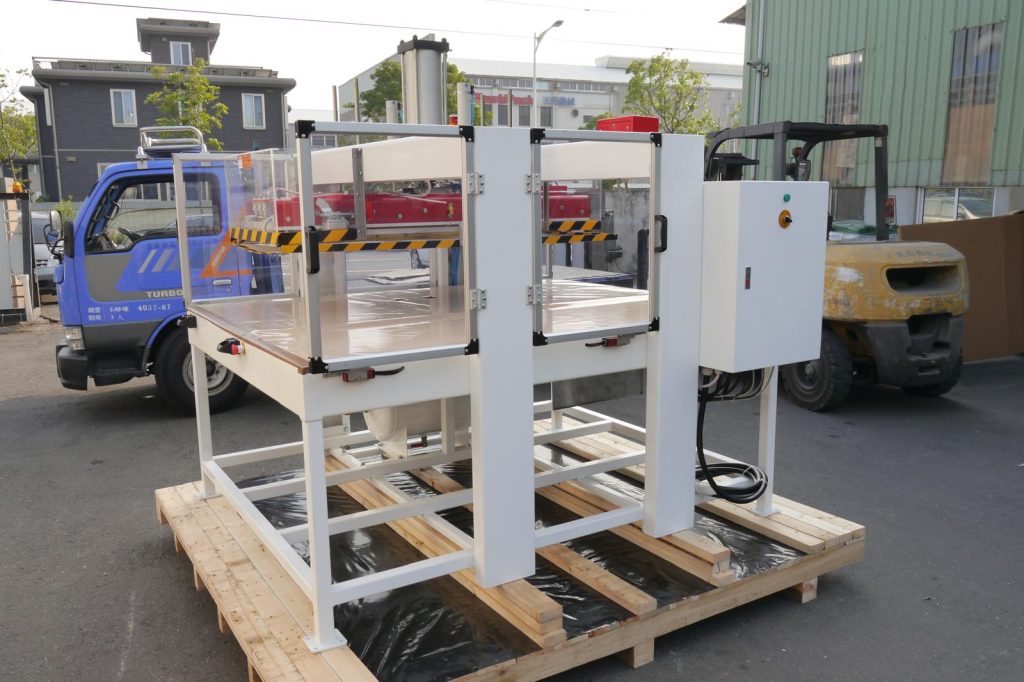
Custom Heat Sealing for Surgical Robotic Covers
Surgical robotic systems use multiple articulated arms during minimally invasive procedures. Protective drapes or covers can be used over the robotic arms as part of the operating-room setup.
For this application, the cover material needs to be sealed and cut into a specific shape so it can fit the intended robotic-arm configuration.
Rather than using a standard bag sealer, this application requires a specialized machine capable of combining precision heat sealing and cutting in a controlled manufacturing process.
Promarks designed a custom system using a precision heated die system to seal and cut the material into the required configuration.
The result is a formed plastic cover designed for use with the robotic-arm application.
How the Custom Heat Sealing Machine Works
The equipment uses a heated die to perform the sealing and cutting operation.
During the process, the material is positioned in the machine and the custom die applies controlled heat and pressure to the designated area. The heated tooling creates the required seal while the cutting portion of the die produces the specified shape.
This type of precision heat sealing machine can be particularly useful when a medical product has dimensions, contours, or sealing requirements that cannot be efficiently handled by standard heat sealing equipment.
The process can combine several functions into a single manufacturing operation:
- Material positioning
- Precision heat sealing
- Die cutting
- Forming the required profile
- Repeatable production of the finished component
The exact temperature, pressure, dwell time, tooling configuration, and material specifications depend on the product and the manufacturing process.
Why Custom Medical Heat Sealing Equipment Matters
Medical manufacturing applications can have highly specific requirements. A standard commercial heat sealer may provide a good seal on a conventional bag, but specialized medical products can require much more precise tooling and process control.
A custom medical heat sealer can be designed around factors such as:
Precise Product Geometry
Some medical covers and components have unusual shapes or contours. Custom tooling allows the sealing and cutting process to follow the required product geometry.
Controlled Heat Sealing
Different medical-grade films and thermoplastic materials can require specific sealing conditions. Machine parameters can be engineered around the characteristics of the material being processed.
Repeatable Production
Custom equipment can help manufacturers perform the same sealing and cutting process repeatedly, which is important when producing components with defined dimensions and specifications.
Integrated Sealing and Cutting
Combining sealing and cutting into one operation can simplify production compared with performing the two processes separately.
Application-Specific Tooling
The heated die can be designed specifically around the required product shape, sealing pattern, and cutting configuration.
Operator Safety Features
Custom industrial equipment also needs to consider operator safety.
The machine developed for this application incorporates safety systems including light curtains and Opti-touch activation systems.
These features are designed to help control machine operation and provide safeguards around the equipment’s operating area.
For specialized medical manufacturing equipment, safety engineering should be considered alongside sealing performance, production requirements, tooling, and machine controls.
Applications for Custom Medical Heat Sealers
Custom heat sealing equipment can be developed for a wide range of medical and healthcare manufacturing applications.
Potential applications include:
- Surgical drapes and protective covers
- Medical device components
- Medical-grade plastic films
- Protective medical covers
- Specialized medical packaging
- Disposable healthcare products
- Thermoplastic medical products
- Custom-shaped sealed components
The appropriate machine configuration depends on the material, product geometry, required seal, production volume, and manufacturing process.
Custom Heat Sealing vs. Standard Heat Sealing
A standard heat sealing machine is generally designed around common packaging formats such as bags, pouches, and flexible films.
Custom heat sealing equipment is different because the machine is engineered around a specific product or manufacturing requirement.
| Standard Heat Sealing | Custom Medical Heat Sealing |
|---|---|
| Designed for common packaging formats | Designed around a specific application |
| Standard sealing bars or jaws | Application-specific tooling |
| Primarily seals packaging | Can combine sealing and cutting |
| Standard machine configuration | Custom machine configuration |
| Common bag and film applications | Specialized medical products and components |
| Limited geometry options | Can accommodate custom product shapes |
For manufacturers producing specialized medical products, custom equipment can provide capabilities that are difficult to achieve with an off-the-shelf sealing machine.
What to Consider When Developing a Custom Medical Heat Sealer
Before designing a custom medical heat sealing machine, manufacturers should evaluate several factors.
Material
The type and thickness of the film or thermoplastic material will influence the sealing method and machine parameters.
Product Shape
The dimensions and geometry of the finished component determine the tooling and die configuration.
Seal Requirements
The required seal width, pattern, strength, and appearance should be established during the equipment-development process.
Production Volume
Production requirements can influence the level of automation, cycle time, material handling, and machine configuration.
Cutting Requirements
If the product needs to be both sealed and cut, the cutting process can be incorporated into the custom tooling.
Operator Safety
Safety systems should be incorporated into the machine design based on the equipment configuration and applicable workplace requirements.
Promarks Custom Heat Sealing Solutions
The Da Vinci surgical drape application demonstrates how custom heat sealing equipment can be developed for a specialized medical manufacturing requirement.
Promarks Heat Seal Division designs and manufactures custom sealing systems for applications that may require precision heating, specialized tooling, sealing, cutting, and application-specific machine controls.
The right solution depends on the product and manufacturing process not simply the size or type of a standard heat sealer.
If your company needs custom medical heat sealing equipment, precision heat sealing machinery, or a specialized sealing and cutting system, the Promarks Heat Seal Division can work with your team to understand the application and develop an equipment solution around your requirements.
Contact Promarks Heat Seal Division at sales@promarksvac.com to discuss your custom heat sealing application.