Sausage making looks simple from the outside: grind the meat, add seasoning, stuff it into a casing, and cook it. Anyone who has worked in a commercial meat-processing operation knows there is much more to it.
Different sausages require different meat blends, seasoning profiles, casing sizes, stuffing techniques, and cooking or smoking methods. A bratwurst does not behave exactly like a blood sausage, and a delicate Weisswurst presents different production considerations than a firm, smoked Kielbasa.
For butchers, sausage manufacturers, restaurants, co-packers, and meat processors, understanding these differences is important not only for product quality but also for choosing the right processing equipment.
Whether you are producing a traditional sausage or developing your own specialty product, the basic production flow usually follows the same path:
Grinding → Mixing → Seasoning → Stuffing → Linking/Forming → Cooking or Smoking → Cooling → Packaging
The equipment used at each stage can influence consistency, production speed, labor requirements, and the final appearance of the sausage. One of the most important steps is stuffing, particularly as production volume increases. A commercial piston stuffer can provide controlled, consistent filling while allowing operators to work with different sausage sizes and casing types.
In this guide, we’ll look at 11 popular types of sausage and explain how they are generally produced, what makes each one different, and what butchers and meat processors should consider when stuffing them.
What Is Involved in Commercial Sausage Production?
Before looking at individual sausage varieties, it helps to understand the basic production process.
Most sausage production begins with selecting the right combination of meat and fat. Depending on the product, this might be pork, beef, lamb, poultry, or a combination. The ratio of lean meat to fat has a major effect on the finished sausage. Too little fat can produce a dry product, while excessive fat can create processing and texture problems.
The meat is then ground to the desired particle size. Fresh sausages may use a relatively coarse grind, while emulsified sausages require a much finer mixture. The ground meat is combined with salt, spices, seasonings, and other ingredients according to the formulation.
Mixing is another important step. The goal is to distribute the ingredients evenly and develop the desired texture without unnecessarily warming the mixture.
Once the sausage mixture is ready, it moves to the stuffing stage.
This is where the right equipment becomes particularly important for commercial producers.
The mixture needs to be transferred into the casing evenly, without excessive air pockets or inconsistent filling. The casing must be filled firmly enough to produce a uniform sausage but not so aggressively that it splits.
For small batches, manual equipment may be sufficient. For commercial operations, however, a hydraulic piston stuffer can provide much greater control and repeatability.
1. Bratwurst
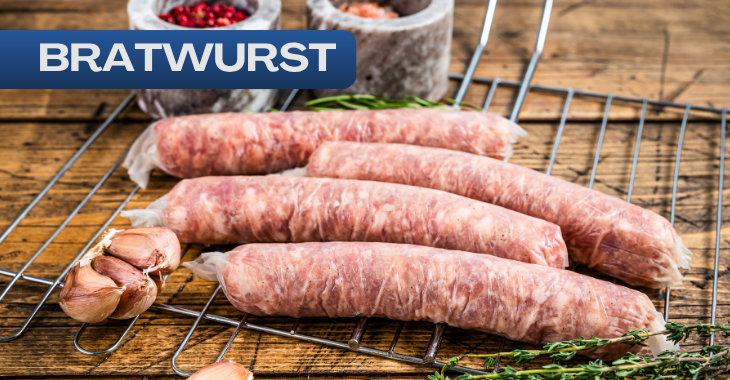
Bratwurst is one of the best-known German sausage varieties and is commonly associated with pork, although beef and veal versions are also produced.
The sausage typically has a relatively mild seasoning profile compared with heavily spiced varieties such as Chorizo or Merguez. Depending on the style, ingredients may include salt, pepper, herbs, spices, and other seasonings.
For a butcher or processor, one of the most important considerations is achieving a consistent texture and filling. Bratwurst is commonly produced in linked portions, so uniform stuffing helps create consistent links across the batch.
Natural casings are commonly associated with fresh bratwurst because they provide the traditional appearance and bite consumers expect.
During stuffing, the mixture needs to flow smoothly through the horn while maintaining enough control to prevent overfilling. A piston stuffer with adjustable pressure and speed can be useful here because the operator can adjust the flow according to the casing and meat mixture.
2. Chorizo
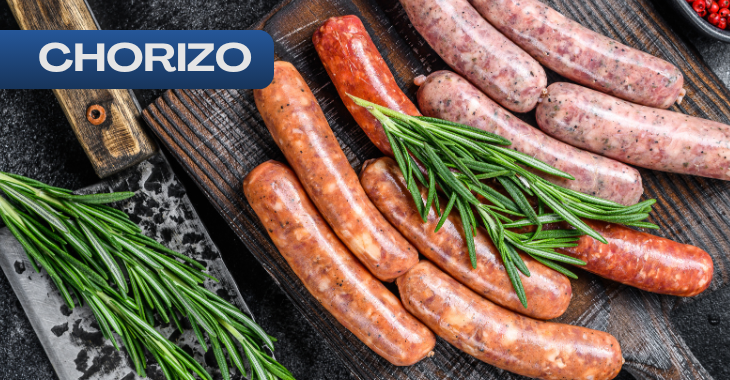
Chorizo covers a wide range of sausage styles, with recipes varying significantly depending on the region and intended use.
Spanish-style chorizo and Mexican-style chorizo, for example, can have very different ingredients, textures, and processing methods. Paprika, chili, garlic, herbs, and other spices are commonly associated with different forms of chorizo.
From a production standpoint, the seasoning profile is only one part of the equation. The meat particle size, fat distribution, casing, and whether the product is fresh, cured, or cooked all influence the manufacturing process.
Commercial producers should therefore establish a consistent formulation before selecting their stuffing and processing parameters.
For fresh chorizo, consistent stuffing is particularly important when producing links for retail or foodservice applications. Uneven filling can result in inconsistent weights and an unattractive final appearance.
3. Italian Sausage
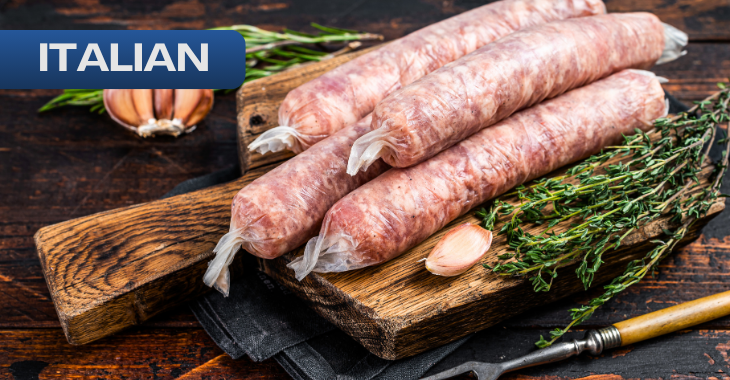
Italian sausage is another popular product manufactured in both small butcher shops and large commercial facilities.
It is commonly produced using pork and can range from mild to hot depending on the seasoning. Fennel, garlic, pepper, and chili are often associated with different styles.
Italian sausage is frequently sold as links, although bulk versions without casings are also common.
For linked products, stuffing consistency matters. Each link should have a similar diameter and fill so that cooking performance and portion size remain consistent.
For processors producing large quantities, manually filling every casing can quickly become labor-intensive. A commercial piston stuffer can help maintain a steady flow of sausage mixture and reduce the physical effort required from the operator.
4. Andouille
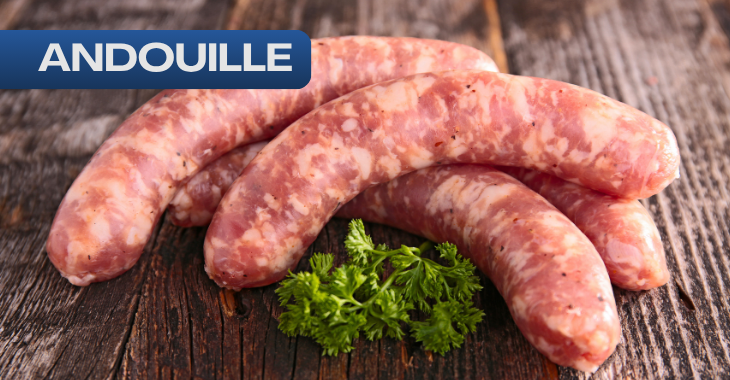
Andouille is strongly associated with smoked sausage and is particularly well known in Cajun and Creole cooking.
Unlike mild fresh sausages, Andouille typically has a more pronounced smoky and savory character. Different producers use different formulations and processing methods, so the exact recipe can vary.
Commercial production often involves grinding, seasoning, stuffing, and smoking or cooking. The casing needs to hold its shape through the subsequent processing stages.
For this reason, processors should consider more than simply how quickly a machine can fill the casing. Consistent stuffing pressure is important because an uneven sausage can affect appearance and downstream cooking or smoking.
For producers making several sausage varieties, equipment flexibility becomes even more valuable. The same stuffer may need to handle different casing diameters and product formulations throughout the production day.
5. Kielbasa
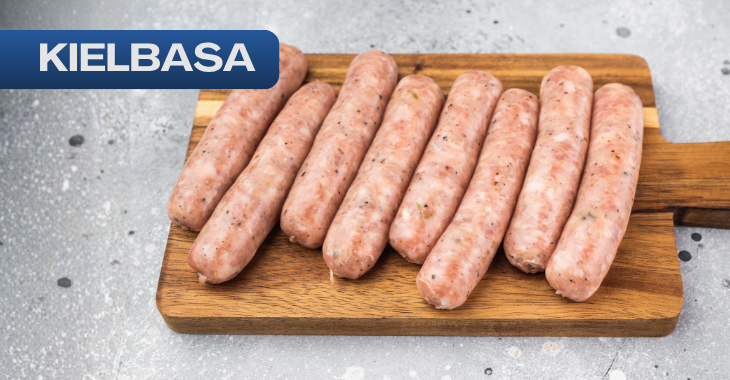
Kielbasa is a broad term commonly associated with Polish sausage, and there are many regional and commercial variations.
Many versions are made with pork, while some formulations include beef or other meats. Kielbasa may be seasoned with garlic, pepper, marjoram, and other spices before being cooked or smoked.
One of the characteristics consumers often expect from Kielbasa is a firm, uniform appearance. That starts during stuffing.
If the casing is underfilled, the finished sausage may look loose or irregular. If it is overfilled, the casing may be more likely to split during linking or thermal processing.
Commercial producers therefore need to balance stuffing speed with controlled product flow. This is one reason adjustable stuffing pressure and speed can be useful when switching between sausage varieties.
6. Merguez
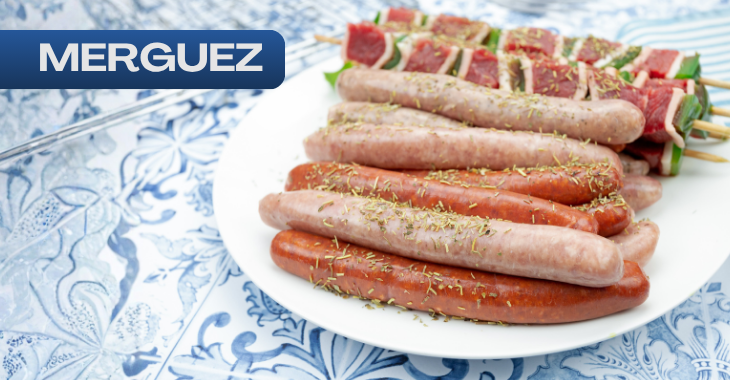
Merguez is a North African sausage traditionally associated with lamb or beef and known for its distinctive red color and spicy seasoning.
Depending on the formulation, spices may include chili, cumin, coriander, garlic, paprika, and other seasonings.
Merguez is often produced in relatively narrow links, making the stuffing horn and casing relationship especially important.
When producing a smaller-diameter sausage, the meat mixture needs to move smoothly through the stuffing system without creating excessive pressure against the casing.
For a commercial processor, the ability to change horns and adjust the stuffing process can make it easier to move between different product sizes.
7. Boudin
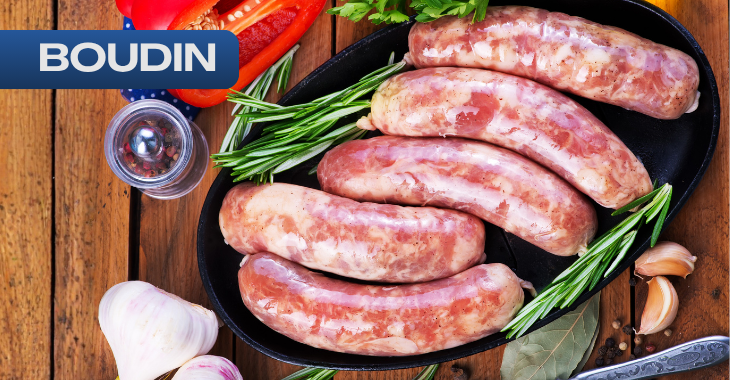
Boudin is different from many of the meat-forward sausages on this list because its formulation can include ingredients such as rice, onions, herbs, and other components depending on the style.
Boudin blanc and boudin rouge, for example, are distinctly different products.
The mixture’s texture is particularly important during stuffing. Unlike a straightforward ground-meat sausage, the presence of additional ingredients can change how the product moves through the stuffing system.
Processors need to make sure the mixture is properly prepared and has a consistency suitable for their equipment and casing.
This is a good example of why commercial sausage production cannot rely on one universal stuffing setting. Different formulations may require different pressure and speed adjustments.
8. Knockwurst
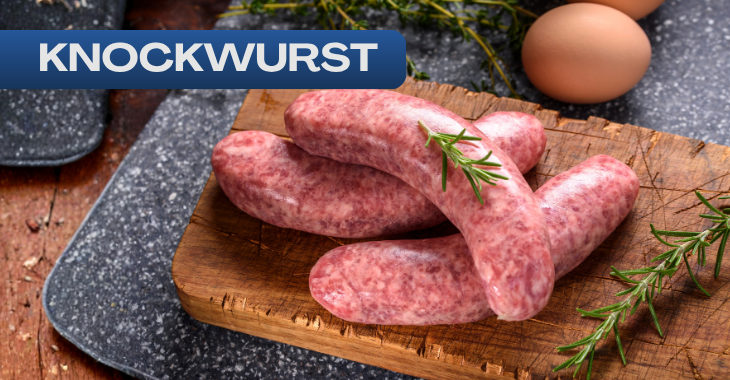
Knockwurst is generally associated with a heavily seasoned, smoked sausage and is commonly made using pork, beef, or a combination of meats.
The sausage is usually thicker than many breakfast-style links and is commonly cooked or smoked after stuffing.
For commercial production, uniform diameter is important because the sausage may undergo further thermal processing. Consistent stuffing helps produce a more predictable product from one batch to another.
The processor also needs to consider the casing material and diameter when selecting the appropriate stuffing horn.
When several products are being manufactured on the same equipment, quick changeover and easy cleaning become increasingly important.
9. Longaniza
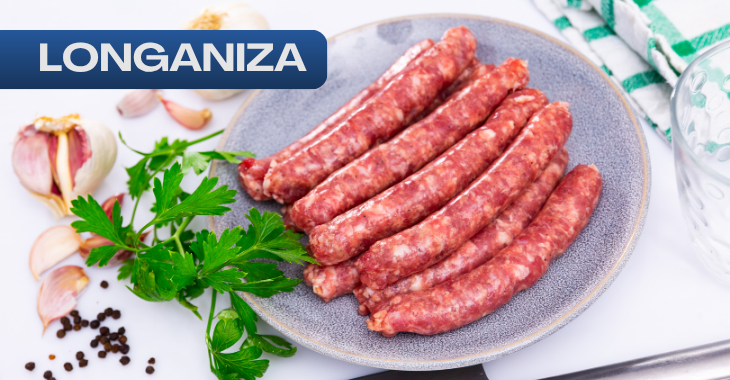
Longaniza is a sausage with numerous regional variations, particularly across Spain, Latin America, and the Philippines.
The ingredients and seasoning profile can differ considerably depending on where the sausage is produced. Some versions are fresh, while others may be cured, dried, or otherwise processed.
The name alone therefore doesn’t define one universal manufacturing process.
For meat processors, the important lesson is that production equipment should be flexible enough to accommodate different formulations and sausage sizes.
If a facility produces several Longaniza varieties or other specialty sausages, consistent stuffing becomes especially important for controlling portion size and finished appearance.
A commercial stuffer that allows the operator to control product flow can make this process considerably easier than relying entirely on manual filling.
10. Blood Sausage
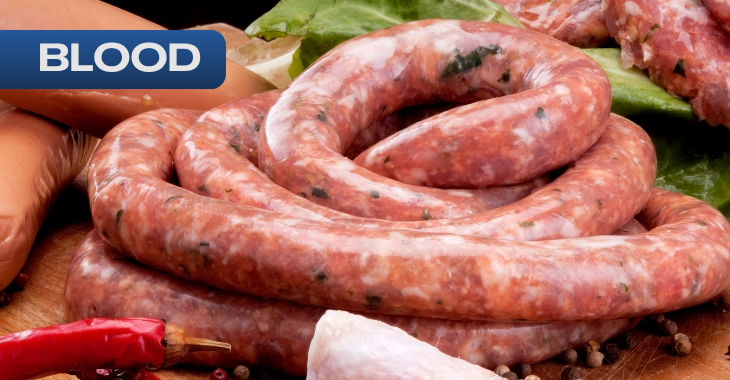
Blood sausage is one of the most distinctive categories in sausage making.
Recipes vary widely around the world and can include blood combined with meat, fat, grains, onions, spices, or other ingredients. Black pudding and other regional blood sausages are examples of this broader category.
Because the formulation can differ substantially from conventional fresh sausage, processors need to pay close attention to mixture consistency and equipment setup.
The stuffing process should be controlled rather than simply maximizing pressure or speed. The objective is to produce an evenly filled casing while maintaining the desired texture of the mixture.
For commercial producers, this is another situation where adjustable machine settings can be valuable.
11. Weisswurst
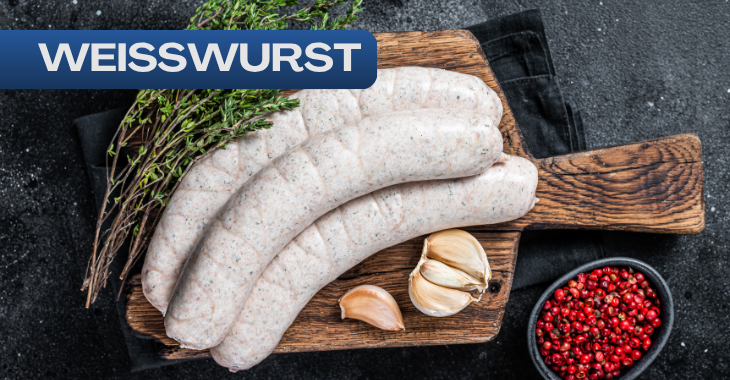
Weisswurst is a traditional Bavarian sausage typically associated with a pale appearance and a finely textured mixture.
Unlike many coarse-ground sausages, Weisswurst has a much finer texture, and its production requires careful handling of the meat mixture.
The temperature of the mixture, particle size, formulation, and stuffing process all contribute to the final product.
The casing is typically delicate, so aggressive stuffing pressure can create unnecessary problems.
A controlled stuffing process is therefore important. The objective isn’t simply to fill the casing as quickly as possible; it is to produce a consistent sausage without damaging the casing.
Why Stuffing Equipment Matters in Commercial Sausage Production
Grinding and mixing get a lot of attention in sausage production, but stuffing is where the product finally takes its recognizable form.
A processor can have an excellent recipe and high-quality ingredients, but inconsistent stuffing can still create problems.
You may end up with different sausage diameters, inconsistent weights, air pockets, casing breaks, or irregular links. These issues become increasingly expensive as production volume increases.
Manual stuffing can work well for very small operations, particularly where production is limited and an artisanal approach is part of the business model. But once production reaches commercial volumes, the labor involved in manually controlling product flow becomes difficult to justify.
This is where a commercial piston stuffer can make a meaningful difference.
How a Hydraulic Piston Stuffer Fits Into the Production Process
A hydraulic piston stuffer is designed to move the prepared sausage mixture from the machine’s cylinder through a stuffing horn and into the casing.
Unlike simply forcing the mixture through the system as quickly as possible, the goal is controlled product delivery.
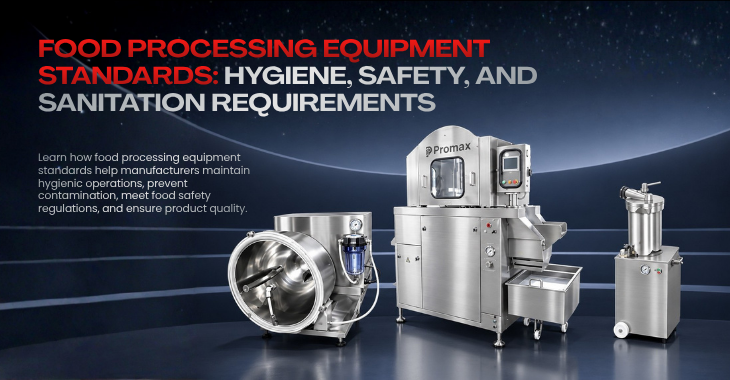
Promarksvac’s SS-100 Piston Stuffer, for example, is a commercial stainless-steel hydraulic piston stuffer with a 100-lb. capacity. It uses hands-free knee-lever operation and provides adjustable stuffing speed and pressure. The machine is supplied with three straight horns in 10 mm, 17 mm, and 27 mm sizes, giving processors flexibility for different sausage applications.
That flexibility matters when a processor produces multiple products.
A butcher shop might produce Italian sausage in the morning, bratwurst later in the day, and a specialty sausage for a restaurant customer in the afternoon. A meat manufacturer may have an even broader product range.
Rather than treating every sausage as the same product, operators can adjust the stuffing process according to the formulation, casing, and desired finished size.
Choosing the Right Stuffing Horn
The stuffing horn is one of the smaller components of a sausage stuffer, but it has a major role in the production process.
The horn needs to be appropriate for the casing and sausage diameter. A narrow horn may be suitable for smaller sausages, while larger products require a larger horn.
This is particularly important for processors producing multiple varieties.
For example, Merguez may require a different setup from a larger Kielbasa-style sausage. A processor producing several product sizes should therefore look for equipment that offers flexibility rather than being restricted to a single configuration.
Promarksvac’s SS-100 includes 10 mm, 17 mm, and 27 mm straight horns as standard, providing several options for different sausage applications.
Consistency Is More Important Than Maximum Speed
It can be tempting to think that the fastest sausage stuffer is automatically the best machine for a commercial operation.
In practice, speed is only one part of the equation.
If the machine moves the mixture too aggressively, the casing may not handle the pressure well. If production is too slow, labor costs can increase and throughput can suffer.
The ideal setup is a controlled flow that gives the operator enough control to maintain consistent filling.
This is particularly important when moving between sausage types. A processor may use one machine for products with different casing sizes, formulations, and textures.
Adjustable pressure and speed allow the operator to adapt the machine rather than forcing every product through the same settings.
Don’t Ignore Air Pockets
Air trapped inside sausage can affect appearance, consistency, and the finished product.
Air can enter the mixture during preparation or remain in the cylinder before stuffing begins. Operators should therefore take care to minimize trapped air before and during stuffing.
The Promarksvac piston stuffer documentation specifically emphasizes pressing the meat mixture down in the cylinder to remove as much trapped air as possible before operation. Proper control of product pressure and flow is also important when stuffing casings.
For commercial production, reducing these inconsistencies isn’t simply about making the sausage look better. Consistent product formation can help reduce rework and improve overall production efficiency.
Cleaning and Sanitation Are Part of Production
Sausage production doesn’t end when the final link comes off the stuffing horn.
Cleaning and sanitation are essential parts of any meat-processing operation. Equipment that comes into direct contact with meat must be cleaned according to the facility’s sanitation procedures and applicable requirements.
This becomes especially important when producing different sausage varieties on the same machine.
A machine that handles one product and then moves to another needs to be cleaned thoroughly between production runs according to the facility’s established procedures.
Promarksvac’s SS-100 is designed with removable piston and lid gaskets and a drain hole in the bottom of the cylinder to make washdown and cleaning more practical. The machine is also designed for easier oil changes and uses replaceable oil filters.
For a busy butcher shop or meat-processing facility, these details matter because cleaning time is part of the real operating cost of equipment.
From the Stuffer to Packaging
Once the sausage has been stuffed and linked or formed, the production process continues.
Depending on the product, sausages may be cooked, smoked, chilled, frozen, or sold fresh. The final packaging method depends on the product, distribution requirements, expected shelf life, and sales channel.
For processors producing sausages for retail or foodservice customers, packaging is another area where consistency matters.
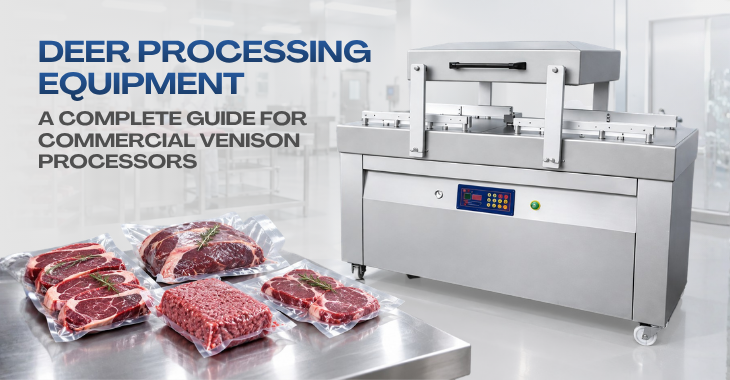
Vacuum packaging can help create a compact package and protect the product from exposure to air. Promarksvac manufactures commercial vacuum packaging and food-processing equipment for meat processors, including vacuum sealers alongside piston stuffers and other processing equipment.
This makes it possible for a processor to think about sausage production as a complete workflow rather than treating stuffing and packaging as completely separate operations.
What Should Butchers and Meat Processors Consider When Choosing a Sausage Stuffer?
There isn’t one machine that is automatically right for every sausage producer.
Before purchasing a commercial sausage stuffer, consider your current production volume and where you expect the business to be in the next few years. A machine that works for a small butcher shop may not provide enough capacity for a larger manufacturer.
You should also consider the range of sausages you produce.
If you make only one or two sausage varieties, your equipment requirements may be relatively straightforward. If you produce bratwurst, Italian sausage, Kielbasa, Merguez, specialty sausages, and other products on the same equipment, flexibility becomes much more important.
Casing sizes should also be considered. Different products can require different stuffing horns, and having multiple options can make changeovers easier.
Finally, don’t overlook cleaning and maintenance. In a commercial meat-processing environment, equipment needs to be practical to clean and maintain. Downtime, difficult cleaning procedures, and complicated maintenance can quickly become more expensive than the original purchase price suggests.
Making Different Sausages Starts With Understanding the Process
There is no single recipe or production method that works for every sausage.
Bratwurst relies on a different flavor and texture profile than Chorizo. Merguez brings a different seasoning and casing requirement. Boudin has a unique mixture that behaves differently during stuffing, while Weisswurst requires attention to its fine texture and delicate casing.
But despite these differences, the fundamental production process remains familiar:
Prepare the meat → Grind → Mix → Season → Stuff → Link or Form → Cook/Smoke → Cool → Package
The difference between a small-scale operation and a professional production environment often comes down to how consistently that process can be repeated.
A commercial piston stuffer can play an important role in that consistency by giving operators better control over stuffing speed, pressure, product flow, and sausage size.
For butchers and meat processors looking to increase production without sacrificing the quality and consistency customers expect, choosing the right sausage stuffing equipment is an important part of building an efficient operation.
Ready to Improve Your Sausage Production?
From traditional Bratwurst and Italian sausage to specialty products such as Merguez, Boudin, Blood Sausage, and Weisswurst, different products may require different approaches to stuffing and processing.
A commercial piston stuffer gives meat processors greater control over one of the most important stages of sausage production while helping reduce the labor associated with manual stuffing.
Explore the Promarksvac SS-100 Piston Stuffer to learn more about its capacity, adjustable pressure and speed, hands-free operation, and interchangeable stuffing horns.