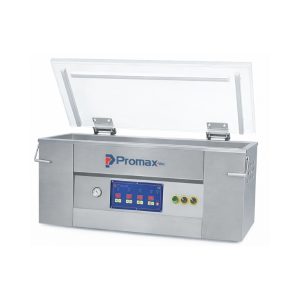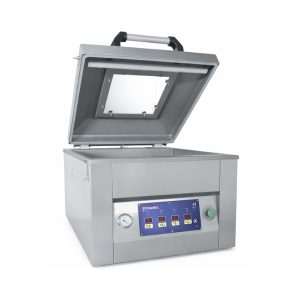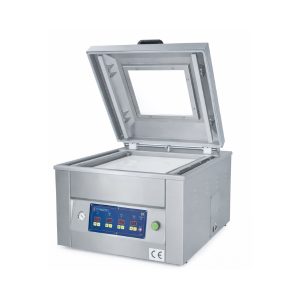
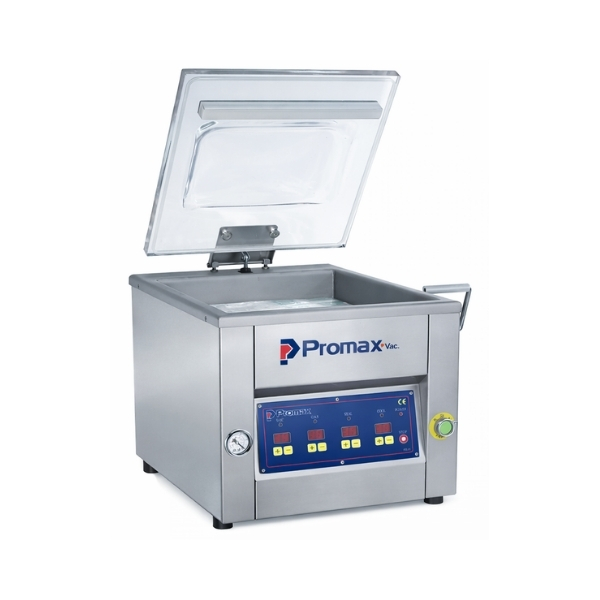
TC-280F – Table Top Vacuum Chamber Sealer

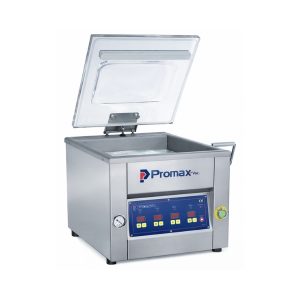
Our Table Top Vacuum Packaging Machine is designed for efficiency and reliability, making it the perfect solution for small to medium-scale operations. Equipped with a Busch Vacuum Pump—the industry’s leading standard for powerful and consistent performance—this machine ensures superior vacuum strength, seal integrity, and extended product shelf life. With low maintenance requirements and proven durability, Busch vacuum pumps make this Table Top Vacuum Packaging Machine a trusted choice for food processors and industrial packaging applications worldwide.
Please note: Specifications are subject to change without notice

- Description
- TC-280 Table Top Vacuum Packaging Machine – FAQ
Description
Specification:
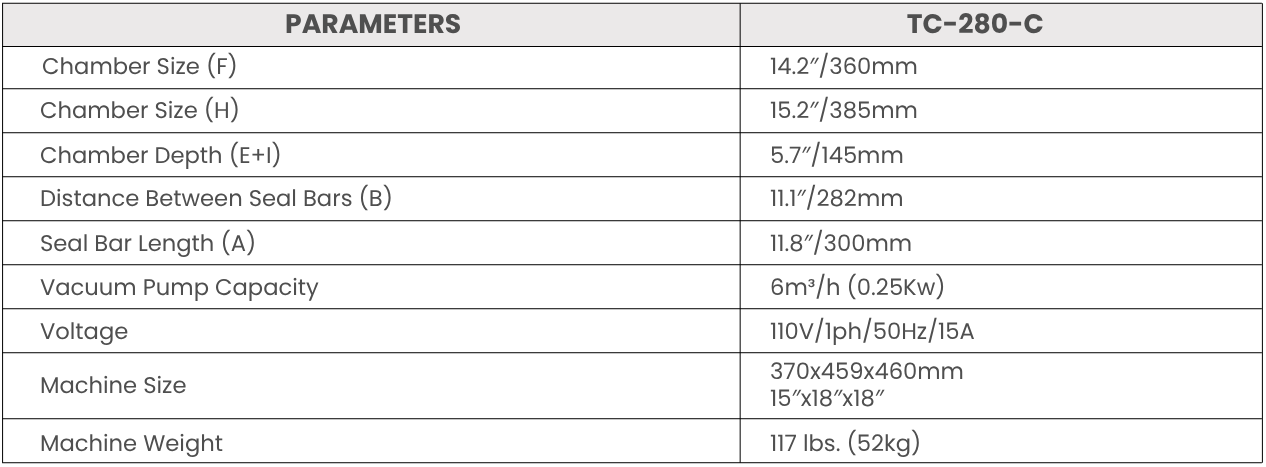
Standard Features – Table Top Chamber Sealer:
- PD-01 Basic Digital Control Panel
- Stainless Steel Construction
- Clear See-Through Lid
- Bladder Activated Sealing
- Busch 08 Vacuum Pump
- 4mm Flat Seal or Cut-Off Seal
- Certified & labeled to meet UL, CSA & NSF
Options:
- PNC-01 Microprocessor Control
- Soft Air
- Bi-Active Seal
- Air Assist Sealing
- Gas Flush System
- Twin Beam Sealing
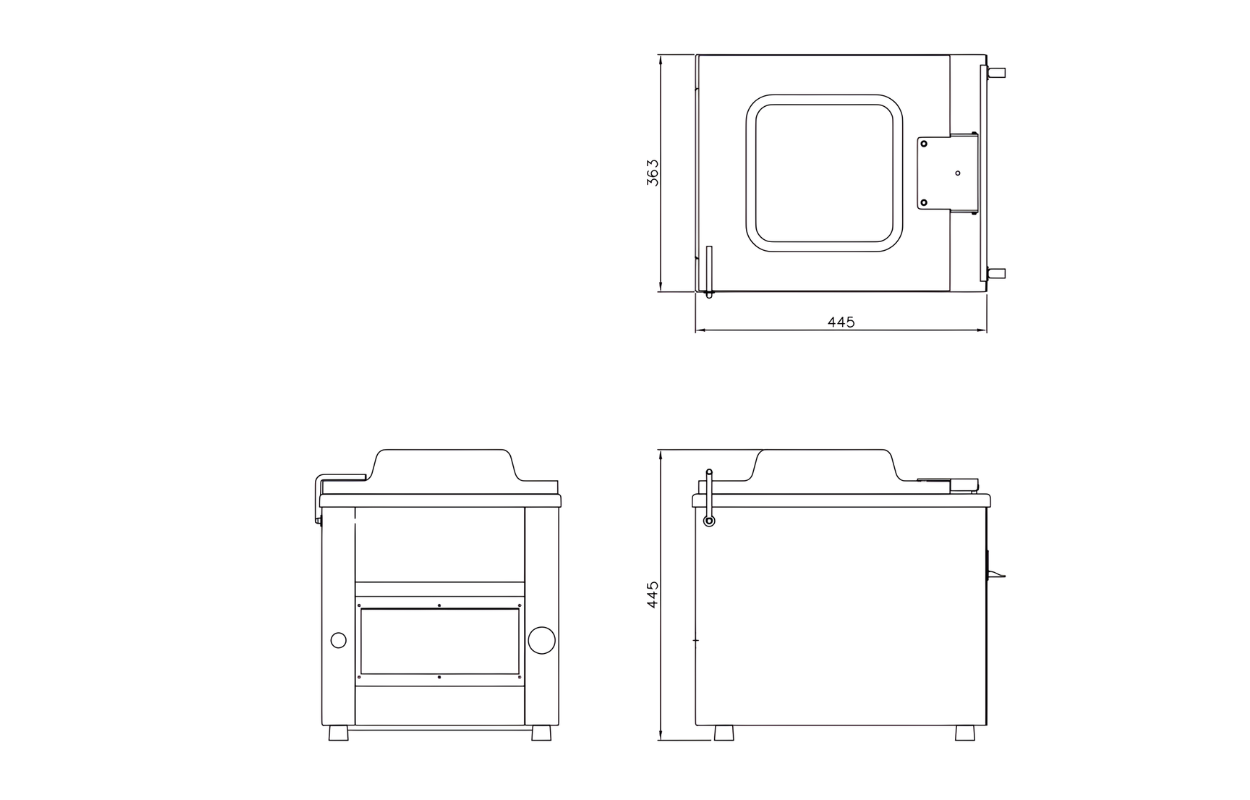
Drawing – TC280 – Table Top Chamber Sealer
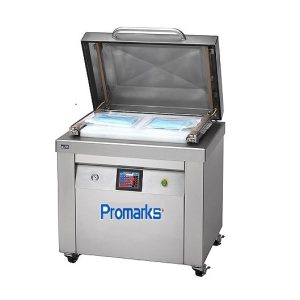
The model TC-280F may be the smallest of the Promarks table top chamber vacuum sealers but it is engineered and manufactured to be an industrial quality machine. Both the housing and the vacuum cavity are constructed using all # 304 stainless steel as part of meeting the stringent NSF standards. As with all of the Promarks’ chamber machines the TC-280F also meets UL and CSA safety standards. Meeting the UL, CSA and NSF standards means these machines meet all the requirements for use in restaurants, delis, test kitchens and any other establishment that is inspected by the local or state authorities. The heart of any vacuum chamber machine is the vacuum pump and Promarks’ utilizes only Busch vacuum pumps in all models including the TC-280F (Busch 08 vacuum pump). The TC-280F is not only a rugged unit but an easy to operate machine as well. The standard PD-01 control panel allows you to select the vacuum time, gas flush time (if the unit is equipped with the optional gas flush system), seal time and cooling time by simply touching either the up arrow or the down arrow and the digital readout provides total accuracy. If your application can be enhanced by using preset programs, multi-stage gas flush or soft air venting then you can upgrade a TC-280F to the PNC-01 microprocessor control panel that allow for all of these features and many more.
Promarksvac has supplied TC-280F machines for the following applications:
- Sous Vide
- Pet food packaging
- Test kitchens
- Beef jerky packaging
- Bio test labs ( Non validatable applications)
- Many more
Tell Us What You Need – Get a Fast Quote
Table Top Chamber Vacuum Sealer - Inquiry Form
1. What type of machine is the TC-280?
The TC-280 is a Table Top Chamber Vacuum Packaging Machine designed for commercial food packaging applications. It is suitable for:
-
Fresh meat
-
Pork & beef
-
Processed meats
-
Cold cuts
-
Sliced sausage
-
Pasta
-
Products with liquid
It uses pre-made vacuum pouches and performs vacuum, seal, and optional gas flush cycles inside a chamber.
2. What control panel options are available on the TC-280?
The TC-280 may be equipped with one of the following control systems:
-
PA-01 Analog Control Panel
-
PD-01 Digital Control Panel
-
PNC-01 Advanced Digital Control Panel (Programmable)
The PNC-01 version allows:
-
Multiple program storage
-
Vacuum by percentage
-
Pulse vacuum
-
Soft air venting
-
Multi-stage vacuum/gas cycles (optional)
-
Gas flush pulse control (optional)
3. Does the TC-280 support Gas Flush (MAP)?
Yes, the TC-280 offers an optional Gas Flushing Unit.
Important safety notes:
-
Gas regulator pressure must NOT exceed 40 PSI
-
Gas mixtures must NOT exceed 22% oxygen
-
Bag opening must be positioned in front of gas nozzles (do not tuck under)
Gas flush is commonly used for extending shelf life in modified atmosphere packaging (MAP).
4. What are the recommended vacuum times for different products?
Below are general vacuum guidelines:
| Product | Vacuum Time | Estimated Storage Life (2–6°C) |
|---|---|---|
| Fresh meat | 30 sec | 10 days |
| Pork | 30 sec | 10 days |
| Beef | 30 sec | 30 days |
| Meat with liquid | 15–30 sec | 14 days |
| Pasta | 3–9 sec | 21 days |
| Sliced sausage | 15 sec | 10 days |
| Cold cuts | 9 sec | 10–21 days |
Final settings should always be tested based on pouch type and product.
5. What are the environmental requirements for TC-280?
For proper operation:
-
Temperature: 5°C – 40°C
-
Working elevation: 0 – 1000 meters
-
Humidity: 30% – 95% RH
-
Maintain minimum 20 cm clearance on all sides for ventilation
Normal operating temperature of the machine may reach 70–80°C due to vacuum pump heat.
6. What type of power connection is required?
-
Electrical specifications are listed on the machine’s serial plate.
-
Installation must be completed by a certified electrician.
-
Proper grounding is mandatory.
-
Always follow lockout/tagout procedures before servicing.
7. How do I operate the TC-280?
Basic steps:
-
Turn on the main power switch.
-
Place product in a vacuum pouch.
-
Position open end across the sealing bar.
-
Close lid – cycle starts automatically.
-
Lid opens automatically after cycle completes.
-
Remove sealed package.
After finishing production:
-
Let vacuum pump run for 15 minutes.
-
Turn off main switch.
8. How often should vacuum pump oil be checked?
-
Oil level must be checked daily.
-
Oil level should remain between minimum and maximum on sight gauge.
-
Replace oil after 500 operating hours.
-
Always check oil when machine is OFF and chamber is vented.
9. What daily maintenance is required?
Daily inspection should include:
-
Teflon tape (clean & inspect for burns/tears)
-
Vacuum pump oil level
-
Lid gasket condition
-
Pressure bar rubber condition
-
Listen for abnormal pump noise
Daily cleaning:
-
Clean seal bar Teflon carefully (do NOT wash down directly)
-
Clean rubber pad with mild solvent
-
Wipe stainless steel exterior
-
Clean clear lid with mild glass cleaner
10. Why is the vacuum level insufficient?
Common causes:
-
Low vacuum pump oil
-
Pump rotating in wrong direction
-
Lid gasket damaged
-
Leaking bag
-
Bag too large
-
Sharp product edges puncturing bag
Note: Most insufficient vacuum complaints are due to bag leakage, not machine malfunction.
11. Why is sealing weak or burnt?
Possible causes:
Weak seal:
-
Seal time too short
-
Low sealing pressure
-
Loose heating element
-
Damaged Teflon tape
Burn marks:
-
Seal time too long
-
Oil or moisture in sealing area
Important:
Do not increase sealing time excessively, as it reduces Teflon and silicone life.
12. Why does the lid not open or close properly?
Possible causes:
-
Damaged vacuum valve
-
Faulty limit switch
-
Electrical disconnection
Machine should be powered OFF before inspection.
13. What safety precautions must be followed?
-
Never service machine while powered.
-
Follow lockout/tagout procedures.
-
Ensure proper grounding.
-
Do not place foreign objects inside chamber.
-
Use protective gloves when handling blades (if optional knife system installed).
-
For MAP applications, consult a food safety specialist.
14. Does the TC-280 allow vacuum by percentage instead of time?
Yes — if equipped with the optional Sensor Control with the PNC-01 panel.
This allows:
-
Vacuum by percentage (e.g., 99%)
-
Percentage + additional time
-
Pulse vacuum cycles
-
Multi-stage vacuum/gas programs (up to 10 stages)
15. What should I do if the vacuum pump does not start?
Check:
-
Power supply compatibility
-
Circuit breakers (KM1, QM1, MCB1, MCB2)
-
Correct voltage connection
-
Fuse condition
If abnormal motor sound occurs, stop machine immediately.